One Client, Multiple Services: How to Build a $100,000+ One-Person Agency
On this page
Chasing new clients is the slowest way to make more money. I'll say it louder for the people in the back: the next client is not where your income is hiding.
I know that's backwards. Every freelancer is taught to grind for leads. Finish a build, collect the check, then go cold again. New calls, new proposals, new strangers to convince, every single month. It feels like work, so we assume it's the work that pays.
But the real money has been sitting right next to you the whole time. It's the client you already won.
That Shopify store you just built for $1,500? The owner already trusts you. They've already paid you once. They already have problems you can fix. Their email list is dead, their ads are running on guesswork, their site needs a hundred small things over the next year. Every one of those is revenue you don't have to go hunt for.
When you stop selling one-off projects and start stacking web, email, and ads into a single system for the same handful of clients, the math changes completely. One person, no team, no office, can clear six figures from a roster small enough to remember every name.
Stop selling projects. Start building systems.
Picture a business owner who comes to you because they need an online store.
Most developers build the store, collect the payment, and disappear. Project done.
But walk through what actually happens after that store goes live. A store with no email marketing quietly leaks customers who were one reminder away from buying. A store with no advertising sits there waiting for traffic that never shows up. A store with no automation eats hours of the owner's week on tasks a machine should handle.
Every one of those gaps is a problem the business owner already feels. And every problem is a service you can deliver.
That's the whole idea. One client doesn't have to be one payment. One client can be three or four revenue streams, because you're solving the next problem instead of waving goodbye after the first one.
The reframe I want you to keep: you don't get paid more for doing more work. You get paid more for owning more of the outcome.
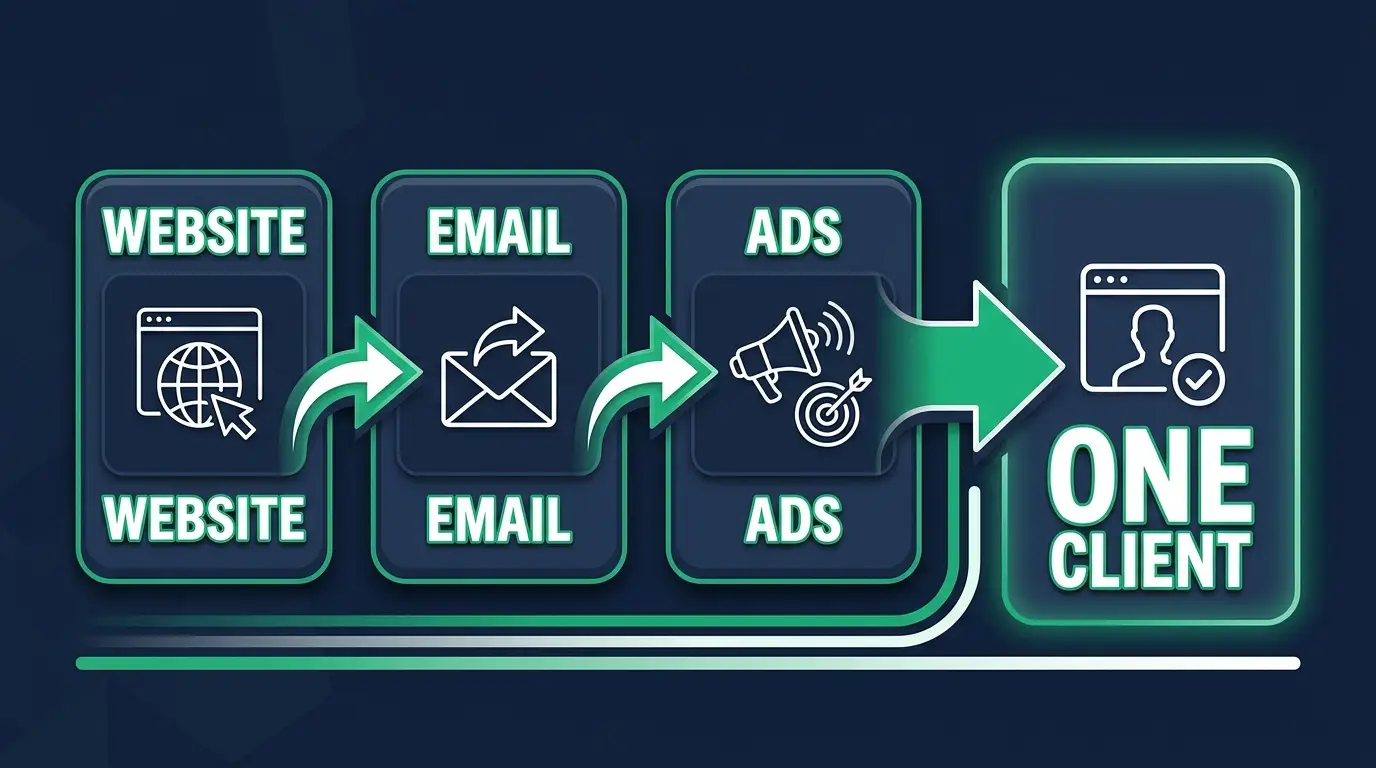
Step 1: Build their ecommerce store
This is the foundation, and it's the door in.
Your first job is helping the client launch a store that actually works, not just one that looks nice in a demo.
That usually means:
- Shopify store setup or WooCommerce development
- Product pages and collections that are built to convert
- Payment gateways and shipping configuration
- Theme customization and mobile optimization
Typical project pricing: $1,000 to $2,000.
For most developers, this is where the relationship ends. For you, it's where it starts. If store building is the skill you're still sharpening, here's the honest roadmap to becoming a Shopify developer.
Step 2: Build their email marketing system
Every ecommerce business should have automated email running. Almost none of them set it up correctly.
That gap is your second service, and it's the one that turns a one-time payment into recurring income.
The flows worth building:
- Welcome series and post-purchase sequences
- Abandoned cart and browse abandonment (this is the money one)
- Win-back campaigns for customers who've gone quiet
- Product launches, weekly promotions, and holiday campaigns
You'll do this on a platform like Klaviyo, Shopify Email, Mailchimp, or Omnisend. Klaviyo is where most of the serious ecommerce money lives, so it's worth knowing deeply.
Typical setup fee: $300 to $500. Monthly management: $200 to $1,000 per month.
That monthly number is the whole game. The same client who paid you once is now paying you every month. If you want to go deep on this skill, start with how to become an email developer and what that work actually pays.
Step 3: Create their advertising assets
Once email is running and the client sees results, the next conversation writes itself. They want more traffic.
Now you help them acquire customers, not just hold the ones they have.
That can mean:
- Facebook and Instagram ads, Google Display ads
- Static image ads, promotional banners, landing page graphics
- AI-generated product and lifestyle photography
- Video ads and ad variations for testing
At this point you've quietly changed what you are. You're not "the developer who built the site." You're the person responsible for the business growing.
Typical management pricing: $500 to $2,000 per month.
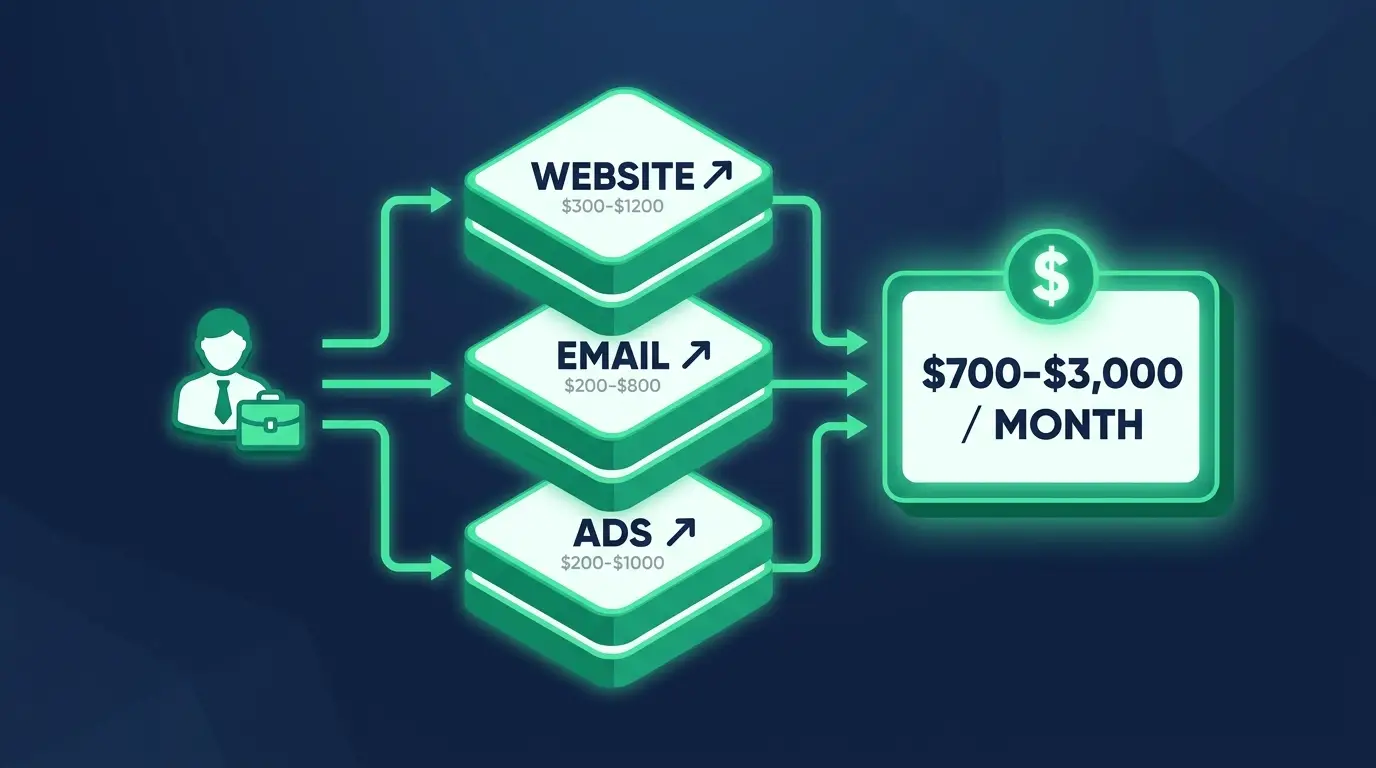
One client is worth more than you think
Let's run the numbers on a single client.
Up-front revenue
| Service | Price |
|---|---|
| Website build | $1,000 to $2,000 |
| Email setup | $300 to $500 |
| One-time total | $1,300 to $2,500 |
Monthly recurring revenue
| Service | Price |
|---|---|
| Email management | $200 to $1,000 |
| Ad management | $500 to $2,000 |
| Monthly total | $700 to $3,000 |
One client. A few thousand up front, then up to three grand a month, every month, for as long as you keep delivering.
What happens with 10 clients
This is where it stops being freelancing and starts being a business.
One-time revenue
| Service | Price |
|---|---|
| 10 website projects | $10,000 to $20,000 |
| 10 email setups | $3,000 to $5,000 |
| Setup total | $13,000 to $25,000 |
Monthly revenue
| Service | Price |
|---|---|
| Email management | $2,000 to $10,000 |
| Advertising management | $5,000 to $20,000 |
| Monthly total | $7,000 to $30,000 |
Annual recurring revenue
Keep those same 10 clients for a year and the recurring side alone produces:
$84,000 to $360,000 per year.
Add the setup fees and any new builds that come in, and a realistic first year lands around:
$97,000 to $385,000+.
No team. No office. No hundred clients. Ten relationships you take care of well.
The part nobody puts in the highlight reel
I'm not going to sell you the dream without the fine print, because the fine print is where people actually fail.
You're selling results now, not deliverables. A website is "done" when it ships. Ad management is never done. If the campaigns don't perform, the client cancels the retainer, and "recurring revenue" stops recurring fast. Owning the outcome cuts both ways.
You become the bottleneck. When one person runs the site, the email, and the ads for ten businesses, you are a single point of failure. Get sick, take a vacation, or land a busy month and everything backs up at once. Build systems and templates early, or the business owns you instead.
Client concentration is real risk. Ten clients sounds safe until three leave the same quarter and a third of your income vanishes overnight. Fewer, bigger clients means each loss hurts more. Keep a pipeline even when you're full.
The skills take time to stack. You can't credibly sell email, ads, and automation on day one. You'll start with the store, get good, then add the next service. This is a one-to-two-year build, not a weekend.
You have to actually understand marketing. Knowing how to build an email flow isn't the same as knowing which flow makes money. The developers who win here learn the business side, not just the technical side.
None of this is a reason to skip it. It's the reason to go in with your eyes open and price for the responsibility you're taking on.
Why this model works anyway
Once you account for the hard parts, the math still wins, for a few reasons.
It raises customer lifetime value. One sale becomes an ongoing relationship. The longer clients stay, the more every new client is worth, and the less time you spend hunting for the next one.
It makes you hard to replace. Anyone can be the person who built a website. Almost no one is the person who runs the website, the email, the automations, and the ads. When you own the whole stack, swapping you out is a project the client doesn't want to take on.
Recurring revenue creates stability. Project work is exciting and lumpy. Retainers are calmer and predictable. Knowing roughly what next month looks like is the difference between running a business and surviving one.
AI makes this genuinely doable solo
A few years ago, delivering all of this alone wasn't realistic. The asset creation alone would bury you. That's changed.
You can now use AI to help produce marketing images, product and lifestyle photography, banner and social graphics, email copy, product descriptions, landing page copy, and a dozen ad variations for testing, in a fraction of the time it used to take.
That's the unlock. AI doesn't replace your judgment about what the business needs. It removes the hours of grunt work between the idea and the deliverable, so one person can serve more clients without drowning.
If you want to build this muscle deliberately, start with the best AI automation tools worth learning and how to become an AI automation specialist.
The skills that stack into this
The reason this business is possible is that these skills compound. Each one makes the next service sellable to the same client.
Start with the foundation:
- HTML, CSS, JavaScript
- Shopify and WordPress
Then add the recurring-revenue layer:
- Email development and Klaviyo
- Marketing automation with Zapier, Make, or n8n
- CRM platforms
Then add the growth layer:
- AI content creation
- Paid advertising
- Analytics and conversion optimization
Every skill you add isn't just a new line on your resume. It's a new invoice you can send to clients you already have.

Think like a business partner
The whole mindset shift comes down to one swap.
Stop asking:
"What website should I build?"
Start asking:
"How can I help this business make more money?"
That single question leads straight to more services. More services build stronger relationships. Stronger relationships create recurring revenue. And recurring revenue is what buys you freedom.
FAQ
How many clients do I need to hit six figures? Fewer than you'd think. Ten clients on website-plus-email-plus-ads retainers can produce $84k to $360k a year in recurring revenue alone. Plenty of one-person agencies get there on five to eight strong clients, because the money is in the monthly retainers, not the count.
Do I need to know how to run ads before I offer ad management? Yes, at least competently. This is the service with the most accountability, because the client measures you against revenue. Start by running ads for your own offer or one client at a low budget, learn what actually works, then sell it. Don't sell a result you can't yet produce.
What if I only know how to build websites right now? That's a fine starting point. Build stores, get good, and add one service at a time. Email is usually the best second skill because it creates recurring revenue fastest and pairs naturally with ecommerce. The Shopify and email marketing specialist paths are built for exactly this stacking.
Is this better than just getting a job? It's different, not strictly better. A job is stable and someone else carries the risk. A one-person agency has a higher ceiling and real freedom, but you carry client churn, income swings, and the pressure of owning outcomes. Many people start it on the side while employed, which is the lowest-risk way in.
Won't AI or cheaper freelancers undercut me? They'll undercut the person who only does one isolated task. They won't easily replace the person who owns a client's entire growth stack and understands their business. Bundling several services into one trusted relationship is the moat. AI is the thing making you faster, not the thing replacing you.
At CodingPhase, this is exactly what we teach developers to build: not isolated technologies, but the way web development, email marketing, AI, automation, and ecommerce fit together to solve real business problems and create recurring income.
Build the store. Build the email system. Create the marketing assets. Manage the campaigns. Help the business grow, and your business grows with it.
You don't need a big agency. You need a small group of clients who trust you with more than one piece of their business. Pick the first skill, get genuinely good, then stack the next one. I've got you.