How to Become an AI Automation Specialist
On this page
Picture the back office of a small business on a Tuesday afternoon. An order comes in. Someone opens the email, copies the customer's name, switches to Shopify, pastes it, checks the inventory tab, switches to the accounting tool, types the same numbers a third time, then opens a spreadsheet to log that it all happened. Then the next order comes in and they do the whole dance again. And again. For eight hours.
I sit in rooms like that more often than I'd like, and the owner always says some version of the same thing: "I know this is dumb, I just don't have time to fix it." They're losing hours a day to copy-paste, and they'd happily pay someone to make it stop.
That someone is an AI automation specialist. You build the system that does the dance for them, and you wire AI into the middle so it can handle the messy parts a rigid script never could.
Here's the part nobody tells you. The demand for this showed up way faster than the supply of people who can actually do it. I've watched folks with zero technical background get paid to build these systems, and I've watched others spin their wheels for a year because nobody told them what to learn first. The difference is almost never talent. It's the order you learn things in.
So let me give you the honest version. What the job actually is, the exact sequence of skills, how long it really takes, and how you get someone to pay you for it.
What an AI automation specialist actually does
Strip away the hype and the job is simple to describe. You connect software to other software so that work happens without a human pushing the buttons. Then you wire AI into the middle of that so the system can read, decide, and write, not just move data around.
A real example. A small e-commerce store gets a customer support email. A specialist has built a system that reads the email, figures out what it's about, pulls the order from Shopify, drafts a reply in the brand's tone, and either sends it or queues it for a human to approve. Nobody copied, pasted, or alt-tabbed. That whole chain is what you build.
The "AI" part is what makes this different from old-school automation. Five years ago, automation could only handle things with clear rules: if this, then that. Now the language model in the middle can handle the messy human stuff. Reading a vague email. Summarizing a call. Deciding which of six categories a message belongs to. That's the new skill, and almost nobody has it yet.
That last part is the whole opportunity. The demand showed up faster than the supply of people who can actually do it. If you want the longer case for that, I wrote it up in is AI automation a good career.

The skills, in the order that actually works
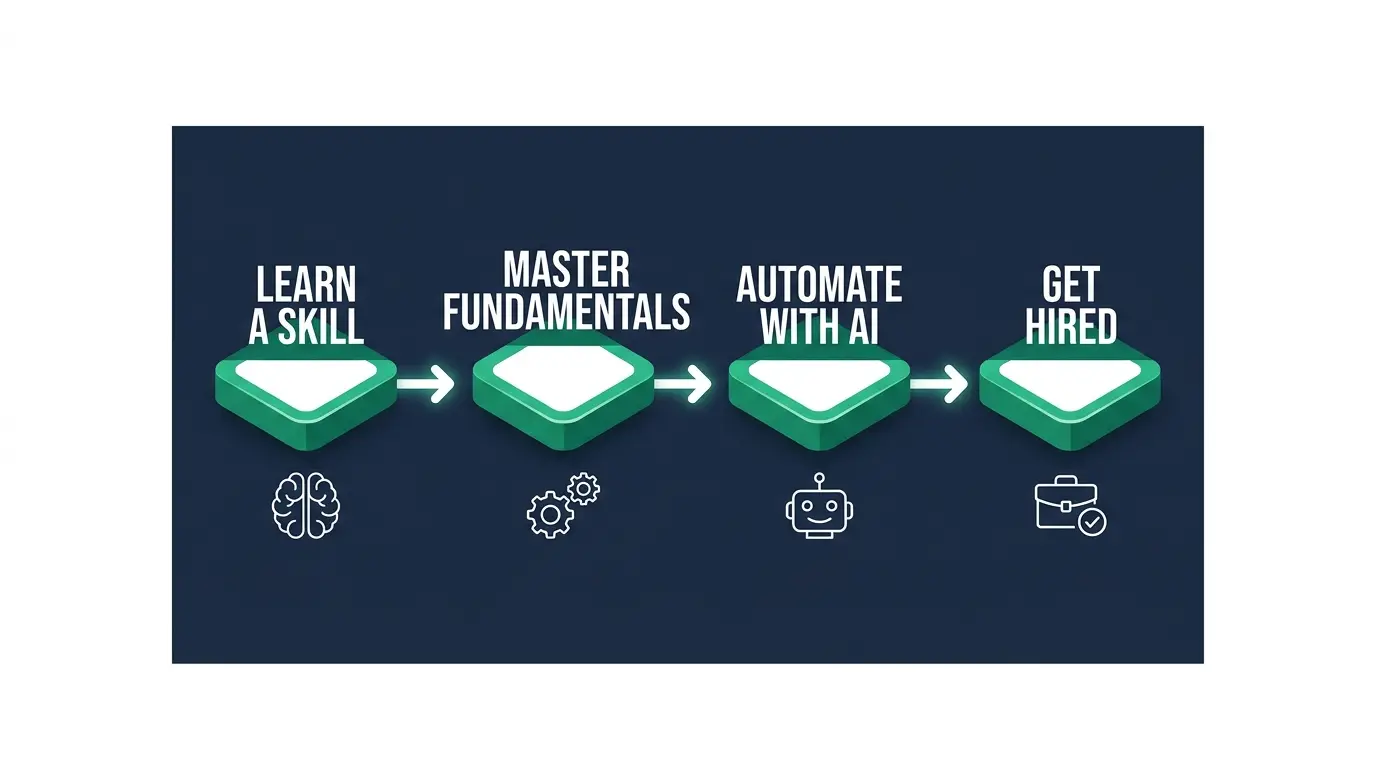
Here's where most people go wrong. They start by trying to learn "AI," watching prompt-engineering videos for three weeks, and then realize they can't build anything because they skipped the plumbing. Do it in this order instead.
1. No-code automation tools first
Start with Zapier or Make (Make used to be Integromat, and it's the one I'd push you toward because it's visual and cheaper at scale). These tools let you connect apps with zero code. You drag a "when a form is submitted" block to a "add a row to a spreadsheet" block, and you've built your first automation.
This feels too easy to be a real skill. It isn't. Most of this job is knowing which apps to connect and what order the steps go in. Learning that on a no-code canvas, where you can see the whole flow, is the fastest way to build the mental model. Skipping this and jumping straight to code is how people end up writing scripts that solve a problem nobody had.
Spend two or three weeks building small things. Automate something in your own life first. Save email attachments to a folder. Post your published blog to a Slack channel. Boring on purpose.
2. APIs and webhooks next
This is the wall most beginners hit, and it's the one worth pushing through, because it's also the thing that separates a hobbyist from someone who gets paid.
An API is how one app lets another app talk to it. A webhook is how an app shouts "hey, something just happened" so your automation can react. You don't need a computer science degree for this. You need to understand what a request is, what JSON looks like, and how to read documentation. That's it.
Once APIs click, your ceiling disappears. The no-code tools only connect the apps they've pre-built. APIs let you connect anything. This is the moment you stop being limited to the toy blocks and start building real systems.
Be honest with yourself here: this part is a grind. It's the least fun week or two of the whole journey. Push through it anyway. Everything after it gets easier.
3. Prompting as a real skill
Now the AI part. Writing a prompt that works once is easy. Writing a prompt that works every time, on messy real-world input, inside a system where nobody's watching, is the actual skill.
You'll learn to give the model a role, structured instructions, examples, and a fixed output format so the next step in your automation can rely on it. The goal isn't a clever prompt. It's a boring, reliable one. A prompt that returns clean JSON every single time is worth more than a witty one that breaks on the hundredth email.
4. AI agents last
Only now do you touch agents, because an agent is everything above it stacked together. An agent is a system that can take a goal, decide which tools to use, use them, look at the result, and decide what to do next. It loops instead of running once.
This is the frontier and it's where the highest pay is. But you cannot build a reliable agent if you don't understand the layers underneath it, which is exactly why it goes last. People who start here build demos that look amazing and fall apart in production.
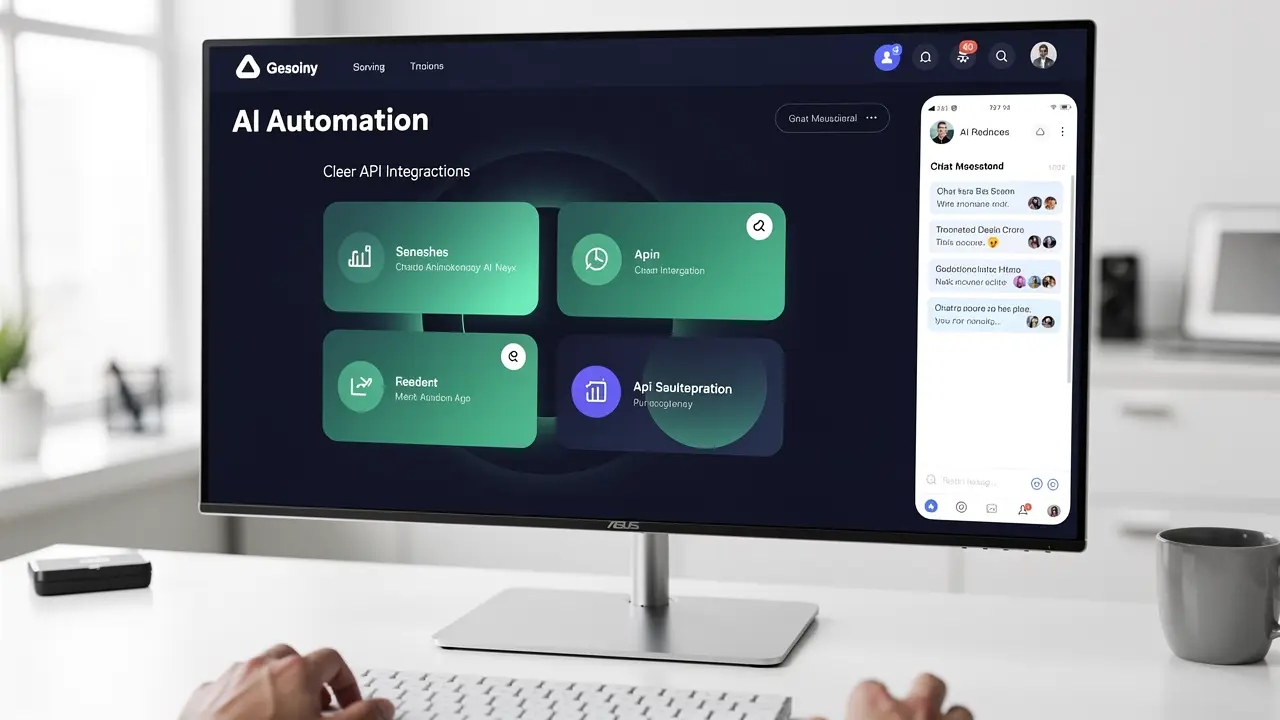
If you want the full toolbox laid out, I broke down each category in best AI automation tools.
A realistic timeline (and an honest one)
I'm not going to tell you 30 days. Here's what I've actually seen.
Months 1 to 2: No-code fluency. You can build multi-step automations in Make and you understand triggers, actions, and data mapping. You've automated a dozen small real things.
Months 3 to 4: APIs and webhooks stop scaring you. You can read documentation, make authenticated requests, and connect apps that have no pre-built integration. This is the slow, frustrating stretch. It's normal.
Months 5 to 6: You're wiring AI into your automations with reliable prompts, and you've built your first simple agent. You have two or three real projects you can show.
So roughly six months of consistent, hands-on work to be genuinely job-ready, if you build the whole time instead of just watching. You don't learn this by watching. You learn it by building broken things until they stop breaking. People who treat it as a course to finish take longer than people who treat it as a problem to solve.
Building a portfolio that gets you hired
Nobody hiring for this cares about your certificates. They care about whether you can build the thing. Your portfolio is the entire interview.
The trick: don't build fake demos, build automations that solve a real problem for a real business, even an imaginary one with realistic constraints. Three solid projects beat ten toy ones.
Project ideas that land:
- An AI inbox sorter. Reads incoming emails, classifies them, and routes or drafts replies. Hits every skill in the stack.
- A content repurposing system. Takes one long video or post and turns it into a thread, a newsletter, and three short captions, automatically.
- A lead-handling pipeline. New lead comes in, gets enriched, scored by AI, dropped into the CRM, and the right person gets pinged.
Record a short Loom of each one running. Write up what it does and why you built it that way. That short video of a working system does more than any resume line.
How to actually get hired (or paid)
Two roads, and most people start on the second one.
Freelance first. This is the fastest path to getting paid. Small businesses are drowning in repetitive work and have no idea automation can fix it. Find one local business, build one automation that saves them real hours, and you have a case study, a testimonial, and probably a referral. Repeat. This is how a lot of people back into a full income before they ever apply for a "job."
Then full-time roles if you want them. Titles to search: AI Automation Specialist, Automation Engineer, AI Solutions Specialist, Marketing Automation Engineer, RevOps Automation. The salary picture is better than most people expect, and I broke it down in the AI automation salary guide.
The honest tradeoff with freelancing: you're also running a business, doing sales, and chasing invoices, which has nothing to do with building. Some people love that freedom. Some people just want a salary and a slack channel. Both are fine. Know which one you are before you pick.
FAQ
Do I need a degree to become an AI automation specialist? No. This is one of the genuinely degree-optional tech careers. Employers and clients hire on demonstrated ability, which means a portfolio of working systems matters far more than a diploma. Nobody has asked me about my degree in years.
Do I need to know how to code? You can start with zero code on no-code platforms, and you'll get real results fast. But to break past the beginner ceiling and command higher pay, you'll want comfort with APIs, JSON, and light scripting. You don't need to be a software engineer. You need to read documentation and not panic at a curly brace.
How long does it take to get job-ready? Around six months of consistent, hands-on building for most people. You can land your first small freelance project sooner, sometimes in two or three months, once you're fluent with no-code tools and one real AI integration.
Is AI automation just a hype trend that'll disappear? The buzzwords will change. The underlying skill, connecting systems and putting intelligence in the middle of them, only gets more valuable as more software exists to connect. Learn the fundamentals, not this month's tool, and you're fine.
Where do I find my first clients? Local small businesses are the easiest start. They have obvious repetitive work and almost no one is pitching them automation. Build one free or cheap automation that saves real hours, get the testimonial, and use it to land the next one.
Are certifications worth doing? Some are worth a weekend for getting past a first screen, and none of them substitute for a portfolio. Which ones carry weight is covered in AI automation certifications.
If you've read this far, you're already ahead of most people, because you understand the order matters more than the hustle. Start small. Build something boring that actually works this week. The grind is real, especially around APIs, but the people who push through that part end up rare, and rare gets paid.
If you want the guided version of this path instead of piecing it together yourself, that's exactly what the AI Automations career path is built for. Either way, I'm rooting for you. Go build the broken thing.