How to Become a PHP Developer (And Why It's Still One of the Smartest Bets in Web Dev)
On this page
"PHP is dead." You've heard it. It's the loudest opinion on every coding subreddit, repeated by people who learned it once in 2014 and never looked back.
Here's the part they leave out: most of the web still runs on it. Roughly three out of every four sites with a known backend language are PHP. WordPress alone powers a huge slice of the internet, and WordPress is PHP all the way down. So is a lot of WooCommerce, Laravel, and half the small-business sites you shopped on this week.
A language that quietly runs the majority of the web is not dead. It's just unglamorous. And I'll be honest with you, unglamorous is exactly where a lot of the steady paychecks live.
That gap between the rumor and the reality is the whole opportunity. While everyone races toward the trendy stack, fewer people are learning the language that thousands of companies still need maintained, extended, and rebuilt every single day.
So let's talk about how you actually become a PHP developer, what it pays, and where the work really is.
"But isn't PHP outdated?" Let's deal with this first
I'm not going to pretend the reputation came from nowhere. PHP earned some of it. Old PHP code was a mess. Inconsistent function names, security holes everywhere, spaghetti scripts dumped into one file. If you learned about PHP from a forum thread written in 2011, you're picturing a language that mostly doesn't exist anymore.
Modern PHP is a different animal. PHP 8 is fast, has proper typing, and runs on a framework called Laravel that developers genuinely love using. Not tolerate. Love.
Here's the part the "PHP is dead" crowd skips: roughly three out of four websites with a known server-side language run PHP. WordPress alone powers around 40% of the entire web, and WordPress is PHP. That's not a dying ecosystem. That's an enormous installed base that needs people to maintain, extend, and rebuild it.
The reframe I want you to keep: popularity on Twitter and demand in the job market are two completely different things, and your rent is paid by the second one.
If you want the longer version of this argument, I wrote a whole piece on whether PHP is a good career. It holds up.
What a PHP developer actually does all day
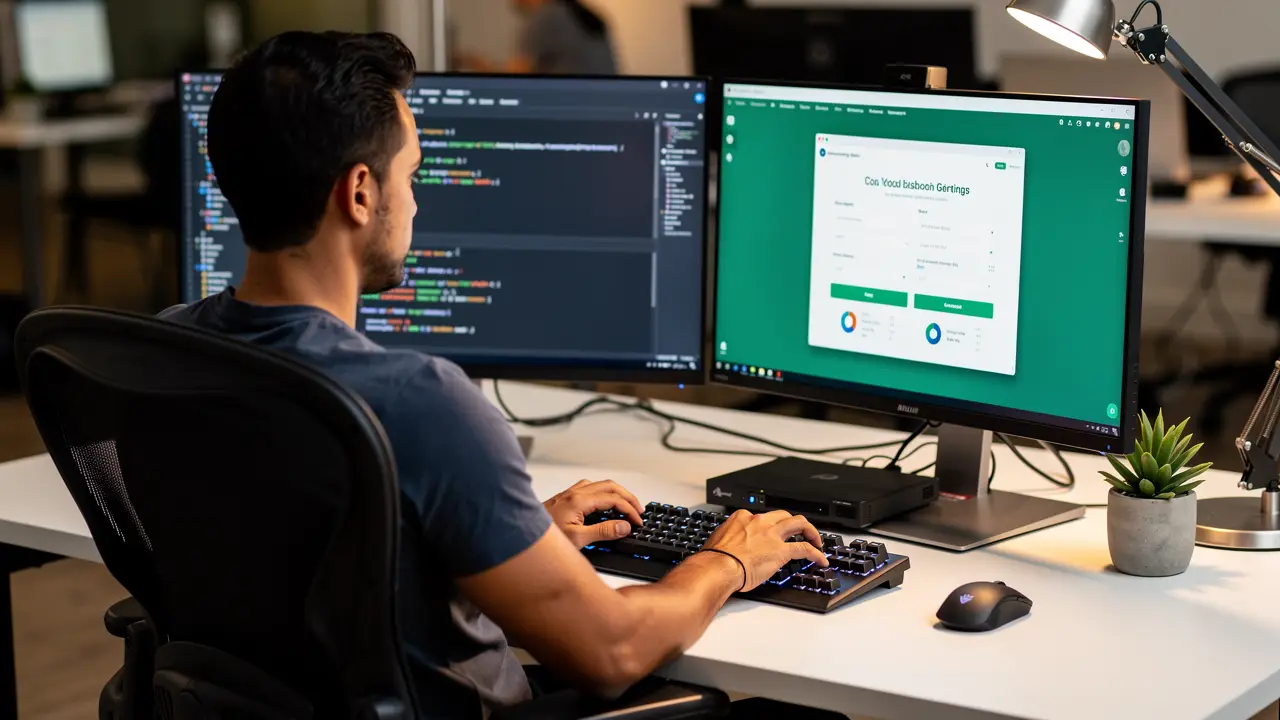
The job is building the part of a website you don't see. The backend.
You build the logic that runs behind the page. A user clicks "buy," and your code checks inventory, processes the order, talks to the payment system, and updates the database. The pretty button is frontend. Everything that happens after the click is you.
You work with databases constantly. Most PHP jobs mean reading and writing to a MySQL database all day. Pulling user records, saving form submissions, running reports.
You build and connect APIs. Modern apps talk to each other over REST APIs. You'll write endpoints that send and receive data in JSON, and you'll plug into other people's APIs too.
You live in a CMS or a framework. Half the PHP world is WordPress work, customizing themes, building plugins, fixing client sites. The other half is application work in Laravel, building real software from scratch. Plenty of developers do both.
The skills to learn, in the order I'd learn them
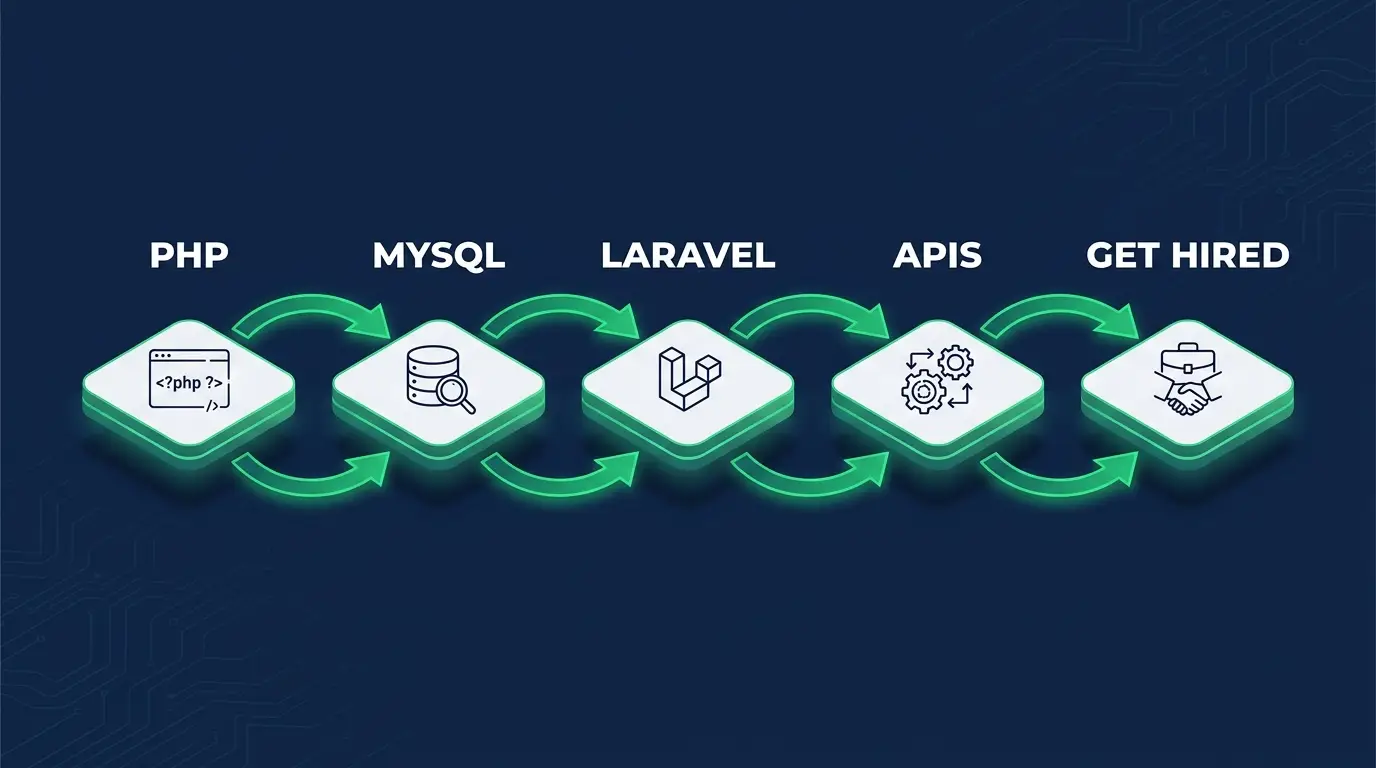
Don't try to swallow this all at once. Go top to bottom.
1. PHP fundamentals. Variables, loops, functions, arrays, then objects and classes. Get comfortable writing small scripts that actually do something before you touch a framework.
2. MySQL and databases. Learn how to design tables, write queries, and connect them to PHP. This is non-negotiable. A PHP dev who can't handle a database isn't a PHP dev yet.
3. MVC and how the web works. Understand the request-response cycle and the Model-View-Controller pattern. This is the mental model every framework is built on.
4. Laravel. This is the one that changes everything. Laravel is the modern PHP framework, and it's the skill that gets you hired. It handles routing, database work, authentication, and a hundred other things you'd otherwise build by hand. If you only go deep on one thing after the basics, go deep here. (I compare it against the alternatives in best PHP frameworks.)
5. REST APIs. Learn to build endpoints and consume them. Almost every real project needs this.
6. Composer. PHP's package manager. You'll use it on day one of any modern project to pull in libraries.
7. Testing. Learn PHPUnit basics. Most beginners skip this, and it's exactly what separates a hobbyist from someone a team will trust with their code.
8. Git and deployment. Version control with Git, and how to actually push a site live. Knowing how to ship is its own skill, and it's a real edge in interviews.
How long this actually takes
Here's the honest version, no inflated promises.
With consistent daily effort, you can be job-ready in one to three months. Not a Laravel architect. Job-ready, meaning you can build a working application and talk through how it works.
The variable is hours. Someone studying two hours a day will get there slower than someone treating it like a full-time push at six or seven hours a day. More focused hours per day means a shorter calendar. That's the whole math.
What matters more than speed is that you finish projects. A half-built app teaches you a fraction of what a finished, deployed one does.
What PHP developers earn
Money you can actually plan around, US figures.
- Entry-level: roughly $60,000 to $75,000.
- Mid-level: around $80,000 to $105,000.
- Senior: $110,000 to $140,000 and up, more if you specialize in Laravel architecture or lead a team.
Freelance and contract work can pay more per hour, but it comes with the usual instability and the job of finding your own clients. I broke the numbers down by region and experience in the full PHP developer salary guide.
Where the jobs actually are
You're not job hunting in a small pond.
Agencies. Web and digital agencies build client sites constantly, and a huge share of that is WordPress and Laravel. Great place to start because you'll touch a lot of different projects fast.
The WordPress economy. Plugin shops, theme developers, maintenance companies. There's an entire industry just keeping WordPress sites running, and it never stops needing people.
SaaS companies on Laravel. This is the higher-paying, more modern end. Real software products built in Laravel, where you're an application developer, not a site fixer.
Freelance. The demand for "fix my PHP site" or "build me a custom Laravel app" is endless. If you want flexibility, this lane is wide open. A lot of these gigs are remote, and I rounded up where to find them in remote PHP developer jobs.
The honest tradeoffs
I'd be breaking my own rule if I sold you this without the downsides.
The reputation tax is real. In certain circles, especially among newer developers chasing whatever's trending, PHP carries less prestige than something like Go or a modern JavaScript stack. If clout matters to you more than a paycheck, know that going in.
You'll meet legacy code. A lot of PHP work means walking into a codebase someone wrote a decade ago with no tests and no documentation. That can be frustrating. It's also exactly why these jobs pay and stay open.
It's not the new hotness. PHP won't make you the most interesting person at the meetup. What it'll make you is employable, quickly, in a market with more demand than supply.
I weigh PHP against the obvious alternative in PHP vs Python if you're genuinely torn between the two.
FAQ
Is PHP still worth learning in 2026? Yes. It runs most of the web, the job market is large and steady, and modern PHP with Laravel is a pleasure to work in. The demand is there whether or not it's fashionable.
Can I get a PHP job with no degree? Absolutely. Most teams care about whether you can build and ship working software. A strong portfolio of finished projects beats a diploma in almost every PHP interview.
Do I need to learn JavaScript too? For backend PHP roles, you can start without it, but you'll want basic frontend skills eventually. Even a little HTML, CSS, and JavaScript makes you far more useful and hireable.
How do I prove my skills without job experience? Build and deploy real projects, then show them. A CRUD app, a small API, a custom WordPress plugin. See PHP developer portfolio examples for what actually impresses hiring managers.
Should I learn WordPress or Laravel? Both, eventually. WordPress gets you working faster and there's endless demand. Laravel pays more and opens up application development. Start with whichever matches the jobs near you.
Are PHP certifications worth getting? A couple carry weight with enterprise employers and most do not. The honest assessment is in PHP developer certifications.
If you're sitting where that student was, talked out of PHP by people who've never shipped a line of it, here's my honest take: learn it. It's a fast, reliable path into a developer salary, and the market is bigger than the internet gives it credit for.
When you're ready to build the skills for real, our PHP developer career path walks you through it step by step. No hype, just the work that gets you hired. I'll see you in there.