Remote PHP Developer Jobs: Where They Are and How to Actually Get One

On this page
Are there actually remote PHP jobs out there, or is every listing either senior-only or already snapped up before you can hit apply?
Let me answer you straight, because I know that's the real question sitting under all the others. Yes. They exist, there are a lot of them, and PHP is honestly one of the easier developer paths to work fully from home.
But I won't pretend the worry is made up. The thing that gets people isn't a shortage of remote PHP work. It's that the good listings hide in places most beginners never look, and the ones that show up on the big job boards really do tilt senior and really do get buried in applicants fast. So it feels picked-over when you're really just standing in the wrong line.
I've watched students land fully remote backend roles without ever moving cities. I've also watched solid coders fumble it because they applied like it was a regular office job. There's a difference, and it decides everything.
So let me walk you through where these jobs actually live, what they pay, and how to stop getting filtered out before a human ever opens your code.

Why PHP is unusually remote-friendly
Some jobs fight remote work. Backend PHP basically invites it.
The work is fully digital. You're writing code, talking to a database, pushing to a repo. There's no warehouse to stand in, no machine to be near. Everything you touch lives on a server you reach over the internet anyway.
Your work is verifiable. A manager doesn't have to watch you type. They can see your commits, review your pull requests, and check whether the feature works. Remote managers love roles where output speaks for itself, and PHP is one of those.
The freelance and WordPress economy is enormous. Roughly 40% of the web runs on WordPress, and WordPress is PHP. That's millions of sites that need someone to fix, extend, and rebuild them. Most of that work was already being done by people scattered across the world before "remote" was a buzzword.
The work is naturally async. A bug ticket, a feature spec, a code review. None of that needs everyone in the same room at 9am. You pick up the ticket, you ship it, you move on.
Add it up and you get a field where being remote isn't a special arrangement you have to beg for. It's the default a lot of the time.
Who's actually hiring remote PHP developers
Four buckets, and they hire differently.
Web agencies. They build sites for clients and they're almost always understaffed. Lots of them are remote-first or remote-friendly because their clients are everywhere anyway. Great for getting volume of real-world experience fast.
WordPress shops and plugin companies. Companies that build themes, plugins, or run big WordPress sites. This is a steady, underrated corner of the market. Less glamorous, very employable.
SaaS companies running Laravel. This is where the higher salaries tend to sit. Real product, real engineering team, real growth. If you've got Laravel chops, this is the bucket to aim at over time.
Freelance clients. Individual businesses who need a thing built or maintained. You find them through platforms or referrals, you set your own rate, you work when you want. More freedom, less stability. We'll get to the honest version of that.
The exact job titles to search for
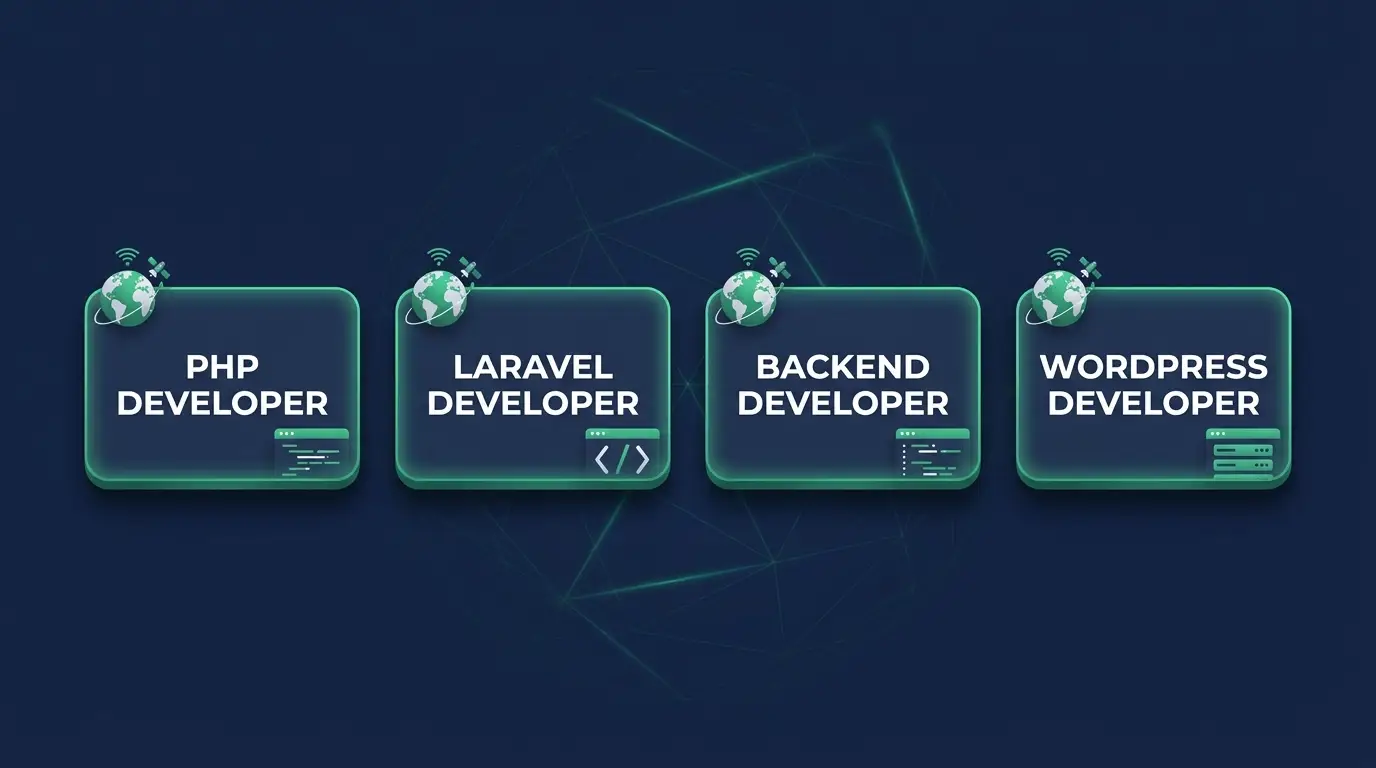
This is where people lose jobs they were qualified for. They search "PHP jobs" and miss half the listings because companies title the same role five different ways.
Search all of these:
- PHP Developer
- Laravel Developer
- Backend Developer (PHP)
- WordPress Developer
- Full-Stack PHP Developer
- Web Developer (PHP)
Same skills, different labels. If you only search one, you're applying to a fraction of the market. Set up a saved search for each.
Where the remote jobs actually hide
LinkedIn, with the remote filter on. This is the workhorse. Search each title above, set location to "Remote," and then do the part most people skip: save the search and turn on the alert. New roles get dozens of applicants in the first day. Being early is half the game.
Remote-specific job boards. We Work Remotely, Remote OK, and Working Nomads all carry steady PHP and Laravel listings. These boards exist because the company already decided to hire remote, so you're not fighting that battle.
Laravel-specific boards. Laravel.io has a jobs section, and Larajobs is built entirely around Laravel roles. The competition here is more focused, but so is the audience. If Laravel is your strength, this is some of the highest-signal hunting you can do.
Agency career pages directly. Find agencies whose work you like, go to their site, check the careers page. A lot of agency hiring never hits a big board at all. Applying directly puts you in a much smaller pile.
Freelance platforms. Upwork, Codeable (which is WordPress-focused), and PeoplePerHour. Slower to build on, but a real path, especially for WordPress work and for earning while you keep applying to salaried roles.
How to stand out for a remote role specifically
Here's the thing nobody tells you. Getting a remote job is a slightly different game than getting any job. They're not just asking "can you code." They're asking "can I trust this person to work without me standing over them."
Show real apps on GitHub, not tutorials. A pinned repo of something you actually built, with a clean README and a live demo link, does more than any line on a resume. They can click it and see that you ship. If you're not sure what that looks like, I broke it down in PHP developer portfolio examples.
Prove you're reliable. Remote hiring is risk-reduction. Reply to emails quickly. Show up to the interview early. Hit the small deadlines in the process. Every one of those is you quietly answering the trust question.
Communicate well in writing. Async work runs on clear writing. When you describe a project, be specific and organized. A messy, rambling message is a red flag for a remote manager. A tight one is a green light.
Show you can self-direct. Mention a time you scoped your own work and finished it without anyone managing you. That's the exact muscle remote teams need, and most junior applicants never bring it up.

What remote PHP work pays
Salaried PHP developer roles in the US generally run from around $60k for juniors up to $130k to $140k for experienced and senior people, with Laravel SaaS roles landing on the higher end. I go deeper on the numbers in the PHP developer salary guide.
Freelance is hourly. New freelancers often start in the $25 to $50/hour range, and experienced PHP and Laravel freelancers regularly charge $75 to $150/hour once they have a track record and a niche.
The quiet advantage of going remote: your market stops being your city. You can be in a low-cost town and earn a salary set by companies in expensive ones. That gap is real money, and it's the whole reason remote is worth chasing.
The honest tradeoffs
I'm not going to sell you the laptop-on-a-beach fantasy.
Remote takes discipline. No one's watching, which sounds great until it's 2pm and you've done nothing. The people who thrive remote are the ones who can run their own day.
It can be isolating. You'll miss the hallway chatter and the easy "hey can you look at this" moment. You have to build connection on purpose.
Contract roles can vanish. A 6-month contract is exactly that. Great pay, no guarantee of renewal. Always keep a little pipeline going.
WordPress freelance has a floor and a grind. There's endless work, but a lot of it is cheap and repetitive, and you're also doing your own sales and invoicing. Niche down and raise your rates or you'll burn out doing $50 plugin fixes forever.
The reframe to keep: remote work doesn't remove the boss, it makes you the boss of your own day, and that's a skill you have to earn, not a perk you get handed.
FAQ
Are remote PHP developer jobs hard to get as a beginner? Harder than mid-level, but doable. Companies worry a junior needs hand-holding that's tough to do remotely. You beat that by over-showing reliability and shipping real projects they can click on. Agencies and WordPress shops are the friendliest entry points.
Do I need Laravel to get a remote PHP job? No, but it widens the door a lot. Plenty of remote work is plain PHP or WordPress. Laravel just unlocks the higher-paying SaaS roles, so it's worth learning once you've got the basics down.
Can I get a remote PHP job from outside the US? Yes, and that's one of the best parts. Remote-first companies and freelance platforms hire globally. You may earn less than a US-based dev, but often far more than local rates where you live.
Is freelance or a salaried remote job better? Salaried gives you stability, benefits, and a steady paycheck. Freelance gives you freedom and a higher ceiling, with more risk and more admin. Many people freelance to build experience, then move to a salaried remote role for the calm.
What skills get me hired fastest for remote PHP work? PHP fundamentals, MySQL, Git, and one framework (Laravel or solid WordPress). After that, the thing that actually closes the deal is clear written communication and a portfolio that proves you finish what you start.
If you're staring at remote listings wondering whether you're ready, the honest answer is usually "closer than you think." Build one real app, put it on GitHub, set up your saved searches, and apply like the reliable remote teammate you already are.
Not sure your foundation is solid yet? Start with how to become a PHP developer and the full PHP developer career path. Get the skills in order, then come back and go hunting. I'm rooting for you, and that DM I mentioned? He's interviewing for a remote Laravel role next week.