PHP Developer Portfolio Examples That Actually Get You Hired
On this page
It's 11pm and you're staring at your GitHub. Eleven repos. All forks of someone else's Laravel tutorial, half of them frozen at the exact commit where the YouTube video ended. The little green squares trail off three weeks ago. You've applied to thirty PHP jobs this month and your inbox is a wall of silence.
You know PHP. You can build a CRUD app in your sleep. So why does nobody call back?
Here's the thing nobody tells you when you're learning: a hiring manager spends about nine seconds on your application before they decide. They are not reading your resume line by line. They are looking for one thing, proof that you can ship something real, something that runs, something they can click on.
Tutorial follow-alongs don't prove that. They prove you can type what a screen tells you to type. Every other applicant has the same ones.
What gets you the interview is a link. Something live, something yours, something that breaks in interesting ways because you actually built it. That's what this post is about, the PHP projects worth building and exactly how to show them off so a stranger trusts you in those nine seconds.
Why a portfolio beats a resume for PHP roles
Here's the uncomfortable truth about junior and mid-level PHP hiring. A resume tells someone you say you can build things. A working project shows them you already did.
When a hiring manager opens 80 applications for one opening, they are not reading carefully. They are looking for a reason to move you to the "yes" pile in about five seconds. A list of skills doesn't give them that reason. A link to a Laravel app they can click, log into, and poke at does.
And PHP is one of the most portfolio-friendly languages out there. You can deploy a full app cheaply, the ecosystem is huge, and the work is concrete. Nobody has to imagine what you built. They can use it.
GitHub matters just as much. A clean repo with a real README is a window into how you actually work. Your commit history, your folder structure, the way you name things, whether you wrote a single test. That's the stuff a resume can't fake and an interview can't fully hide.
If you want the bigger picture of breaking in, I wrote a full guide on how to become a PHP developer that pairs well with this. This post is about the proof you bring to that journey.
What a strong PHP portfolio actually includes
You don't need ten projects. You need a few that each prove something different.
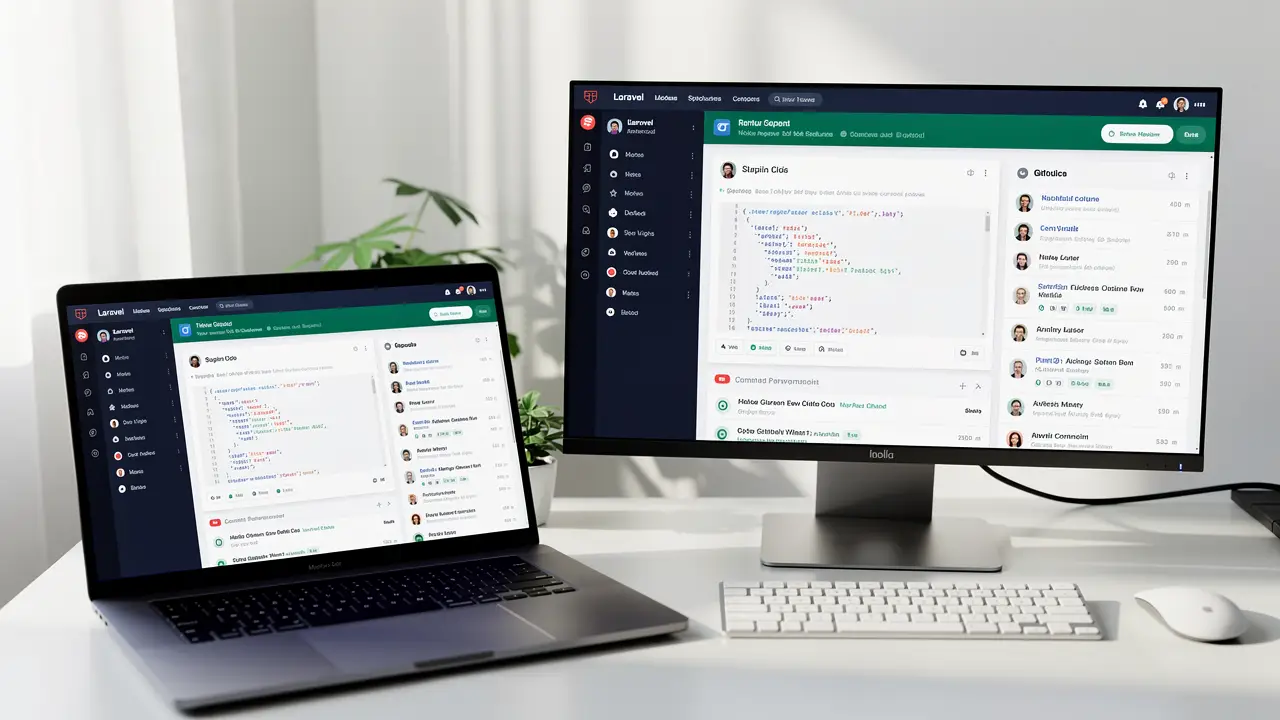
A deployed Laravel app. Live, on a real URL, with a login you can hand someone. This is the centerpiece. Laravel is what most PHP shops hire for now, and a running app shows you understand routing, Eloquent, auth, and migrations in practice. (If you're still picking a stack, my breakdown of the best PHP frameworks covers why Laravel keeps winning.)
A REST API. Endpoints, proper status codes, validation, and authentication. APIs are everywhere in real jobs, and most beginners avoid them because they feel abstract. Building one separates you immediately.
A CRUD or SaaS project with a real database behind it. Something with users, relationships between tables, and data that persists. CRUD sounds boring, but every business app is CRUD wearing a nicer outfit. Show you can model data and you've shown the core of the job.
A WordPress plugin or custom theme. A huge slice of paid PHP work is WordPress. A small custom plugin proves you can work inside someone else's codebase and ship something useful, which is exactly what client work feels like.
Clean GitHub repos with READMEs. Every project gets a README that says what it does, how to run it locally, and a screenshot or demo link. No README is the single most common thing that makes good code look amateur.
Projects you can build this week
You don't need a startup idea. You need scoped, finishable projects. Here are four I'd put in front of any junior I'm mentoring.
A Laravel task or mini-CRM app. Users sign up, log in, and manage tasks or contacts. Add filtering, a search box, and one chart. This single project demonstrates auth, CRUD, relationships, and a real UI. It's the one I'd build first.
A small SaaS with auth and billing. Take that CRM and add Stripe with a free and paid tier. Even a fake "Pro" plan that just unlocks one feature shows you understand subscriptions, webhooks, and gated access. That's the exact pattern behind most real products, and almost no junior portfolio has it.
A REST API with documentation. Build an API for a book library or a recipe box. Add token auth, validation, and a README (or a simple docs page) listing every endpoint with example requests. The documentation is half the point. It shows you think about the people who use your code.
A custom WordPress plugin. Pick one annoying thing and fix it. A plugin that adds estimated reading time to posts, or a custom block, or a small admin dashboard widget. Scope it tiny and ship it. Bonus points for putting it on the WordPress plugin directory.
Build two or three of these well rather than five half-finished. A finished, deployed task app beats an ambitious SaaS that throws a 500 error on the homepage every time.
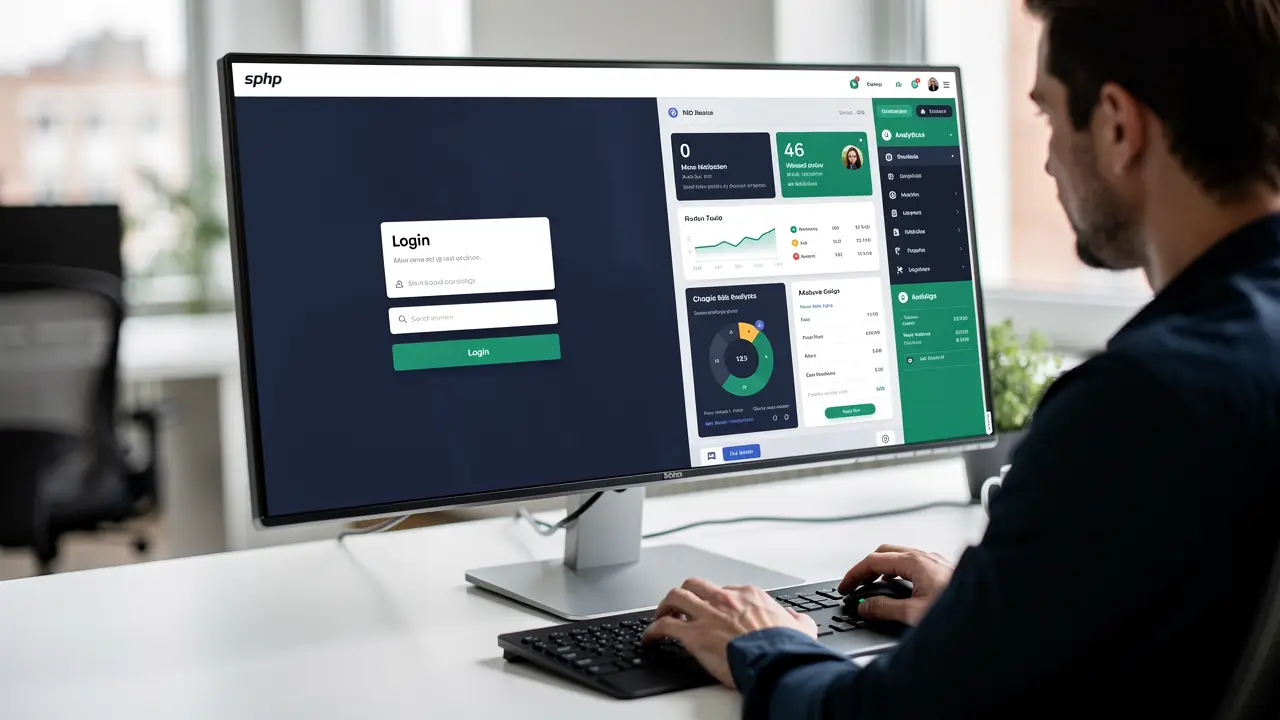
How to present it so a hiring manager gets it in five seconds
This is where most people lose the job they earned.
You did the work. Now make it impossible to miss.
Lead with a live demo link. Not a video. Not a screenshot. A URL they can click and use right now, with demo login credentials right there on the page so they don't have to register.
Put the GitHub link right next to it. They'll check the code if the demo impresses them. Make the jump one click.
Write three or four lines of case notes per project. What problem it solves, what you built it with, one thing that was hard and how you solved it. Skip the life story. A hiring manager reading "Laravel + MySQL + Stripe. Handles subscription billing with webhook verification. The tricky part was retrying failed payments" already knows you can do the job.
Here's the line I want you to remember: a portfolio's job is not to list what you know, it's to remove every reason someone has to doubt you.
Host it simply. A one-page site, or even a tidy GitHub profile README with pinned repos, works. The container matters far less than the projects inside it.
Common mistakes that sink a portfolio
Tutorial clones with no deployment. A to-do app that looks exactly like the YouTube video, sitting in a repo with three commits, all named "update." Hiring managers have seen that exact app a thousand times. Build it, then change it, then deploy it.
Messy repos. Commits like "fix" and "asdf," no README, commented-out code everywhere, your database password sitting in a committed .env file. That last one isn't just messy, it's a red flag about security judgment.
Nothing actually running. A portfolio of GitHub links where not one project is live. If they have to clone and run your code to see it work, most won't bother. Deploy something.
Ten weak projects instead of three strong ones. Volume reads as noise. Depth reads as a developer.
FAQ
How many projects should a PHP portfolio have? Three to five strong ones, with at least one live and deployed. Quality and a working demo beat quantity every time.
Do I need a fancy portfolio website? No. A clean one-page site or a well-organized GitHub profile with pinned repos and good READMEs is plenty. Spend your energy on the projects, not the wrapper.
Can I get a PHP job with no work experience? Yes, if your projects do the talking. A deployed Laravel app with auth and a real database is the closest thing to experience you can show before anyone hires you.
Should my portfolio be Laravel or plain PHP? At least one polished Laravel project, since that's what most shops hire for. A little plain PHP or a WordPress plugin alongside it shows range.
Is GitHub enough, or do I need live demos too? Both. GitHub proves how you write code; a live demo proves it actually works. Together they answer every question a hiring manager has.
Your portfolio is the part of the job hunt you fully control. You can't make a company reply, but you can make it so a hiring manager who clicks one link can't find a reason to say no.
Pick one project from this list and start it today. Get it live by the weekend. Then do the next one.
If you want a structured path instead of guessing what to build next, the PHP developer career path at codingphase walks you from your first line of PHP to a deployable portfolio, and when you're ready to look, my guide to remote PHP developer jobs shows you where to point all that proof.
You've got this. Go build the thing, then send me the link.