Omnisend vs Klaviyo: Which Ecommerce Email Platform Should You Actually Use?
On this page
A guy I helped last year sold candles. About 3,000 subscribers, decent revenue, nothing wild. He'd been on Klaviyo for eleven months because a podcast told him it was the standard, and when we opened his account together he had two flows running: a welcome email and an abandoned cart. That's it. No segments. He'd never opened the analytics tab. He was paying for a jet engine to power a ceiling fan, and he felt bad about it, which was the part that got me, because none of it was his fault.
I've built and managed email systems for ecommerce stores, and I've watched founders torch money on platforms they used at ten percent of their power. Both of these tools are good. The question isn't which one is better, it's which one fits your store at your size, right now.
The one-line verdict
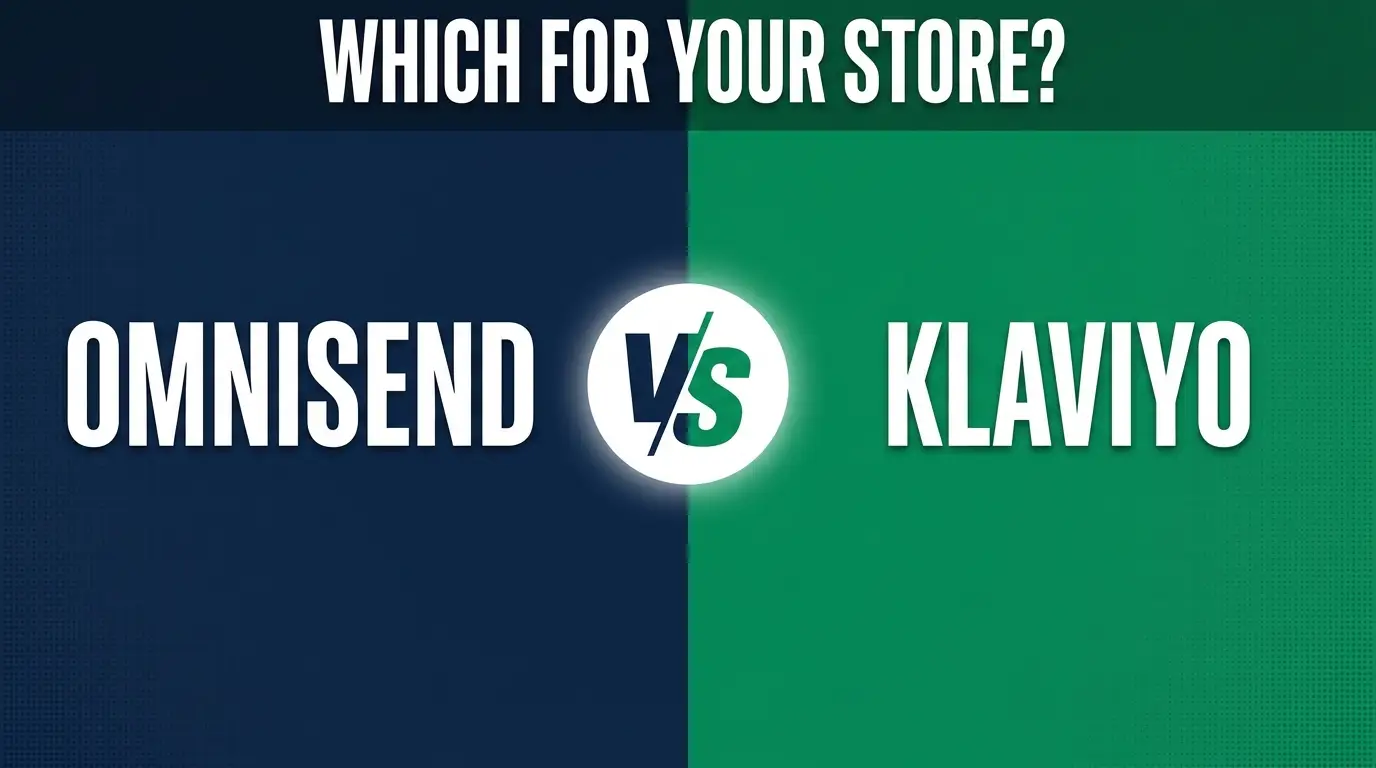
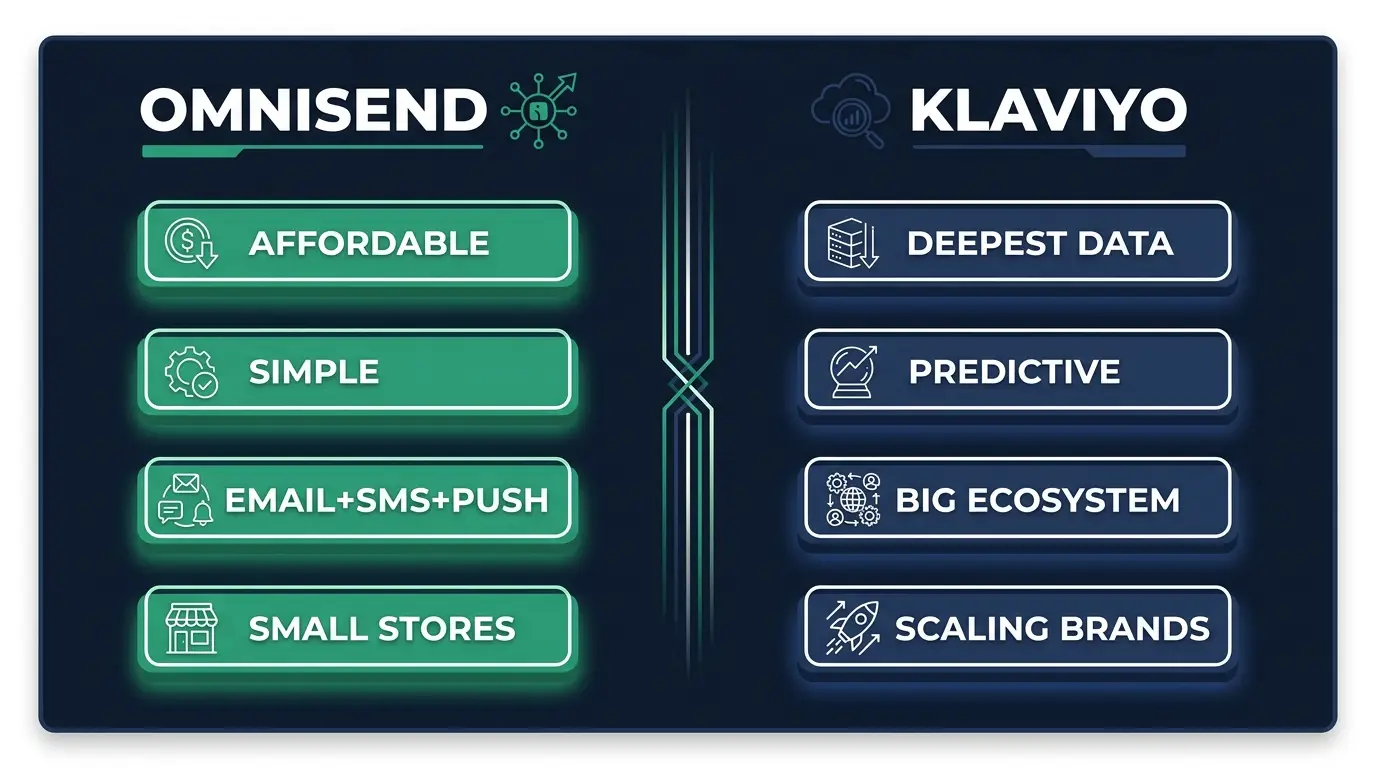
Omnisend is the better pick for small-to-mid stores that want strong ecommerce features, email plus SMS plus push in one place, and a bill that doesn't scare them. It's simpler, faster to learn, and the free tier is generous enough to actually launch on.
Klaviyo is what data-heavy brands standardize on when they're scaling. Deepest segmentation, predictive analytics, the biggest integration ecosystem money can buy. It costs more and asks more of you, and in the right hands it prints revenue.
If you remember nothing else: Omnisend gets you shipping fast and cheap, Klaviyo gets you scaling deep. Most small stores are happier and richer on Omnisend. Most stores chasing serious growth end up on Klaviyo eventually.
Now the honest details.
Pricing and value
I'm hedging here on purpose. Both companies tweak their tiers regularly and the exact numbers shift, so check their current plans before you commit. But the shape of the pricing has held steady for years, and the shape is what should drive your decision.
Omnisend is usually cheaper at smaller list sizes. The free plan sends a meaningful volume every month, and the paid tiers tend to come in noticeably under Klaviyo for the same contact count, especially under 10,000 subscribers. For a store watching every dollar, that gap is real money back in the ad budget.
Klaviyo's pricing climbs faster as your list grows, and it bills on active profiles. The counterargument brands make is that Klaviyo's revenue per email runs higher because the targeting is sharper, so the bigger bill pays for itself. Sometimes that's true. Sometimes you're just financing horsepower you never touch, like my candle guy.
At small scale, Omnisend usually wins on value. At large scale with someone who can actually use the advanced features, Klaviyo's cost stops looking crazy.
If you're weighing the cheaper end of the market too, my Klaviyo vs Mailchimp breakdown covers where Mailchimp fits, and the Klaviyo vs Shopify Email comparison covers the free-but-limited native option.
Ecommerce automation and flows
This is where email actually makes you money. Abandoned carts, welcome series, post-purchase follow-ups, win-backs. The stuff that runs while you sleep.
Omnisend ships with clean pre-built ecommerce automations and a visual builder that's easy to wire up. Abandoned cart, browse abandonment, order confirmation, cross-sell. You can have the money-makers live in an afternoon, and because the whole thing was designed for stores, you're never bending a general-purpose tool into ecommerce shape.
Klaviyo does all of that and then keeps going. Deeper conditional logic, more granular triggers, branching on data Omnisend doesn't track as richly. Say you want a flow that fires differently for a customer's third purchase than their first, only in one product category, only above a certain spend. Klaviyo handles that without blinking.
For most stores, Omnisend's automations capture the vast majority of the revenue anyway. Klaviyo's extra depth starts mattering when your catalog is large and your customers behave in genuinely different ways.
Segmentation and analytics
Klaviyo's home turf. I won't pretend otherwise.
Klaviyo's segmentation goes deeper than anything Omnisend offers: predicted lifetime value, predicted next order date, churn risk. You can slice a list in ways that feel almost unfair. The reporting ties revenue back to specific flows and messages precisely enough that you're making decisions instead of guesses.
Omnisend covers what most stores need. Purchase behavior, engagement, campaign activity. It isn't trying to be a data science suite, and the analytics stay clear instead of drowning you in dashboards.
So: if your growth plan runs on squeezing more out of existing customers through sharper targeting, Klaviyo's depth earns its price. If you mostly need to know who bought, who didn't, and who's drifting away, Omnisend has you covered.
The thing I tell every store owner is that advanced segmentation only pays off if somebody is actually there to use it. A powerful tool nobody drives is just an expensive bill.

Ease of use
Omnisend is simpler. Friendlier interface, gentler curve, and a non-technical founder can build a decent email program without ten hours of tutorials first. When you're a team of one doing everything yourself, that simplicity is worth real money.
Klaviyo is more powerful and, predictably, more complex. New users get overwhelmed by the options. The depth that makes it great on month six is the same depth that makes it intimidating on day one, and I'd rather tell you that up front than watch you quit in week two.
Want to be sending good email by the weekend? Omnisend. Willing to climb? Klaviyo repays the effort.
SMS and channels
Both bundle more than email, which matters more every year as inboxes get crowded.
Omnisend has been all-in-one from the start. Email, SMS, and web push under one roof, managed from the same automations. Having a text and an email fire from the same abandoned-cart flow, without stitching two tools together, saves a small team real hours.
Klaviyo's SMS is also strong, and it inherits the same profile data that powers the email targeting, so your texts get that same sharp segmentation. In the US it's a serious channel.
Call it roughly even. Omnisend wins on simplicity, Klaviyo wins on data. Watch the SMS pricing on both, because message costs stack up fast and vary a lot by region.
Which should you pick
Wishy-washy comparisons help nobody, so:
New or small store, under ~5,000 subscribers, tight budget, wearing every hat: Omnisend. Start free, get your core flows live, keep the money in inventory and ads. Don't buy horsepower you can't drive yet.
Mid-size, growing steadily, comfortable with tech: honestly a toss-up, and I've seen both work. If budget decides it, Omnisend. If you can already picture yourself building predictive segments and you'd rather migrate zero times than once, start on Klaviyo.
Scaling brand, real revenue, a marketing person or team, a plan built on data: Klaviyo. This is the case it was built for, and the price stops mattering when the targeting is driving sales.
Overwhelmed and just want to start: Omnisend. The best email platform is the one you actually use, and simplicity wins more often than founders like to admit.
There's no wrong answer between two good tools. There's only the wrong fit for your stage.

FAQ
Is Omnisend good enough to eventually replace Klaviyo? For many small-to-mid stores, yes, Omnisend covers everything you need for a long time. Stores usually move to Klaviyo when their segmentation and data needs outgrow what Omnisend tracks, not because Omnisend "stopped working."
Is Klaviyo worth the higher price? It is when you have someone using the advanced segmentation and predictive analytics that justify the cost. If those features would sit untouched, you're overpaying, and Omnisend delivers most of the revenue for less.
Can I switch from Omnisend to Klaviyo later? Yes, and plenty of brands do exactly that as they scale. Migrating contacts and rebuilding flows takes work, so if you're confident you'll need Klaviyo's depth soon, it can be worth starting there to avoid a second setup.
Which is better for a brand-new Shopify store? Omnisend, usually. Both integrate deeply with Shopify, but Omnisend's free tier, simpler setup, and lower cost make it the safer place to launch before you know what you'll need.
Do I need SMS on day one? No. Get your email flows working first, since that's where the fastest revenue lives. Add SMS once email is dialed in. Both platforms let you turn it on when you're ready.
Here's the part almost nobody mentions when they compare these tools.
Whichever platform a store picks, somebody has to run it. Build the flows, write the campaigns, manage the segments, read the reports. Store owners pay well for that somebody, usually $200 to $1,000 a month per store, often more, for work that becomes routine once you know the systems.
That somebody can be you.
That's the whole idea behind the email marketing specialist path at CodingPhase. You learn to build and manage ecommerce email systems on platforms exactly like these, the skill that turns "which tool is cheaper" into "which clients do I take on." If you want the full picture, start with how to become an email developer and what the email developer salary actually looks like. A lot of people run this as a one-person agency from a laptop.
Inside CodingPhase you get all of it: Diamond membership is $42/month or $255/year with a 7-day money-back guarantee, and if you want lifetime access plus live weekly mentorship, the Tech Accelerator is a one-time $1,500. That unlocks the guided career paths and the job board where this work gets posted.
Pick the platform that fits your store. Then, if you liked learning how it works, come learn to get paid for it. I'll be here when you're ready to start.