How to Use Email Marketing to Drive Sales (Without Annoying People)
On this page
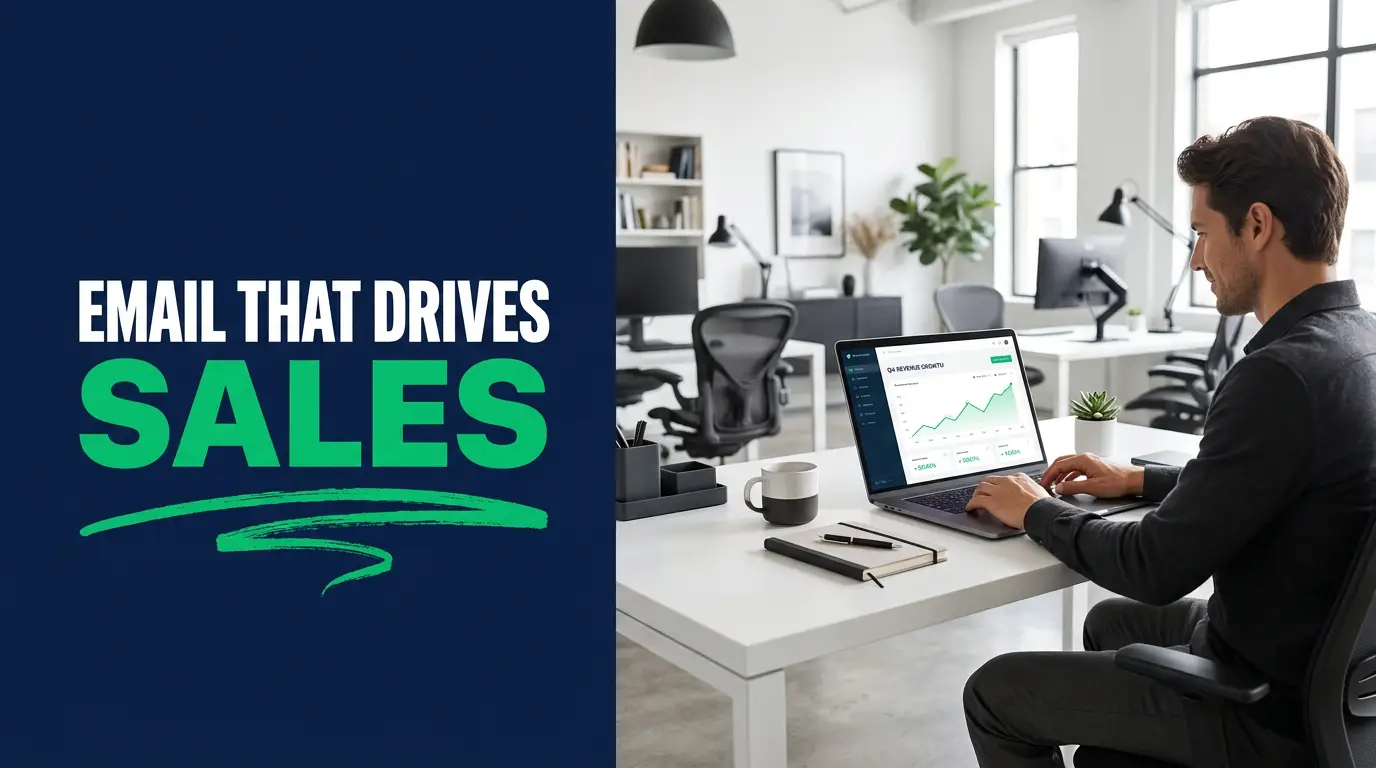
A friend messaged me last year, panicking a little, because his little supplement brand had done about forty grand that month and he wanted to know why the number felt fragile. I asked one question. What do your emails do? He blinked at me through the phone. He had a list. Eleven thousand people who had bought from him or almost bought. And it was sitting there doing nothing, no welcome, no cart recovery, no follow up after a purchase, just a monthly newsletter he wrote when he remembered.
That list should have been paying his rent. Instead it was a spreadsheet.
I see this constantly. People pour money into ads to get a click, the click leaves without buying, and that is the end of the relationship because nothing catches them. Email is the thing that catches them. Done right it is quietly the highest-return channel a business has, and done wrong it is the reason someone marks you as spam and never sees you again. Same tool, opposite outcomes. The difference is entirely in how you run it.
So let me give you the version I wish my friend had known two years earlier.
Why email still outsells almost everything per dollar
Here is the uncomfortable truth for every shiny new channel. You do not own your Instagram followers or your TikTok reach. An algorithm decides, on a Tuesday, whether the people who chose to follow you ever see you again, and mostly they do not.
You own your email list. It is a direct line into an inbox a person checks every day, with no platform in between taking a cut or throttling your reach for fun.
That is why the returns are what they are. When people call email the highest ROI channel in marketing, they are not exaggerating for a headline. A well-run program regularly returns thirty or forty dollars for every dollar spent, and the reason is boring. You are talking to people who already raised their hand. Selling to someone who already likes you is cheap. Selling to a stranger on a cold ad is expensive. Email is mostly the first thing.
There is a career point buried in here too, and I will come back to it, because the person who can build these systems is worth a lot more than the person who writes one clever caption.
Build the list the right way, or nothing else matters
Before any of the clever flows, you need people to send to, and how you get them decides everything downstream.
The wrong way is buying a list or scraping addresses. You will land in spam, tank your sender reputation, and burn the whole thing before you send a real email. Do not do it, ever, no matter who sells you on it.
The right way is trading something for a voluntary opt in. A discount on a first order. A genuinely useful guide. Early access to a drop. The offer matters more than the popup design, so make it worth an address. "Sign up for our newsletter" converts almost nobody because it asks for something and offers nothing back. "Get 10% off your first order" converts because there is a reason to say yes right now.
Two things I would push you on. Use a real opt-in, meaning the person actively agrees, ideally confirmed by a click. It keeps your list clean and keeps you on the right side of privacy law, which is not optional anymore. And put the capture where intent is highest: the popup on arrival and a reminder near the cart for a store, inside the article for a content site, where someone is already reading about the thing you sell. If you run a store, the deeper mechanics are worth their own read, and I went further in this piece on ecommerce email marketing.

Segmentation, without overcomplicating it
Segmentation sounds like a big-company word. It is just this: stop sending the same email to everyone.
A person who bought three times this year should not get the same message as someone who has never opened a single email. Sending your "we miss you, here's 20% off" to a loyal customer who was about to pay full price tomorrow is how you hand money back for no reason.
You do not need forty micro-segments to start. You need a handful that actually change what you would say.
New subscribers who have not bought yet. They need trust and a reason to take the first step.
Active customers who buy regularly. They need new products and restock nudges, and to feel like regulars rather than targets.
At-risk people who used to open and buy and have gone quiet. They need a reason to come back before they forget you exist.
That is enough to matter. Sell to both small businesses and big teams, or across wildly different product lines, and you will want more, because there is real money in getting granular. But three segments beat one blast, and one blast beats the newsletter my friend forgot to send.
The flows that actually make the money
Here is the part people skip, and it is the part that prints. Campaigns are the emails you send manually, the sale announcement, the new drop. Flows are the automated emails that fire on their own when someone does something. Flows are where most of the revenue hides, because they run while you sleep and they catch people at the exact moment they are deciding.
Four of them do most of the work.
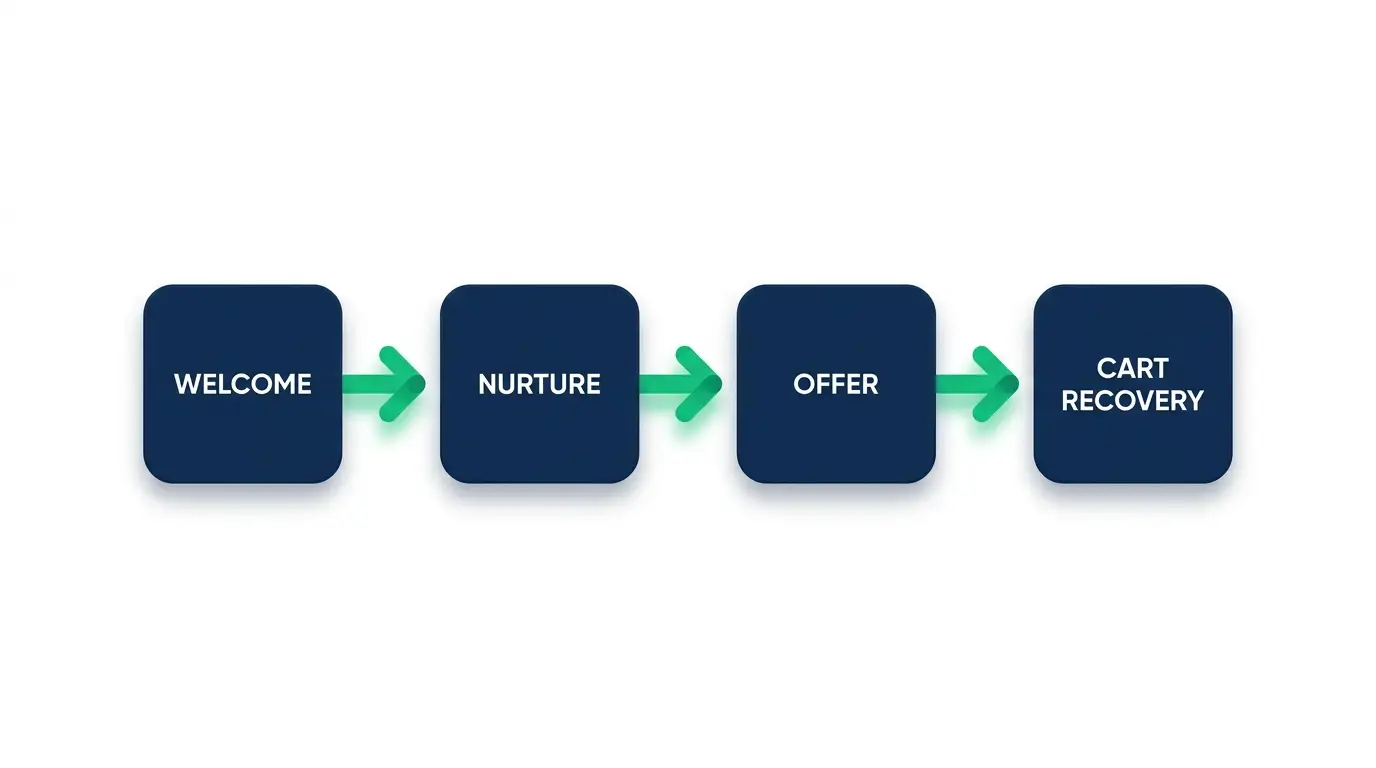
The welcome flow. Someone just gave you their address. This is the most attention you will ever have from them, so do not waste it on a limp "thanks for subscribing." Introduce who you are and why you exist, deliver the discount or guide you promised, and make one clear ask. The first email in a good welcome series often outperforms everything else you send all month, because the interest is at its peak and cooling by the hour.
The abandoned cart flow. Someone added a product and left. They were one nervous second from buying. A short sequence that reminds them what they left, handles the quiet objection (shipping, sizing, whether it is worth it), and gives a gentle nudge recovers a chunk of sales that were otherwise gone. This single flow pays for most email tools ten times over, and it stuns me how many stores still do not run it.
The post-purchase flow. The sale is the start of the next one, not the end. Someone who just bought is the warmest person you have. Thank them, tell them how to get the most from what they bought, and later, when the timing is right, suggest the natural next thing. This is how a one-time buyer becomes a repeat customer, and repeat customers are the whole game, because you already paid to acquire them once.
The win-back flow. People go quiet. That is normal. A win-back sequence reaches out to someone who has not engaged in a while with a reason to return, sometimes a discount, sometimes just a "here's what you missed." Some come back. The ones who do not, you can finally stop mailing, which protects your deliverability so the people who do want you keep landing in the inbox.
Set these four up and they run without you. That is the closest thing to free money in marketing, and it is the exact thing my friend's list was missing.
How to write an email that actually sells
You can have perfect flows and still sell nothing if the emails read like a brochure. Selling in an inbox is a specific craft, and most of it comes down to respecting the reader.
The subject line has one job, and it is not to trick anyone. It earns the open by being honestly interesting. Curiosity works, clarity works, and cheap bait ("RE: your order" when there is no order) works exactly once before it trains people to distrust you forever. I would rather a slightly lower open rate from an honest subject than a spike from a lie that costs me the next hundred emails.
Write to one person, not a mailing list. "Hey, quick thing" beats "Dear valued customer" every time. Read your draft out loud, and if it sounds like a press release, rewrite it until it sounds like you texting a friend who happens to be interested.
Every email needs one clear action, not five links pulling in five directions. One thing you want them to do, stated plainly, with a button that says what happens when they click it. Confused readers do not buy, they close the tab.
And here is the reframe I want you to keep: every good email is a conversation that happens to sell. The moment your list feels like a broadcast tower, people tune out. The moment it feels like a person who gets them, they buy, and they forgive the occasional pitch because the rest of the time you were actually useful. If you want the fuller version of this, our post on email marketing best practices breaks the writing down further.
Timing and cadence, so you sell without becoming noise
The fastest way to get muted is to email constantly with nothing to say. The second fastest is to email so rarely that people forget who you are and report you as spam when you finally show up.
There is no universal perfect frequency, and anyone who hands you an exact number for every business is guessing. Send when you have something worth their attention, and be consistent enough that your name in the inbox feels familiar instead of alarming. For a lot of stores that lands around one to a few campaigns a week on top of the flows, but your list will tell you. Watch what happens to unsubscribes and complaints when you push the pace. Those two numbers are your speed limit.
Your flows handle the precise timing on their own. A cart email that fires an hour after abandonment catches the moment. A win-back that waits sixty days respects that people have lives. That is the beauty of automation, it gets the timing right at scale in a way you never could by hand.
The metrics that actually matter
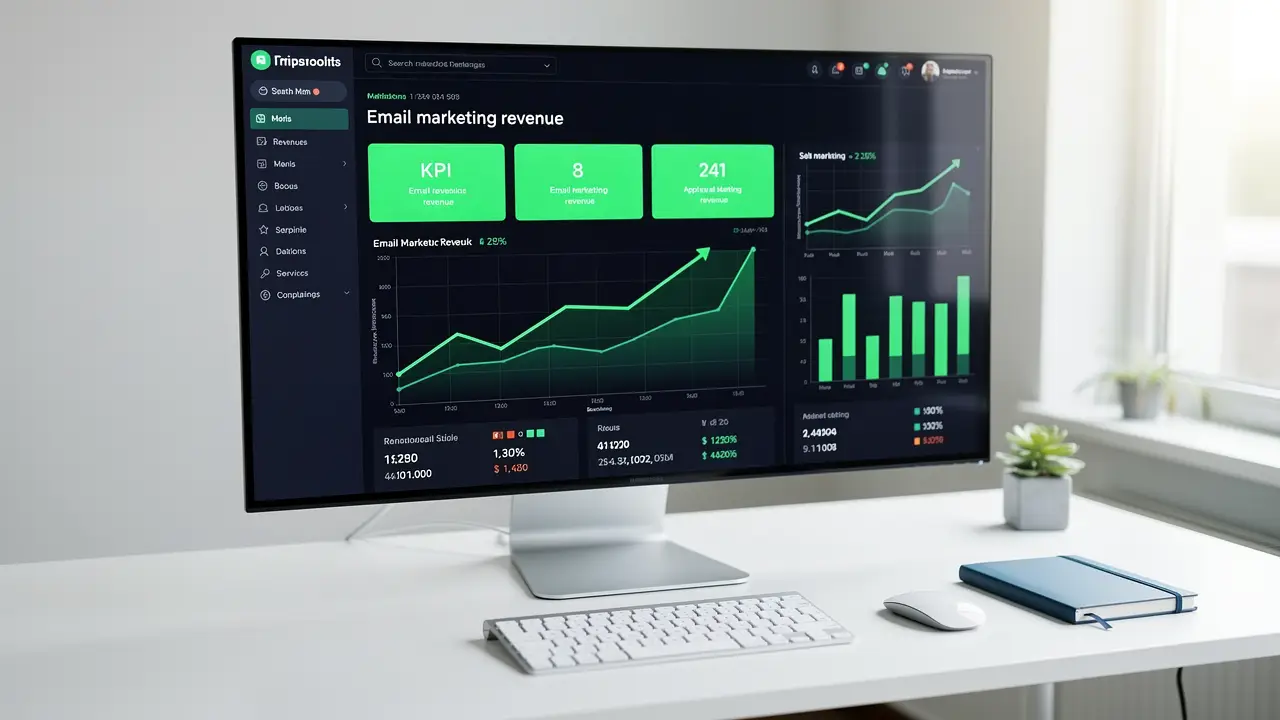
Most people stare at open rate like it means something. It barely does anymore, and it got even flakier once inbox providers started pre-loading images and inflating the number. Open rate tells you a subject line was okay. It does not tell you that you made a dollar.
Watch revenue per email instead. Total revenue an email or flow generated, divided by how many people got it. That single number tells you whether an email did its job, and it will reorder your priorities fast, because your beautiful newsletter might be losing to a plain-text cart reminder you wrote in four minutes.
A few others earn their place. Click rate is a better engagement signal than opens, because a click is a real choice someone made. And your unsubscribe and spam-complaint rates are the early warning that you are pushing too hard or talking to the wrong people. If complaints climb, slow down before the inbox providers slow you down for you.
Chase revenue per email and let the vanity metrics be a footnote. The point of the channel is sales, so measure sales.
Where this becomes a career, not just a task
Here is the part I promised to come back to. Everything above is a skill. A real, teachable, hard-to-fake skill that businesses pay well for, because it maps directly to money they can see.
Anyone can write a caption. Far fewer people can walk into a company, look at a dead eleven-thousand-person list, and turn it into a set of flows that quietly adds a chunk to monthly revenue. Call that person "good at email" and you undersell them. They build revenue systems, and that is a different pay grade. It is the same reason companies pay so much for the people who understand marketing technology, which I dug into in why engineers are switching to martech.
This is the whole idea behind how we teach at CodingPhase. Not "learn to code" as a hobby, but the technical, revenue-driving skills that get people hired and paid, email and marketing automation included. If this clicked and you want to go from understanding it to actually building it, that is what our courses and career paths are for.
FAQ
How do I use email marketing to drive sales without being spammy? Get permission first, then be genuinely useful more often than you pitch. The spammy feeling comes from sending to people who did not ask and from making every email a sale. Earn the opt-in, segment so the message fits the person, and let your automated flows catch people at the right moment instead of blasting everyone the same thing.
Which email flow makes the most money? For most stores the abandoned cart flow has the highest return per email, because it reaches people who were seconds from buying. The welcome flow is close behind since interest is at its peak. If you can only build two to start, build those.
How often should I send marketing emails? Send when you have something worth their attention, and stay consistent enough that your name feels familiar. Many stores run one to a few campaigns a week on top of their flows, but watch your unsubscribe and complaint rates. Those numbers tell you your real speed limit better than any rule of thumb.
Do I need an expensive tool to start? No. Most email platforms handle the core flows on entry-level plans, and the money is in setting the flows up at all, not in the fanciest software. If you are choosing, our breakdown of Klaviyo vs Mailchimp and our guide to email marketing for small business will point you to the right fit.
My friend spent a weekend building his welcome flow and his cart flow. Nothing fancy, just the version I described up there. Two weeks later he texted me a screenshot of what those two automations had pulled on their own, and all he could say was that he felt stupid for waiting so long.
You do not have to feel that way. The list you have, or the one you are about to start building, is already worth more than you think. It just needs the systems that turn attention into sales, running quietly in the background while you do everything else. If you want a hand building those for real, come learn with us. We will back you the whole way.