Ecommerce Email Marketing: The Flows That Actually Make Money
On this page
A store owner sent me her Klaviyo dashboard last month, half panicked, half proud. Email was doing about 38% of her revenue. What got her was the breakdown. Almost none of it came from the campaigns she stressed over every week, the ones she rewrote four times and scheduled at the "perfect" hour. Most of it came from four automations she built once, back in the spring, and had barely touched since.
That is the whole game, and almost nobody selling you an email course tells you plainly.
The newsletters and the sale blasts feel like the work because you do them by hand. But the money mostly lives in the emails you set up one time that fire on their own when a customer does something. A cart gets abandoned. An order ships. A good buyer goes quiet for 60 days. The email goes out whether you are asleep, on vacation, or staring at your ad account wondering where the margin went.
I want to show you the flows that actually move revenue, in the order I'd build them, plus how the pros segment, which tools are worth it, and the deliverability stuff that quietly decides whether any of this reaches an inbox at all.
Campaigns versus flows, and why flows win
Two kinds of email exist in ecommerce, and mixing them up is why a lot of stores plateau.
A campaign is a one-time send. Your Friday sale, a product launch, a "we restocked the thing everyone wanted" blast. You write it, you pick a list, you hit send once. Campaigns are how you talk to everybody at the same moment.
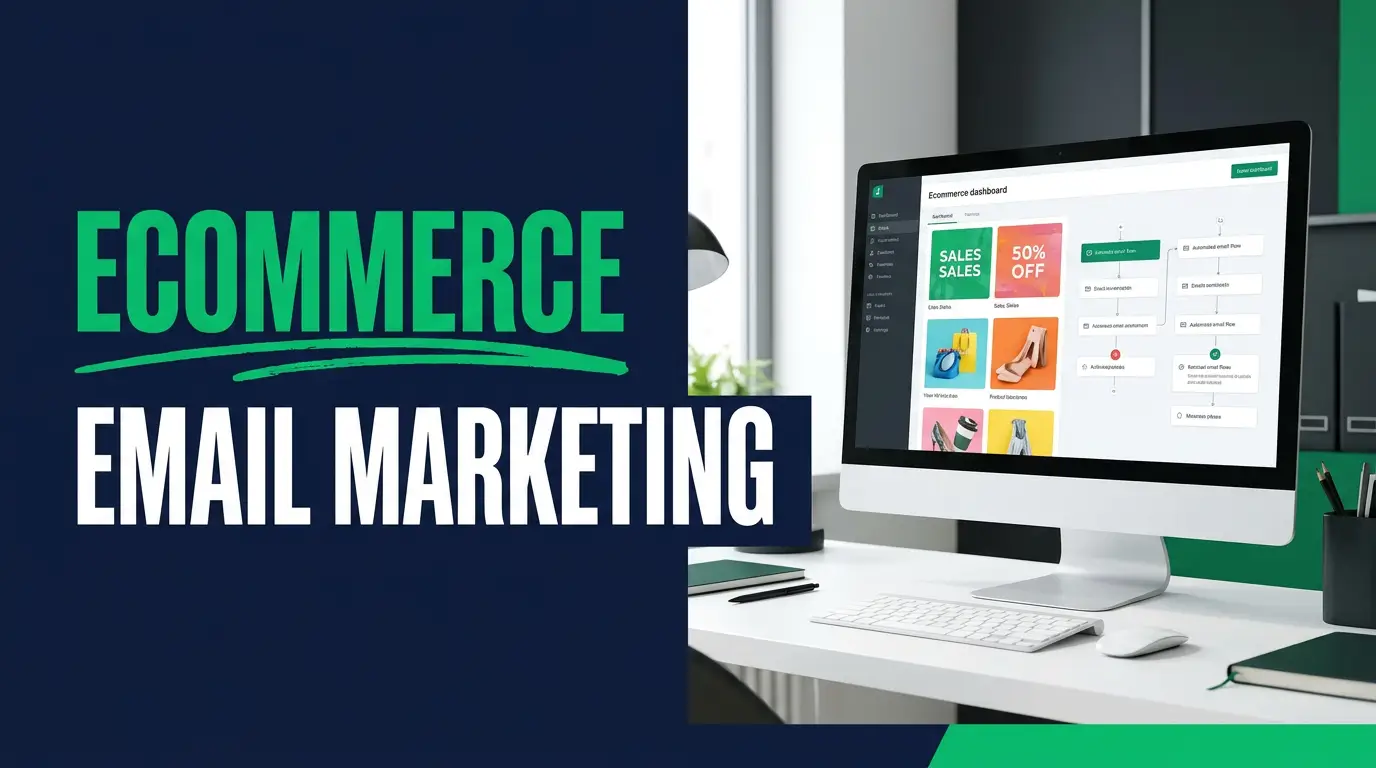
A flow is an automation. It watches for a trigger, then sends the right email at the right time to one person, forever, without you touching it again. Somebody joins your list, the welcome series starts. Somebody adds to cart and vanishes, the recovery sequence kicks in three hours later.
Here is the split that surprises people. In a healthy store, flows often produce a big chunk of email revenue off a tiny fraction of the sends. Campaigns go to your whole list and convert a little. Flows go to a handful of people at the exact moment they were already thinking about buying, and convert a lot.
Campaigns still matter. They drive urgency, they move slow inventory, they keep your brand in the inbox so people remember you exist. But if you have limited hours, and you do, you build the flows first. They pay you back every single day after.
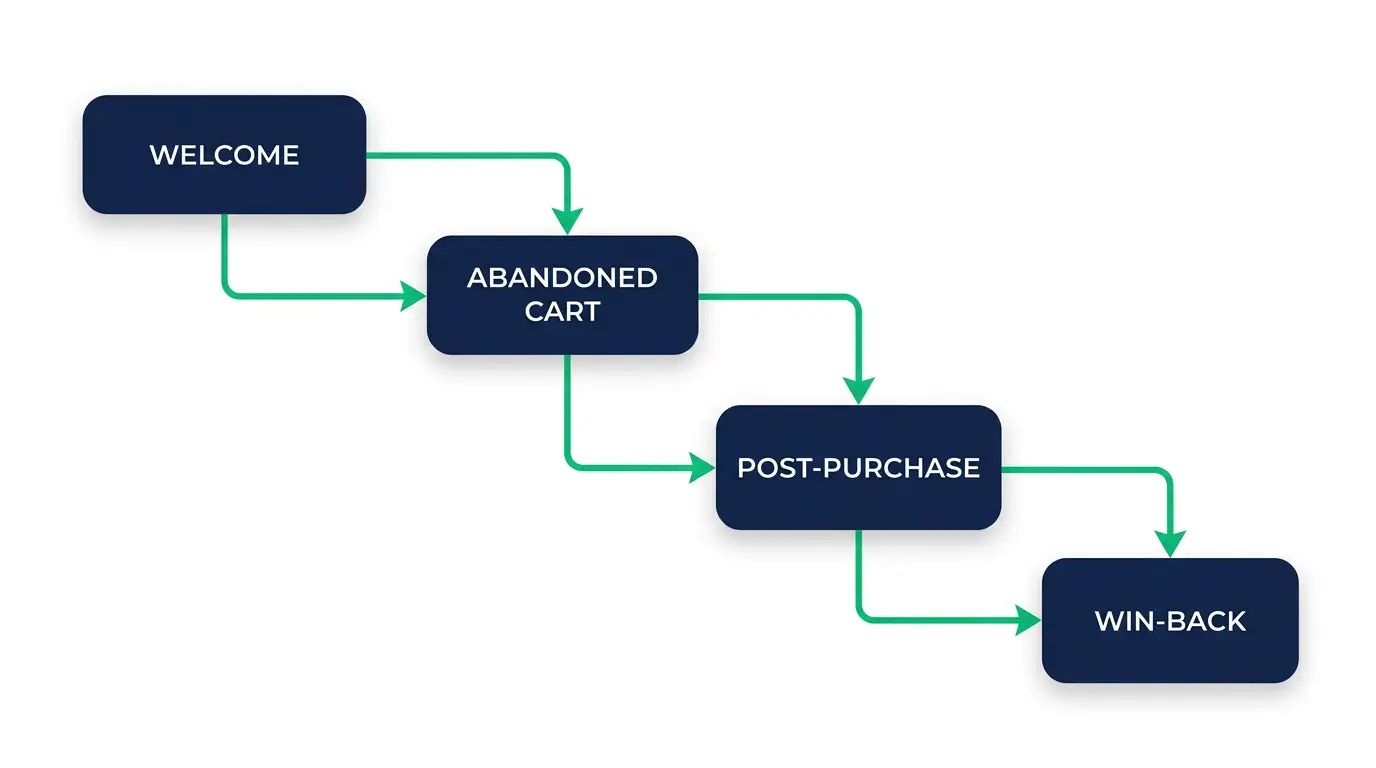
The core flows, one at a time
You do not need twelve automations. You need about six done well. Build them in roughly this order.
The welcome flow
This is the one to build first, and most stores half-build it or skip it.
When someone signs up, usually through a popup offering a discount, they are the warmest they will ever be. They just raised their hand. The welcome flow is where you introduce the brand, deliver the promised code, and make the first sale while the interest is hot.
Three to five emails. Email one delivers the discount immediately, because that is what they signed up for and making them wait annoys people. Email two tells your story, why the brand exists, what makes the product different. Later emails handle the objections that stop first orders and show your best sellers or your reviews.
A good welcome flow often becomes the highest-revenue automation in the whole account. People are ready to buy. You just have to not fumble the moment.
The abandoned cart flow
Most people who add to cart do not check out. That is normal, it has always been normal, and it is the single biggest pool of near-money in your store.
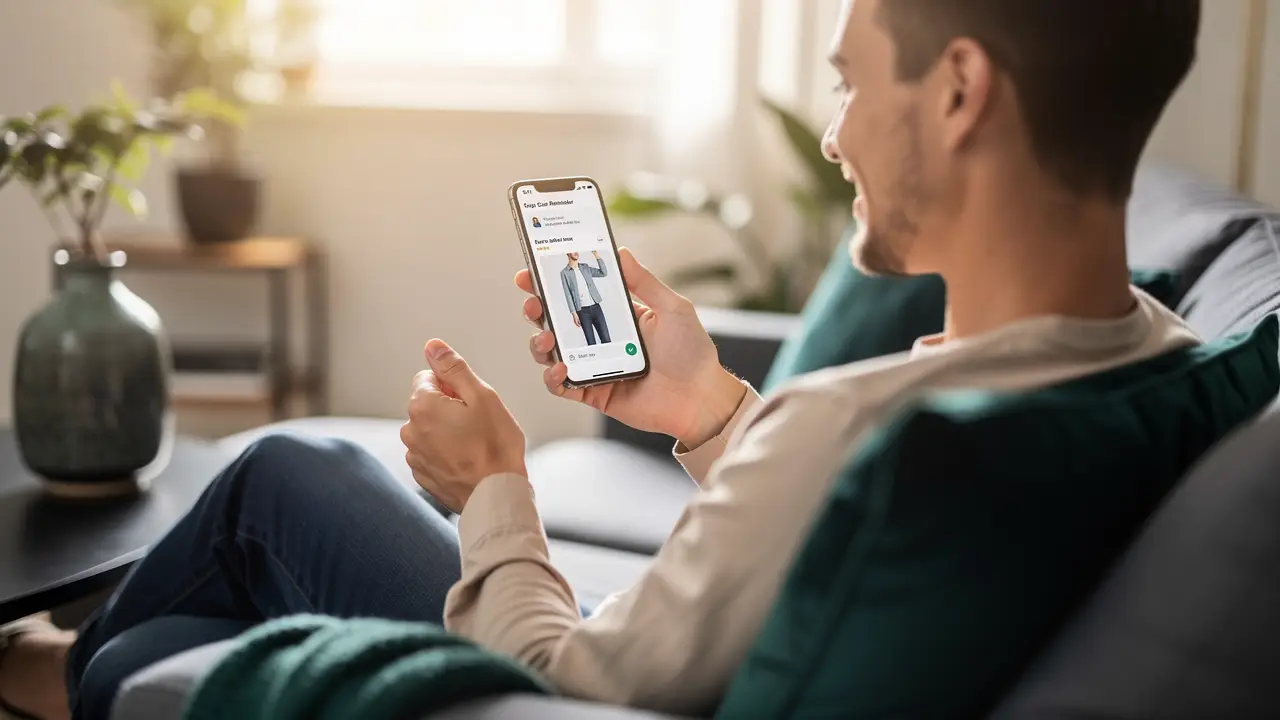
The abandoned cart flow catches them. Someone adds a product, starts checkout, then a kid cries or a Slack pings or the phone dies. A few hours later, an email shows up with the exact item they left, a clear button back to their cart, and a nudge.
Timing matters more than cleverness here. First email around one to four hours after they bail, while they still remember wanting it. A second a day later. Sometimes a third with a small incentive, though I'd hold the discount as long as I can so you are not training people to abandon on purpose to get 10% off.
If you build one revenue flow this week, build this one.
The browse abandonment flow
This one is quieter and most stores ignore it, which is exactly why it is an edge.
Browse abandonment fires when someone views a product but never adds it to cart. Lower intent than an abandoned cart, sure. They were curious, not committed. But they told you what they were looking at, and that is a gift. A gentle "still thinking about this?" email brings a slice of them back.
Keep it soft. No hard discount, no fake urgency. These people are earlier in the decision than cart abandoners, so you are reminding, not closing.
The post-purchase flow
The sale is not the end. Anybody treating the thank-you page as the finish line is leaving most of a customer's lifetime value sitting on the table.
The post-purchase flow does a few jobs after the order. It confirms and sets expectations so people are not anxious about shipping. It makes them feel good about buying, which cuts returns and refund requests. Then it sets up the next purchase with tips on using the thing they bought, a cross-sell that actually fits, and a review request once the product has arrived and they have lived with it a bit.
This flow is how a one-time buyer becomes a repeat buyer, and repeat buyers are where ecommerce stores actually make their margin.
The win-back flow
Every store has customers going cold right now. They bought once, maybe twice, loved it, then life moved on and they forgot you.
The win-back flow targets people who have not purchased in a while, say 60 or 90 or 120 days depending on how often folks normally reorder your stuff. You remind them you exist, show what is new, and if they still do not bite, you make a stronger offer. Cheaper to wake a past buyer than to acquire a stranger, almost always.
Set a real threshold on this so you are not blasting someone who bought last week. Base the window on your actual reorder cycle, which your data will tell you if you look.
The VIP flow
Once the essentials run, add this. A small group of customers spends far more than everyone else. Your VIP flow finds them, by total spend or order count, and treats them like the revenue engine they are. Early access, a genuine thank-you, occasional perks. Not another generic promo. These people already love you, so the job is to make them feel seen, not sold to.
Segmentation, or why blasting everyone slowly kills you
Sending every email to your whole list feels efficient. It is quietly poisoning your account.
Segmentation means slicing your list so the right message reaches the right people. First-time buyers get different email than people on their fifth order. Someone who opens everything you send gets treated differently from someone who has not opened a thing in four months.
Why bother? Two reasons. Relevance sells, obviously, because an email about dog food lands with dog owners and irritates everyone else. But the bigger reason is deliverability, which we are about to get into. When you keep mailing people who never engage, inbox providers notice, and they start routing you to spam. For everyone, not just the dead weight.
Start simple. Engaged versus unengaged. Buyers versus non-buyers. New versus repeat. You can get fancy later. Even those basic cuts will lift your numbers and protect your sender reputation.
The tool landscape, honestly
You will hear a lot of noise here, so let me be direct about the ones that matter.
Klaviyo is the ecommerce standard, and it earned it. Deep Shopify integration, flows built specifically around store behavior, segmentation that goes as far as you will ever need. It gets pricier as your list grows, and it can feel like a lot on day one. For a store serious about email as a revenue channel, it is what I point people to. We break the trade-offs down more in our Klaviyo vs Mailchimp comparison, and if you are already on Shopify, Klaviyo vs Shopify Email is the one to read.
Shopify Email is built into Shopify and cheap to start. For a young store sending basic campaigns and a couple of simple flows, it is a reasonable place to begin. You will likely outgrow the automation depth, but there is nothing wrong with starting light and moving up when the revenue justifies it.
Omnisend sits in the middle, built for ecommerce, a bit friendlier on price than Klaviyo, with email and SMS in one place. Plenty of stores run happily on it. If you want the head-to-head, we did Omnisend vs Klaviyo.
My honest take: do not agonize over the tool. The flows above make money in any of these. A store with great automations on cheap software beats a store with a dead account on expensive software every time. Pick one, build the flows, move on.
Deliverability and list health
None of this matters if your email lands in spam. This is the least glamorous part and the one that quietly wrecks otherwise good programs.
A few things keep you in the inbox. Authenticate your sending domain, which is the SPF, DKIM, and DMARC setup your platform walks you through. Skip it and you are gambling with every send. Warm up a new domain slowly instead of blasting 50,000 people on day one, which is the fastest way to get flagged as a spammer.
Then there is list hygiene, and this is the part people resist. Prune the folks who never open. I know, it feels backwards to shrink a list you paid to build. But a dead subscriber does not buy, and worse, they drag down the engagement signals that decide whether your emails reach the people who would buy. Sunset the unengaged. Your revenue usually goes up, not down.
Here is the reframe I want you to keep: your list is an asset because it is alive, not because it is big. A tiny engaged list out-earns a huge dead one, every time.
Email marketing is a hireable skill
Step back for a second. Everything above is a skill a business will pay real money for, because it maps straight to revenue they can see.
A store owner cannot always tell whether a new logo helped. They can absolutely tell that the abandoned cart flow you built recovered a measurable pile of sales last month. That traceable line from your work to their money is what makes email one of the most hireable, freelance-able skills in the whole marketing world. It is also learnable without a degree or a bootcamp price tag. You are learning it right now.
If you want to go deeper on the strategy side, how to use email marketing for sales picks up where this leaves off, and if you care about the technical craft of building emails that render right everywhere, the best email developer tools is worth a look.
FAQ
What is the best email flow for ecommerce? The abandoned cart flow, for most stores, because it catches people at the exact moment they were already trying to buy. If you have never touched automations, build that one first, then the welcome flow, then post-purchase. Those three usually cover most of what automation will earn you.
Which email tool should I use for my store? Klaviyo if you are serious about email as a real revenue channel, especially on Shopify. Shopify Email if you want something built-in and cheap to start. Omnisend if you want ecommerce features with email and SMS together at a friendlier price. Any of them can run the flows in this post, so pick one and start.
How much revenue can email make a store? It varies a lot by store, but a well-run email program commonly drives a meaningful share of total revenue, often a quarter to a third or more, with most of it coming from a handful of automated flows rather than one-off campaigns. The exact number depends on your list, your margins, and how well the flows are built.
Campaigns or flows, where should I start? Flows. They run on their own and pay you back every day after you build them. Add campaigns once the automations are live and you have the hours to spare.
If reading this made you want to actually build the thing, that is the right instinct. Email is one of those skills where a weekend of focused learning turns into a store that makes more money next month, and a resume line that gets you hired. We teach the marketing and technical skills behind work like this at CodingPhase, the kind that tie directly to revenue a business can point at. Come learn it properly, then go build a flow that makes money while you sleep. I am rooting for you.