Email Marketing Best Practices That Still Work in 2026
On this page
A client sent me a campaign last year that she was genuinely proud of. Custom illustration, a headline that took her a week, a discount code she'd fought her boss to approve. It went to 40,000 people and made zero sales. Not "underperformed." Zero.
We pulled the numbers and the open rate was under 4 percent. Gmail had decided her domain looked like a stranger and quietly filed the whole send under Promotions, or worse, spam. All that design work landed in a folder people check the way they check their junk drawer.
That send taught me the thing most email advice skips past. You can obsess over copy and layout all you want, but if the inbox providers don't trust you, none of it gets read. Deliverability is the floor everything else stands on, and hardly anyone talks about it because it's less fun than picking a button color. So the best practices worth keeping in 2026 start there, with the technical stuff that decides whether your good ideas ever reach a human.
Deliverability is the game nobody tells you you're playing
Before a subject line matters, your email has to survive a gauntlet of filters that decide whether it reaches the inbox at all. In 2024 Google and Yahoo made this non-optional for bulk senders, and the bar has only risen since.
Three acronyms do most of the work here, and you only need them in plain English.
SPF is a list. It tells the receiving server which mail servers are allowed to send email for your domain. No SPF record, and a lot of your mail gets treated as suspicious by default.
DKIM is a signature. It stamps each email with a cryptographic seal so the receiver can confirm the message really came from you and wasn't tampered with on the way, like a wax seal that would crack if someone opened the envelope.
DMARC is the policy that ties the first two together. It tells inbox providers what to do when a message fails those checks, and it reports who's trying to send mail as you. Since the 2024 rules, if you send in any real volume you need a DMARC record published, full stop.
Set these once, correctly, and you've done more for your open rates than any subject line trick ever will.
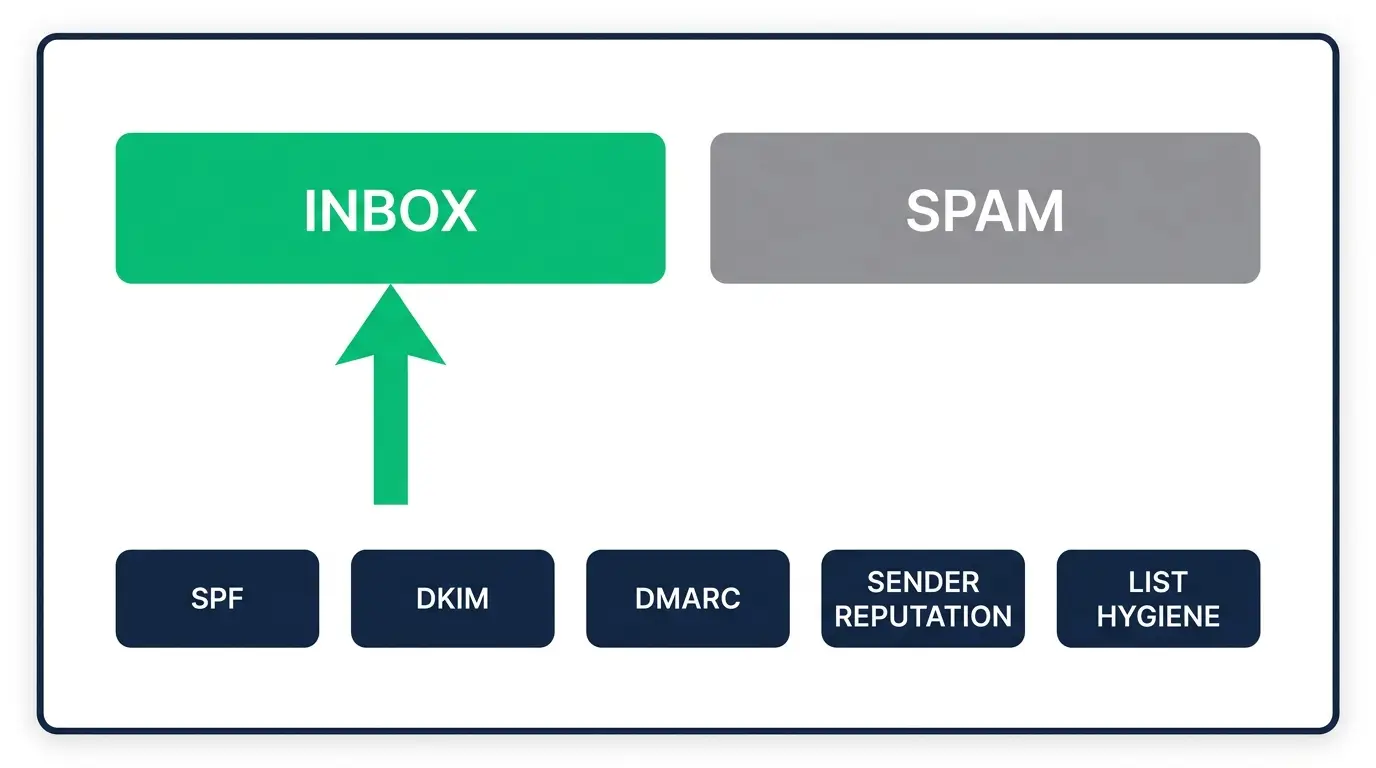
Authentication gets you in the door. Sender reputation keeps you there. Inbox providers watch how people react to your mail and score you on it. Opens and replies build trust. Spam complaints and hard bounces tear it down fast. A brand new domain has no reputation at all, which is why blasting a first campaign to a giant cold list gets you filtered.
If you're sending from a fresh domain, warm it up. Start with a few hundred of your most engaged people, send consistently, and grow the volume over a few weeks. It's dull work, and it's the difference between building a reputation and torching one on day one.
Clean list, honest permission
A smaller list of people who want to hear from you will out-earn a huge list of strangers every single time, and it's not close.
List hygiene is the unglamorous habit that protects everything above. Every dead address, spam trap, and person who forgot they signed up drags your reputation down. So you prune. Remove hard bounces immediately. Watch for subscribers who haven't opened anything in three or six months, try a short re-engagement send, and if they still ghost you, let them go. Suppressing a cold subscriber feels like losing money, but keeping them is what actually costs you, because they poison your deliverability for everyone else on the list.
And please, buy nobody's list. Purchased and scraped lists are the fastest route to spam traps and complaints, and modern filters catch them almost instantly. Permission is the whole ballgame. Someone who typed their email into your form because they wanted your thing behaves nothing like a name you rented. If you want the playbook on turning that permission into revenue, how to use email marketing for sales picks up where this leaves off.
Stop blasting everyone the same thing
The batch-and-blast era is over. Sending one identical email to your entire list was always lazy, and in 2026 it actively hurts you, because the people who don't care about that message quietly train the filters to distrust you.
Segmentation is the fix, and you can start embarrassingly simple. Split by behavior first: buyers versus browsers, active versus dormant, people who clicked a specific topic versus people who never do. A hardware store doesn't send the same email to a contractor who buys every week and a guy who bought one drill in 2023. Neither should you.
Then there's the automated stuff that runs while you sleep. A welcome sequence for new subscribers. A cart-abandonment nudge for the shopper who got cold feet. A post-purchase flow that turns a first order into a second. These triggered emails consistently outperform broadcasts because they hit someone at the exact moment they care, and they're the backbone of any serious ecommerce email marketing setup. Most of it lives or dies on your platform, which is why the Klaviyo vs Mailchimp question comes up so often once people get past the basics.
Personalization in 2026 means relevance, not sticking someone's first name in the subject line and calling it a day. Everyone sees through that now. The right message to the right slice of your list is the personalization that actually moves money.
Subject lines that earn the open
The subject line has one job, and that's to buy the open. It doesn't need to summarize the email or win an award.
What still works: curiosity that's honest, specificity, and a clear reason the message matters to that reader right now. "Your cart's about to expire" beats "Don't miss our amazing sale" because it's about them, not you. Short tends to win, partly because most opens happen on a phone where a long subject line just gets chopped off anyway.
What's dead: fake urgency you can't back up, "RE:" tricks that pretend to be a reply, and anything with three exclamation points. Spam filters flag that stuff, and even when it sneaks through, readers resent it. Clickbait that doesn't deliver trains people to stop opening you, which is the slow death.
Test subject lines against each other when your list is big enough for the result to mean something. Send version A to a slice, version B to another, let the winner go to everyone else. And don't waste the preview text next to the subject line. Leave it blank and the inbox fills it with junk pulled from your email's code. Write it on purpose and it becomes a second subject line working for you free.
Design for a thumb, not a design portfolio
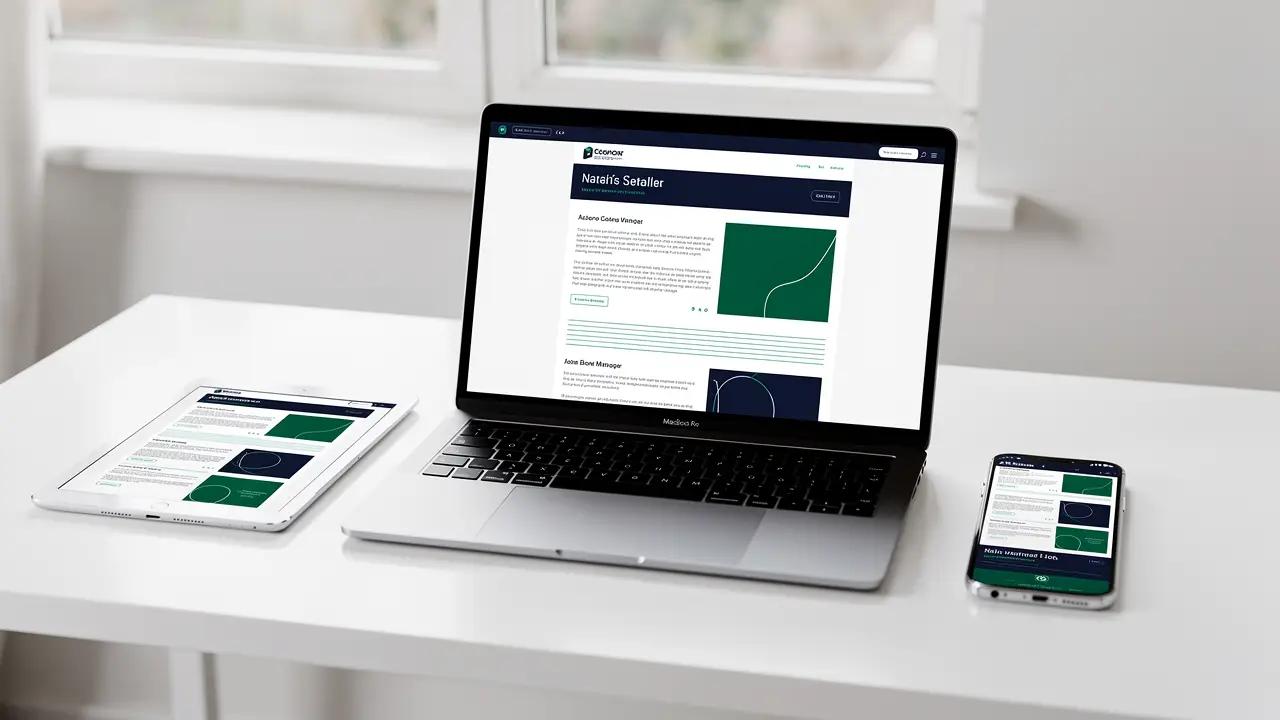
Most of your list reads email on a phone. That single fact should decide how you build every campaign.
Design mobile-first. One column, because two columns collapse into a mess on a small screen. Big tap targets, since a link the size of a grain of rice is useless to a thumb. Body text around 16 pixels so nobody has to pinch to read it. And a call to action high enough that someone sees it before they'd have to scroll.
Watch your image-to-text ratio too. An email that's one giant image looks slick until images fail to load, which they do constantly, and then your reader gets a blank rectangle with nothing to click. Real text that filters can read, images as support, alt text on everything so it survives a blocked-image client.
Then send yourself a test and open it on your actual phone before it goes out. I've caught broken buttons and invisible white-on-white text this way more times than I'll admit, and it takes thirty seconds. To go deeper on the tooling side, the best email developer tools roundup covers what the people who do this for a living actually use.
Timing and cadence, minus the myths
Everyone wants the magic send time. Tuesday at 10am, some blog swears. The honest answer is that the best time to send is when your specific audience opens their email, and the only way to know that is to look at your own data.
That said, a couple of things hold up. Consistency beats perfect timing. A list that hears from you on a predictable rhythm stays warmer than one you hit randomly whenever you remember. And more email is not automatically more revenue. Send too often and you spike unsubscribes and complaints, which quietly wrecks the deliverability you worked so hard to build. Let engagement set the pace: your most active subscribers can take more mail than the people hanging on by a thread, and some of the smartest programs I've seen just let subscribers pick their own cadence.
The rules you can't ignore
Compliance isn't the fun part, but the fines are real and the trust you lose is worse.
In the US, CAN-SPAM requires a real physical mailing address in every commercial email, an honest subject line, and a working unsubscribe that you honor promptly. If you touch anyone in the EU or UK, GDPR raises the bar to genuine consent, meaning no pre-checked boxes and no burying permission in fine print. People have to actually choose to hear from you.
The one that trips up a lot of senders now is one-click unsubscribe. Since the 2024 mailbox rules, bulk senders have to support a single-action opt-out that works without a form or a login. Make leaving easy, because a frustrated reader who can't find the exit just hits "spam" instead, and one complaint hurts you far more than a quiet unsubscribe ever could.
The metrics that matter, and the ones that lie
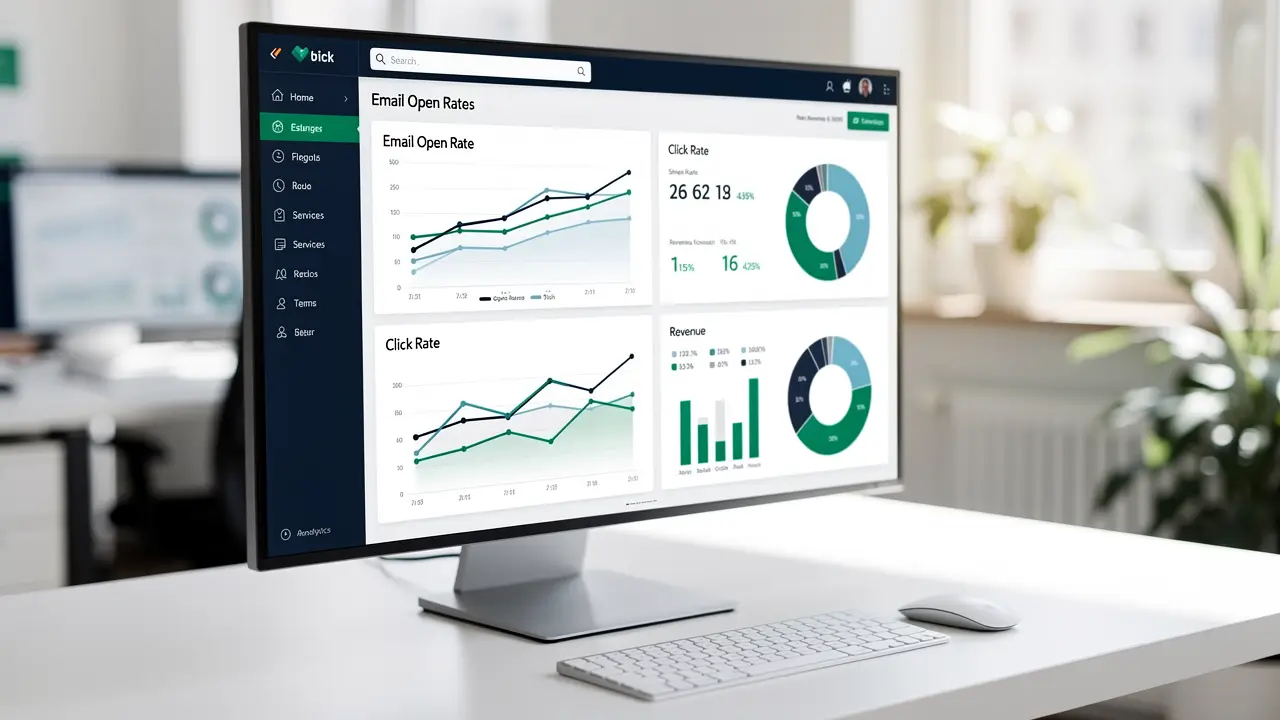
Apple's Mail Privacy Protection broke open rates a few years back by pre-loading images and faking opens, and plenty of people still report a number that no longer means what they think it does. Opens are a rough directional signal now, useful for spotting a total deliverability collapse, useless as a precise measure.
So watch the metrics that tie to money and behavior instead. Click-through rate tells you whether the content earned action. Conversion rate tells you whether that action became a sale or a signup, which is the only number your business truly cares about. Revenue per subscriber reframes your whole list as an asset with a dollar value. On the warning side, guard your spam complaint rate obsessively: keep it under 0.1 percent, which the mailbox providers now basically require, because crossing it puts you in trouble fast.
Vanity metrics to stop bragging about: total list size, since a big dead list is a liability, and raw open counts, for the reason above. A list of 5,000 people who buy beats 100,000 who never open. Chase the number that shows up in your bank account, not the one that looks good in a screenshot.
Mistakes I still see smart people make
A few patterns come up again and again, and they're all fixable in an afternoon. Skipping authentication and wondering why open rates cratered. Buying or scraping a list to "grow faster." Sending your first big campaign from a stone-cold domain. Treating every subscriber as one undifferentiated blob. Writing for desktop when everyone's on a phone. Measuring success by opens in a post-Apple world. Making the unsubscribe link a scavenger hunt.
Notice how many of those are technical, not creative. That's the real lesson hiding in all of this. Email that performs is a marketing skill and an engineering skill wearing the same coat, and the people who understand both sides are the ones companies can't stop hiring.
FAQ
What is the most important email marketing best practice in 2026? Deliverability, without much competition. Authenticate your domain with SPF, DKIM, and DMARC, protect your sender reputation, and keep your list clean. The best email in the world earns nothing if it never reaches the inbox, and this is the piece most people skip.
Are open rates still useful? As a rough signal, yes. As a precise measurement, no. Apple's Mail Privacy Protection inflates open numbers by pre-loading images, so a sudden collapse in opens can still flag a deliverability problem, but you shouldn't optimize around small open-rate differences anymore. Track clicks, conversions, and revenue instead.
How often should I send email? Often enough to stay familiar, not so often that people tune you out or complain. There's no universal number, so watch your unsubscribe and complaint rates as you adjust, and consider letting subscribers choose their own cadence. Consistency matters more than hitting some mythical perfect send time.
Do I really need DMARC? If you send in any real volume, yes. Since Google and Yahoo tightened their rules in 2024, bulk senders are expected to have DMARC published, and it protects your domain from being spoofed by someone else. It's not optional busywork anymore.
Does any of this change for B2B? Some of it does. Longer cycles, smaller lists, and buying committees change what a good send looks like. B2B email marketing covers the differences.
Email rewards the people who treat it as a craft and punishes the ones who treat it as a megaphone. The deliverability setup, the clean list, the segmentation, the honest measurement, none of it is flashy, and all of it is the reason some senders print money while beautiful campaigns die in spam folders.
If any of this made you realize email is more technical than you assumed, good. That's the door in. It's one of the highest-leverage skills a business will pay real money for, and it sits right alongside the rest of the email marketing specialist path if you want to build it properly. You can start learning whenever you're ready. The tools will change. Understanding how the inbox works is what keeps paying you back.