B2B Email Marketing: A Practical Guide That Isn't Spam
On this page
A team I was helping last year uploaded a list of 5,000 contacts they'd scraped from a conference attendee page, wrote one email that opened with "Hope this finds you well," and blasted all of it on a Tuesday morning. Then they sat there watching the dashboard, waiting for the replies to roll in.
Four replies came. Two were angry. One was an out-of-office. Their open rate cratered by Thursday because Google had started routing them straight to spam, and their sales team's normal emails, the real ones to real prospects, started landing in junk too.
That's the thing nobody warns you about. Bad email doesn't just fail to work. It poisons the email that would have worked.
So let me walk you through how B2B email actually functions, and how to do it without becoming the reason your whole company's mail gets filtered.
Why B2B email is a different animal than B2C
If your only reference point for email marketing is the stuff in your personal inbox, you've been trained on the wrong game.
B2C email sells to one person having one feeling. Flash sale, 20% off, cart's about to expire, buy now. The whole thing can happen in an afternoon. The emotion does the work.
B2B is slower and colder and involves more people than you think. Someone might read your email in March and not buy until September. And when they do buy, it's rarely just them. There's the person who found you, the manager who has to approve it, the finance person who questions the budget, and sometimes a security or legal review you never even see. You're not writing to a buyer. You're arming an internal champion with reasons to fight for you in a meeting you'll never attend.
That changes everything about how you write. Forget the impulse trigger. Your job is to be useful enough, often enough, that when the timing finally lands, you're the name they remember.
Which means the whole "blast a discount to a big list" move that works in B2C is exactly the move that fails here. Nurture beats blast, every time, in B2B.
Permission versus cold, and why your domain is on the line
Here's the part people skip, and it's the part that can quietly wreck you.
There are two totally different activities that both get called "B2B email," and treating them as the same thing is how teams end up blacklisted.
Permission-based email goes to people who gave you their address. They downloaded your guide, signed up for your newsletter, started a trial, came to your webinar. They know who you are. This is marketing email, and it runs through a proper email platform that handles unsubscribes, tracks engagement, and keeps you compliant with laws like CAN-SPAM and GDPR.
Cold email goes to people who never asked to hear from you. This is a sales motion, and it belongs in a separate sending setup, ideally a separate domain, with tiny volumes and heavy personalization. When people talk about cold outreach that works, they're talking about 30 hand-researched emails a day, not 5,000 scraped ones.
The reason this matters so much comes down to one word: deliverability. Mailbox providers watch how people react to your mail. Lots of opens and replies tell Gmail you're wanted. Spam complaints, hard bounces, and dead silence tell Gmail you're junk, and it starts hiding you from everyone, including the prospects who actually like you.
When that team blasted 5,000 cold contacts, the bounces and complaints told Google their whole domain was a spam source. That reputation doesn't reset overnight. They spent weeks rebuilding it.
So before you send anything, get the plumbing right. Authenticate your domain with SPF, DKIM, and DMARC. Those are DNS records that prove you are who you say you are, and without them a big chunk of your mail doesn't even get a fair shot. Warm up a new sending domain slowly instead of going zero to thousands. And never, ever buy a list. Purchased lists are full of spam traps, addresses planted specifically to catch people who bought a list, and hitting one is a fast way to get flagged.
The reframe I want you to keep: your list is not an audience you own, it's a reputation you're renting from Gmail, and you can get evicted.
The sequences that actually move B2B deals
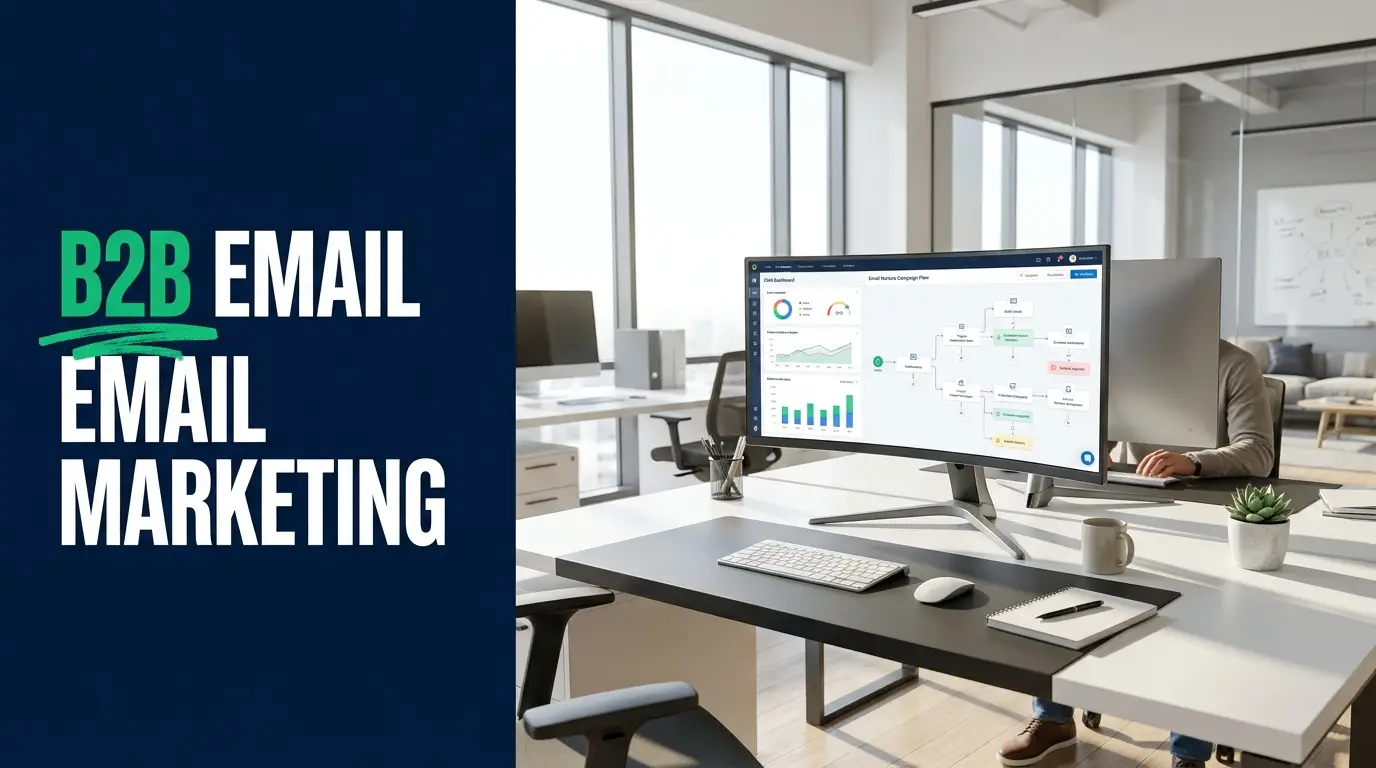
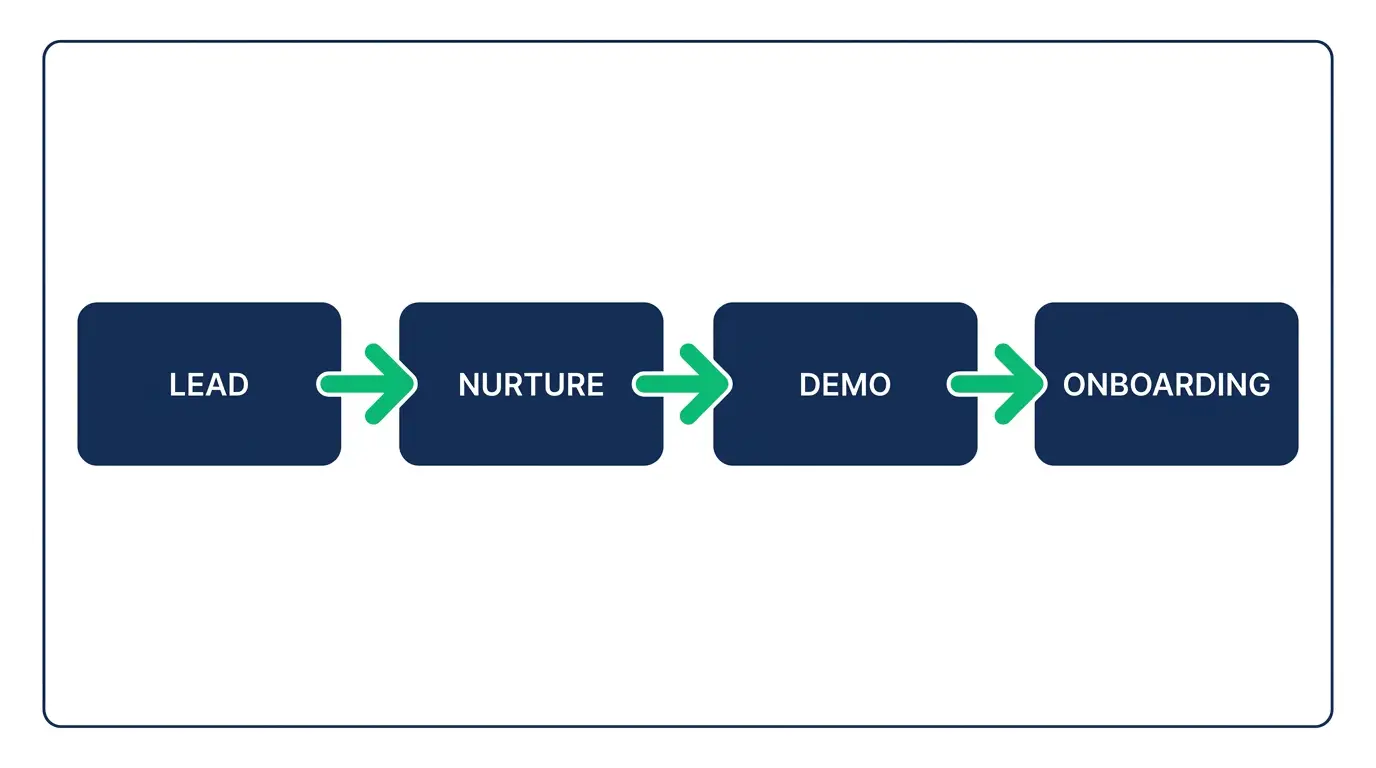
Good B2B email runs as a handful of automated sequences, each firing off a specific trigger, doing a specific job. These are the ones worth building first.
The lead nurture sequence. Someone downloads your thing or joins your list but isn't ready to talk to sales. Perfect. Don't shove a demo request at them. Over a few weeks, send genuinely useful email that maps to the problem they were researching when they found you. A short case study. A common mistake and how to avoid it. A framework they can steal. You're building trust and staying warm until their timing changes. The goal of a nurture email is the next open, not the sale.
The onboarding sequence. This one's underrated because it fires after someone converts, when marketers have already moved on. Big mistake. The first two weeks after a trial starts or a deal closes decide whether that customer sticks. Walk them to their first real win inside the product. Show them the one feature that makes people stay. A customer who never activates churns, and no amount of clever acquisition email fixes a leaky bucket. I go deeper on the flows themselves in our guide to using email marketing for sales.
The re-engagement sequence. Part of your list will always go quiet. Some are gone for good, some just got busy. A short win-back sequence, three or four emails, sorts one from the other. Ask if they still want to hear from you. Offer something genuinely valuable. And here's the discipline most people lack: if they still don't engage, remove them. A smaller list of people who open is worth far more than a bloated list dragging your deliverability down.
Notice what these have in common. Each one is triggered by something the person did, and each one has an actual job. That's the whole model. Behavior in, relevant email out.

Segmentation and lead scoring, or how to stop shouting at everyone
The fastest way to sound like spam is to send the same email to your entire list. The fastest way to sound like a human who gets it is to send different email to different people. That's segmentation, and in B2B you've got rich ways to slice.
By role. A VP of Engineering and a procurement manager care about completely different things. One wants to know it works and won't break; the other wants to know what it costs and how the contract's structured. Same product, different email.
By industry. A healthcare company and a scrappy startup have different constraints, different language, different fears. Even lightly tailoring your examples to their world makes an email feel written for them instead of at them.
By account. In B2B, you're often selling to a company, not a person, and several people at that company might be on your list. Grouping them by account lets you think about the whole buying committee instead of treating each contact as a stranger.
By behavior. What have they actually done? Opened the last five emails or none of them? Visited the pricing page? Behavior is the strongest signal you have, because it's what someone did, not what they said.
That last one leads straight into lead scoring, which sounds fancier than it is. Lead scoring is just assigning points for actions that suggest someone's getting closer to buying, so your sales team knows who to call.
You give points for meaningful signals. Opened an email, small points. Clicked through to a case study, more. Visited the pricing page twice this week, a lot. Job title matches your ideal buyer, points. Free Gmail address instead of a company domain, maybe subtract some. When someone crosses a threshold you set, they're marked sales-ready and handed off.
Start crude. A five-line scoring model you actually use beats a beautiful one you keep tweaking and never ship. You'll refine the point values once you see which "hot" leads actually close.
The tool landscape, honestly
You don't need the most expensive platform. You need one that runs the sequences above and shows you what's working. Here's the honest lay of the land.
HubSpot is the big all-in-one. Email, CRM, landing pages, forms, scoring, all stitched together. It's genuinely good and genuinely pricey, and the cost climbs as your contact count grows. For a company that wants marketing and sales living in one system and has the budget, it's hard to beat. For a two-person team, it's often more than you need.
ActiveCampaign is the sweet spot for a lot of small and mid-sized B2B teams. Serious automation, a solid built-in CRM, lead scoring, at a price that won't make you flinch. If you're graduating from a basic newsletter tool into real sequences, this is usually where I'd point you. We compared it head to head in ActiveCampaign vs Klaviyo if you want the deeper look.
Customer.io is for teams whose email is driven by product behavior, so it's a favorite of SaaS companies. It plugs into your product's event data and triggers email off what users actually do inside the app. More technical to set up, more powerful once it's wired in. If your onboarding and retention email needs to react to in-product actions, this is the category.
The mistake isn't picking the wrong tool. It's buying a powerful tool and using 5% of it because you never built the sequences. The platform runs the strategy. It isn't the strategy. If you're weighing this against a broader stack, our take on marketing automation for small business covers how the pieces fit.

The metrics that actually matter in B2B
Open rate feels good and lies a little. Since Apple started pre-loading images, a chunk of "opens" are machines, not people. Use it as a rough trend, not gospel.
The numbers I'd actually watch:
Click-through rate tells you whether the content earned a reaction. People who click are people who care.
Reply rate is gold in B2B and almost nobody tracks it. A reply is a human choosing to engage. For nurture and especially for one-to-one sales email, replies matter more than opens ever will.
Conversion to pipeline is the one your boss cares about. How many email-touched leads became actual sales conversations, and eventually revenue? Email that generates opens but no meetings is a hobby, not a channel.
Unsubscribe and spam-complaint rate are your early-warning lights. A creeping complaint rate means you're sending too much, to the wrong people, or both. Watch it like a smoke alarm. For the full checklist on keeping sends healthy, we wrote up email marketing best practices separately.
Here's the honest part. B2B email is a compounding channel, not a slot machine. You won't send one campaign and watch pipeline explode. You build sequences, you tend your list, you get a little sharper each quarter, and a year in you've got a machine that quietly turns strangers into customers while you sleep. That's the payoff, and it's real, but it rewards patience over cleverness.
FAQ
Is cold email illegal for B2B? Not inherently, but it's regulated. In the US, CAN-SPAM allows cold B2B email if you identify yourself honestly, don't use deceptive subject lines, and give a working unsubscribe. In much of Europe, GDPR sets a higher bar and you often need a lawful basis to email someone. Rules aside, cold email at scale wrecks your deliverability, so keep it low-volume, personalized, and on a separate domain from your marketing sends.
How often should I email a B2B list? Less than you'd guess for cold audiences, more than you'd fear for engaged ones. A weekly or biweekly cadence works for an engaged nurture list. The real answer is to watch your unsubscribe and complaint rates: if they climb, you're sending too much or the content isn't earning the inbox space.
What's a good open rate for B2B email? Depends on your industry and list quality, and open tracking is unreliable now anyway. Rather than chase a benchmark number, watch your own trend line and lean on clicks and replies, which are harder for a machine to fake and tell you far more about whether the email landed.
Do I need a big list to start? No, and a big list is often the problem, not the solution. A few hundred people who opted in and open your email will out-perform tens of thousands of scraped addresses that tank your reputation. Grow the list slowly with real opt-ins and protect it fiercely.
If any of this clicked, and you're realizing that email is less about clever copy and more about systems, behavior, and knowing what to measure, you're onto something worth learning properly. Lifecycle and email marketing is one of the most hireable, revenue-driving skills a company will actually pay for, because it touches the money directly. That's the kind of skill we build people up in at CodingPhase, one real system at a time. If you want to start, come learn with us. You don't need to get it all right today. You just need to send the next email a little better than the last.