SEO Analyst: The Data Side of Search and What It Pays
On this page
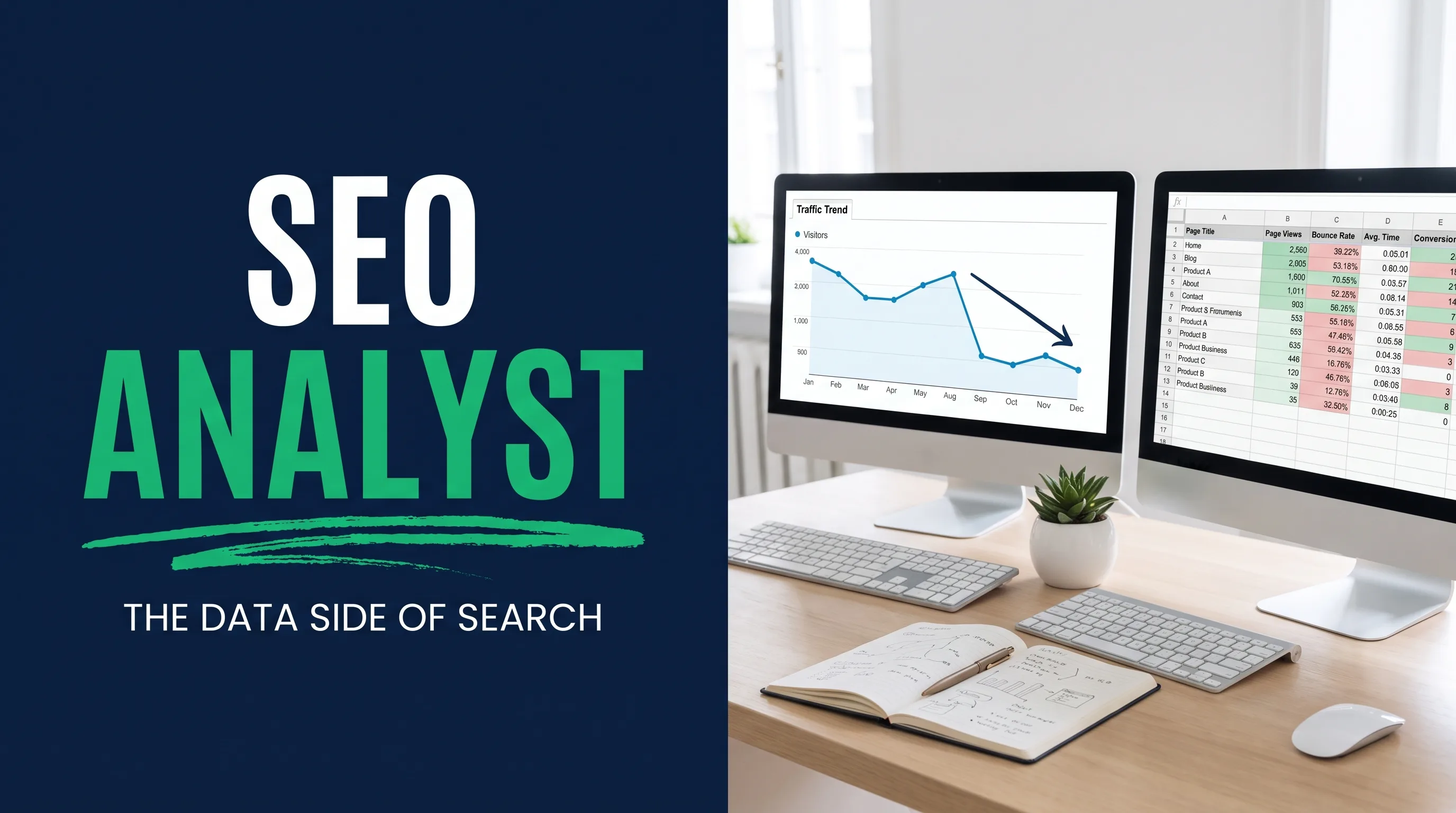
Organic traffic is down 18% month over month. The content team thinks it's the redesign. The developer thinks it's seasonality. Someone mentions an algorithm update they read about on LinkedIn.
The SEO analyst is the person who goes and finds out which of those is true, usually within an afternoon, and usually discovers it was none of them.

How it differs from an SEO specialist
They overlap, and at small companies they're the same person. The distinction shows up as soon as a team is big enough to split them.
The specialist does SEO: fixes pages, briefs content, implements changes, works the roadmap.
The analyst measures SEO: builds the reporting, segments the data, tests whether a change worked, forecasts what a project is worth, and diagnoses problems when the numbers move.
The tell is what you're asked for. If people bring you tasks, you're a specialist. If they bring you questions, you're an analyst.
The actual work
Diagnosis. The traffic-drop investigation above. Segment by page type, device, country, and query type until the drop localizes to something specific. Half the time the answer is boring: a template change removed internal links, or a filter got added to the analytics view.
Reporting. Building the dashboards the rest of the business reads. The good version is a small number of things that matter. The bad version is forty charts nobody opens.
Forecasting. What is this project worth. If we rank in the top three for these forty terms, what does that mean in sessions and revenue. This skill alone makes you valuable, because it's how SEO work gets funded.
Testing. Did the title tag change actually help, or did the whole category rise at once. Proper before-and-after work with a control group where possible.
Competitive analysis. Where competitors gained, what they built, which of it is worth copying.
Keyword and opportunity research at scale. Not looking up twenty terms, but processing tens of thousands and clustering them into something a content plan can act on.
What it pays
$60k to $95k for most US SEO analysts, with senior analysts at $95k to $120k and analytics leads higher.
That's comparable to a general SEO specialist and, importantly, it climbs on a different axis. Specialists get paid more for doing more SEO. Analysts get paid more for handling more data, which means your skills stay valuable even if you leave search entirely. A data-fluent analyst can move into product analytics, ecommerce analytics, or business intelligence without starting over. That optionality is worth real money.
For the neighboring roles, SEO specialist covers the general track and SEO manager the management route.
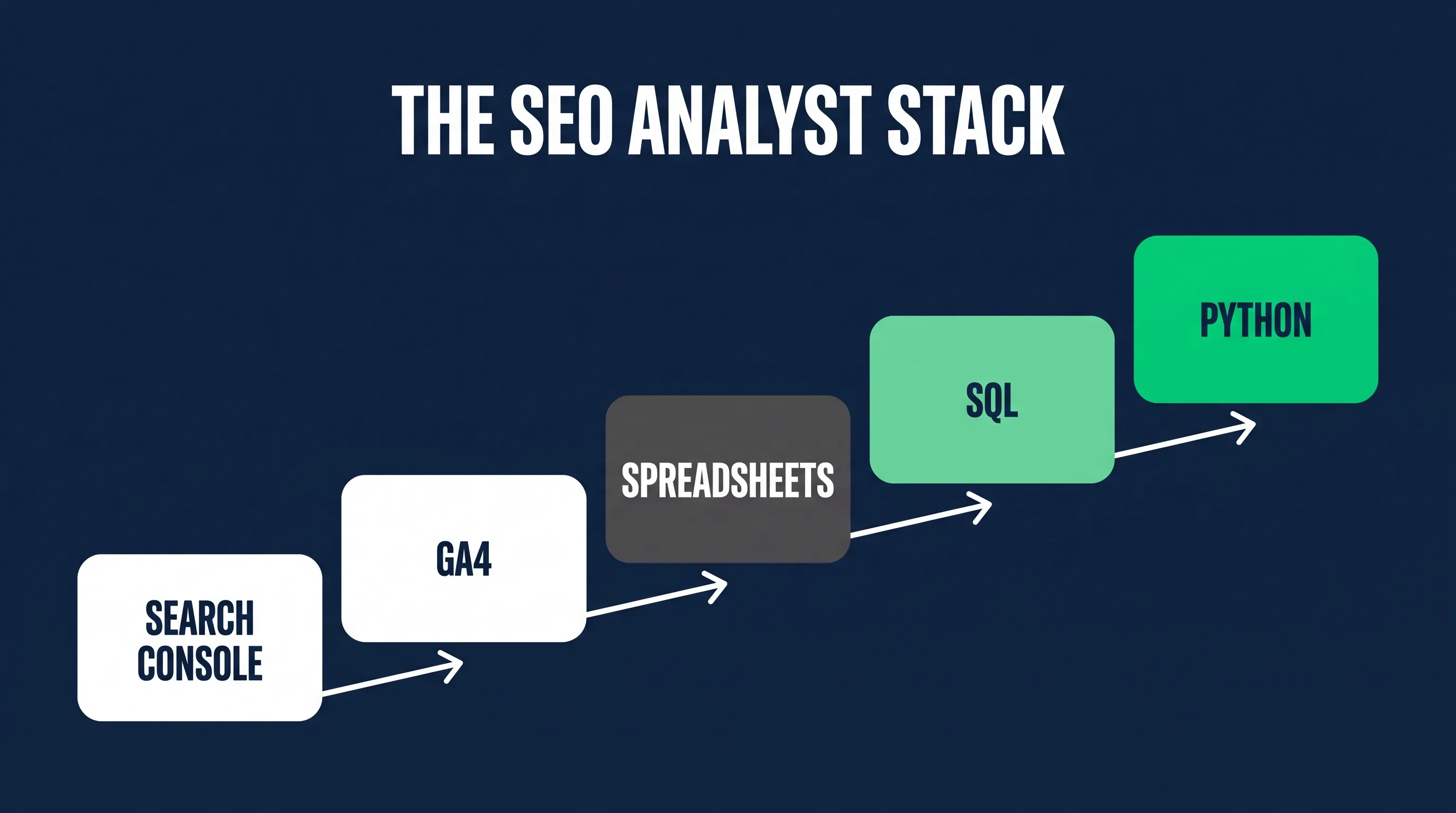
The tools and skills
Search Console, deeply. Not the summary screen. The query and page dimensions, the filters, the export limits and how to get around them via the API.
GA4. Explorations, segments, and a clear understanding of how sessions and attribution actually work, because most people are quietly wrong about both.
Spreadsheets at a high level. Lookups, pivots, and cleaning a 50,000-row export without doing anything by hand.
A full-suite SEO tool. Ahrefs or Semrush, mostly for competitive and keyword data.
SQL. The dividing line in this role. Analysts who can query the warehouse directly stop being dependent on other people and start answering questions in minutes instead of days.
Python, eventually. For pulling APIs, processing crawl data, and clustering keywords at a scale spreadsheets can't handle. This is what takes you to the top of the band, and it's the same skill that makes SEO workflow automation possible.
A visualization tool. Looker Studio most commonly, sometimes Power BI or Tableau.
How to get in
From SEO. The most common route. If you're a specialist who keeps ending up in the spreadsheet, you're already doing part of the job. Learn SQL, start answering questions nobody asked, and the title follows.
From analytics. If you already analyze data, the SEO domain knowledge takes a few months. You'll be ahead of most SEO people on rigor and behind on search intuition, and the second gap closes faster than the first.
From scratch. Harder, but the path is clear: run your own site so you have real Search Console data, learn GA4 and SQL, and produce a written analysis of something real. A three-page investigation of why a site's traffic changed, with the data behind it, is a better portfolio piece than any certificate.
Titles to search alongside this one: digital analyst, web analyst, marketing analyst, growth analyst, and SEO data analyst.

What makes a good one
The ability to end an argument. Most SEO debates are two people with opinions and no data. Being the person who quietly produces the answer, in a form everyone accepts, makes you disproportionately influential regardless of your title.
And knowing when the answer is "we can't tell." Search data is incomplete, sampled, and increasingly private. An analyst who states confidence honestly builds more trust than one who always has a clean story.
The honest downsides
Search data is getting worse, not better. Keyword data has been hidden for years, AI answers don't report clicks that never happened, and attribution across a long journey is genuinely hard. You'll spend real energy on things you can't fully measure.
You can also become a report factory if you don't push back. The recurring dashboards should be automated so you can spend time on the questions that matter.
And you're a step removed from the doing. Some people find that frustrating. If you'd rather ship the fix than explain the problem, the technical SEO specialist route is the better fit and pays more.
FAQ
What does an SEO analyst do? Measures and diagnoses organic search performance: reporting, traffic investigations, forecasting the value of SEO projects, testing whether changes worked, and competitive analysis.
How much does an SEO analyst make? Typically $60k to $95k in the US, with senior analysts reaching $120k. Comparable to a general SEO specialist, with better transferability outside search.
Do I need SQL for an SEO analyst job? Not always to get hired, but it's the clearest divider between the bottom and top of the range, and it removes your dependence on other people for data.
Is SEO analyst better than SEO specialist? Different. The analyst has more transferable skills and fewer implementation arguments. The specialist is closer to the work and moves toward management or technical specialization more naturally.
Do I need a degree? No. A written analysis of real data will do more for you than a credential in most hiring processes.
What comes after SEO analyst? Senior analyst, analytics manager, SEO manager if you want the leadership route, or out of search entirely into product or business analytics. That last option is a genuine advantage of this seat.
The reason I like this role for certain people: it rewards being right rather than being loud, which is not true of every job in marketing.
If that appeals, start with SQL and one real investigation. Take a site you have data for, find something that changed, and write down what actually caused it. That document is the job interview.