How to Automate Your SEO Workflow (Without Killing Your Rankings)
On this page
Most articles about SEO automation are tool listicles. Twenty products, an affiliate link under each, zero opinion about when automating something will quietly wreck your rankings. I've watched automation do exactly that on live sites, so this one is different. By the end you'll know the line between leverage and self-sabotage: which SEO tasks to hand to a machine, which to never touch, and how to build a workflow that scales without you babysitting it.
A fair warning up front. SEO automation is not a button that ranks you. It's leverage on work you already understand. If you don't know why a page ranks, automating your way to a thousand of them just gets you a thousand pages that don't rank, faster.
What Is SEO Automation?
SEO automation is the use of software to handle repetitive, rules-based SEO tasks like rank tracking, site audits, and reporting, so you spend your time on strategy and content instead of manual checking. The key word is repetitive. Automation is good at things that follow a rule and bad at things that need judgment.
That distinction runs through this whole article. Automating data collection and monitoring is almost always safe. Automating decisions about what's good, what to publish, and who to get links from is where people get burned.
How SEO Fits Into Marketing Automation
Here's where I think a lot of marketers lose value. SEO and marketing automation get treated as separate departments. The SEO specialist tracks rankings in one tool, the marketing ops person runs email and lead flows in another, and the two never compound on each other.
They should. SEO is the top of the engine: it decides what content gets made and what topics you can actually win. Marketing automation is the distribution and capture layer: it takes the traffic that content earns and turns it into leads, nurture sequences, and revenue. When you wire them together, an organic visitor isn't just a pageview. They're an entry point into a system that already knows what to do with them.
Most people silo these because the tools are different and the teams are different. The ones who connect them get the compounding effect, where every ranking page feeds a machine that's already built to convert.
What You Should Automate (and What You Shouldn't)
This is the section worth bookmarking. I'd group SEO tasks into three buckets.
Safe to automate fully. These are mechanical, they follow clear rules, and a machine does them better than you because it never gets bored or forgets:
- Rank tracking and position monitoring
- Technical site audits and crawl-error detection
- Broken-link and redirect-chain monitoring
- Indexation checks (is Google actually keeping your pages?)
- Core Web Vitals and page-speed monitoring
- Internal-link discovery and mapping
- SERP and competitor monitoring
- Reporting and dashboards
Automate with guardrails. A machine can do the first 80%, but a human has to check the output before it ships:
- Content briefs and outlines
- Meta title and description generation
- Schema markup
- Image alt text
Never fully automate. These need judgment, taste, or relationships, and handing them to a tool is how sites get penalized or go bland:
- Keyword and topic strategy
- Content quality and editorial judgment
- Link acquisition and outreach
- Anything that touches expertise, experience, or trust signals
Here's the part nobody tells you. Automation doesn't just speed up good work. It speeds up your mistakes too. I've seen a publishing workflow auto-generate duplicate URLs from a slug bug and bury a page that had been sitting at number one. One misconfigured rule, multiplied across a few hundred pages overnight. The audit caught it, but only because the audit was also automated. Automation amplifies whatever you point it at, so point it at things you've already gotten right manually.
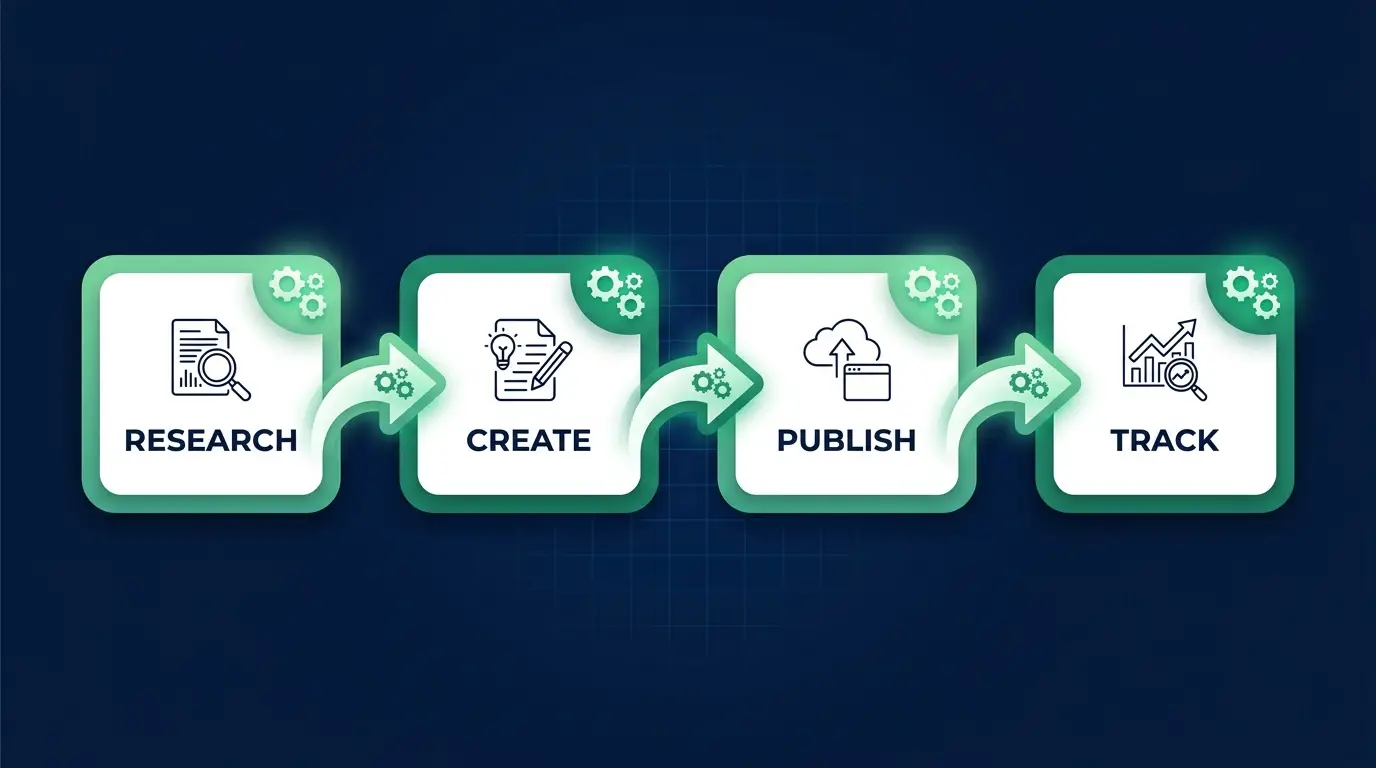
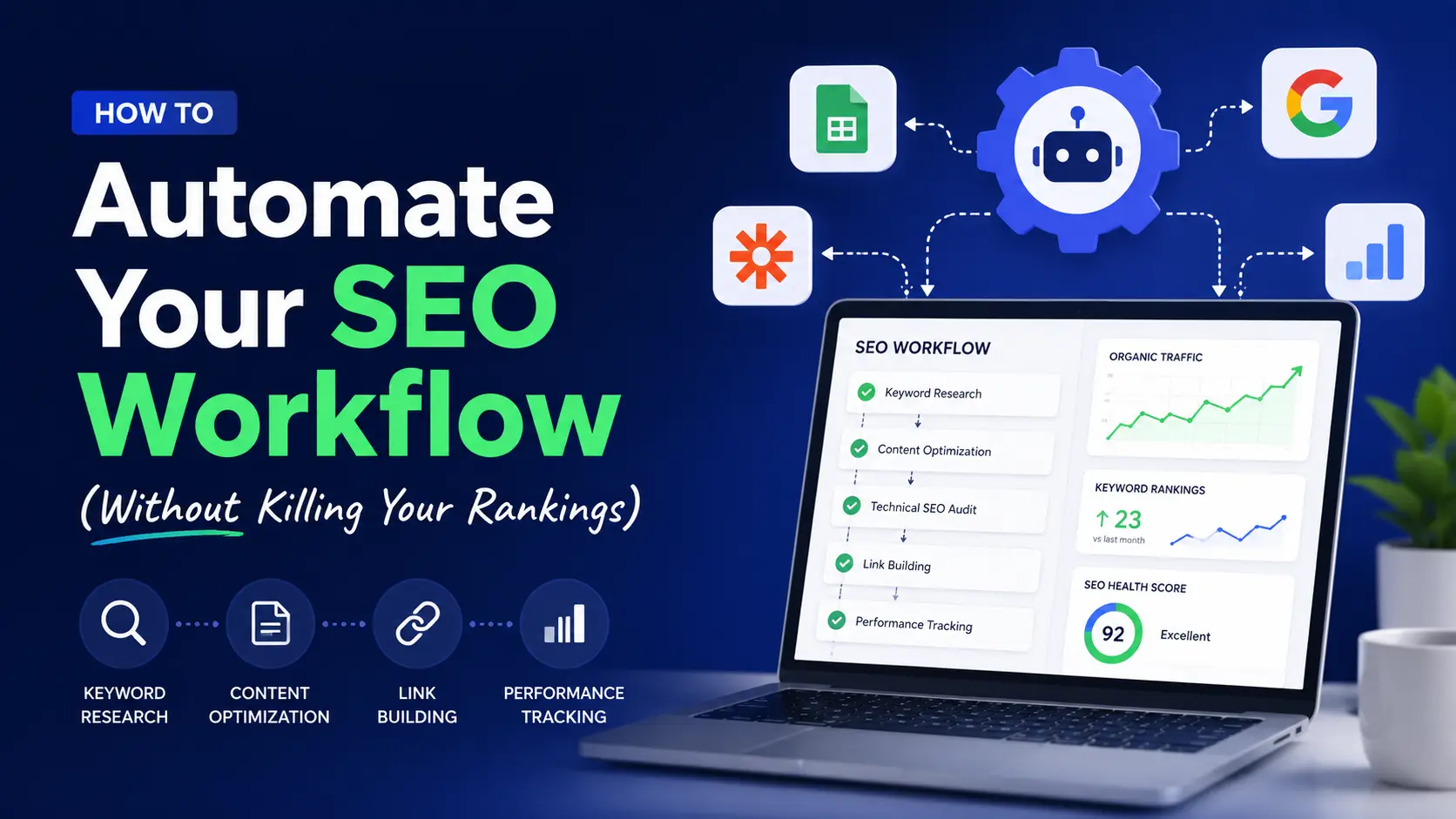
The Automated SEO Workflow, Step by Step
Stop thinking about automation as a pile of tools and start thinking about it as a pipeline. Here's the shape of one that actually runs.
1. Opportunity surfacing. Automated keyword and content-gap monitoring flags new terms you could win and pages slipping in rank. You review the list, you decide what's worth chasing. The tool finds; you choose.
2. Technical monitoring. A recurring crawl watches for broken links, crawl errors, indexation drops, and Core Web Vitals regressions. It alerts you when something breaks instead of you discovering it three weeks later in a traffic report.
3. Internal-link mapping. Automated link-graph analysis shows you which pages are orphaned, which are over-linked, and where a new internal link would actually move something. This is one of the highest-leverage automations and the most overlooked.
4. Semi-automated content production. Brief gets generated from the target keyword and the SERP. A draft gets roughed in. Then a human edits, fact-checks, and adds the things a model can't fake. Never skip that last step.
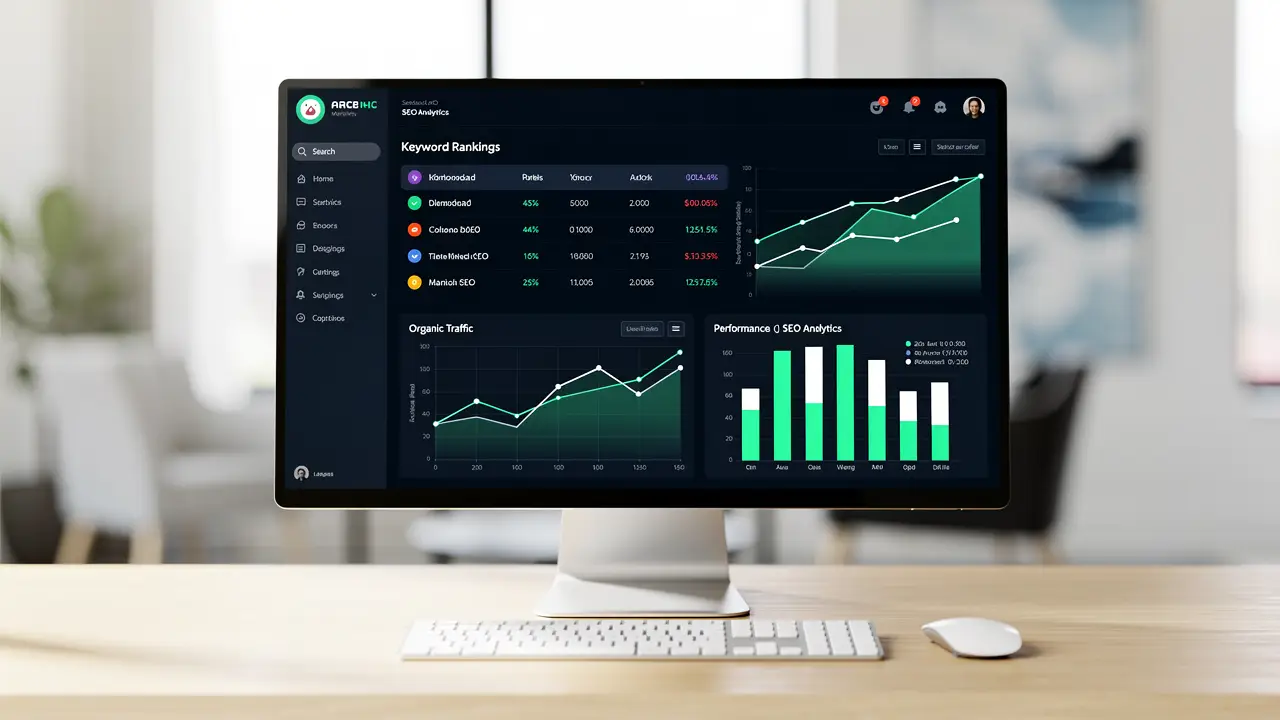
5. Reporting and alerting. Rankings, traffic, and technical health roll up into a dashboard on a schedule, with alerts for anything that moves sharply. You stop manually pulling numbers and start reading signal.
Each step has a trigger and a cadence. Some run daily, some weekly, some only when something changes. The point is that the boring parts run themselves and surface a decision to you, instead of demanding your attention to even start.
SEO Automation Tools That Earn Their Place
I'm not going to list twenty tools. Pick by the job you need done, not the brand on the box.
Monitoring and research. This is your rank tracking, keyword research, and competitor analysis. Ahrefs, Semrush, and similar platforms live here. If you do one paid tool, make it this category, because it feeds every other step.
Technical crawling. Screaming Frog and cloud crawlers handle site audits, broken links, redirect chains, and indexation. Set them on a schedule and let them yell at you when something breaks.
Search Console data. Google Search Console is free and underused. You can automate exports and alerting off it to catch indexation and performance issues straight from the source.
Reporting. Whatever stitches the above into a dashboard your client or your boss can read without you in the room.
A note on tools for agencies
If you're running SEO for clients, the math changes. The value of automation isn't just time saved, it's consistency across accounts and reporting that doesn't eat your week. Agency-grade tooling that lets you template audits and reports across every client is worth more than any single fancy feature. The teams that scale past a handful of clients are the ones that automated the repeatable parts of the audit and the report, then spent the freed-up hours on the strategy that actually keeps clients.
The mistake is buying a tool and treating it as the strategy. The tool runs the workflow. It doesn't decide the workflow.
How Marketing Automation Affects Your SEO
This cuts both ways, and you need to know the risks before the upside.
The risks are real. Automated content at scale tends toward thin pages that say nothing. Marketing platforms that render content with JavaScript can serve pages that bots and AI crawlers can't actually read, so you rank for nothing while your dashboard looks fine. Templated page generation can spit out near-duplicate pages that compete with each other and split your own rankings.
The upside is also real. Done right, automation gives you content velocity you can't match by hand, internal linking that stays consistent as the site grows, and schema markup applied correctly across hundreds of pages.
The rule I keep coming back to: automation should make good SEO faster, never make bad SEO cheaper. If a workflow lets you produce more of something you'd be proud to publish manually, ship it. If it just lets you flood the index with pages you'd be embarrassed by one at a time, you've built a liability.

Getting Started: Your First Three Automations
If this is new, don't try to automate everything at once. Start here.
1. Rank and index monitoring. Set up automated tracking for your core keywords and a check that your important pages are still indexed. This is your early-warning system.
2. A scheduled technical crawl. Put a recurring audit on the calendar with alerts. You want to hear about broken links and crawl errors from a tool, not from a traffic drop.
3. One content-brief workflow. Build a single repeatable process that turns a target keyword into a structured brief. One workflow, used over and over, beats a clever system you never finish building.
Get those three running and you've already removed most of the manual grind without risking anything. Everything else is an extension of the same idea.
FAQ
How is SEO a part of marketing automation? SEO sits at the top of the marketing automation funnel. It determines what content gets created and which topics you can realistically rank for, then feeds the organic traffic that your automation layer captures and converts. Treating them as one connected system, rather than separate teams, is where the compounding value comes from.
How does marketing automation impact SEO? It can help or hurt. On the upside, it gives you faster content production, consistent internal linking, and schema at scale. On the downside, automated content can be thin, JavaScript-rendered pages can be invisible to crawlers, and templated pages can duplicate and cannibalize each other. The outcome depends entirely on whether you're automating quality work or just automating volume.
What is SEO automation? SEO automation uses software to handle repetitive, rules-based SEO tasks such as rank tracking, site audits, monitoring, and reporting, freeing you to focus on strategy and content. It works best on mechanical tasks and poorly on anything requiring judgment.
How long does it take to learn SEO automation? You can set up basic automations like rank tracking and scheduled crawls in an afternoon. Getting genuinely fluent, knowing what to automate, what to leave alone, and how to read the signals, is a skill you build over a few months of doing real SEO work. The tools are easy; the judgment is the part worth learning.
Knowing what to automate is the difference between SEO that scales and SEO that quietly falls apart while you're not looking. If you want to actually build that judgment, the kind that comes from understanding how search, content, and marketing systems fit together, that's the skill worth investing in. The tools will keep changing. The understanding is what compounds.