Is Shopify Development a Good Career?

On this page
Yes, Shopify development is a good career. I'll say it plainly before I spend the rest of this post backing it up, because most people writing about this hedge so hard you can't tell what they actually think.
Here's what I actually think. It pays well, it ships fast, and the niche is far less crowded than the "I'm a React developer applying to 200 jobs" crowd you're probably picturing. That combination is rare, and a lot of people walk right past it because they assume "Shopify" means dragging blocks around a page builder.
It doesn't. There's real engineering under there, and there's real money attached to it.
I've coached people who went from zero into paid Shopify work faster than the full-stack crowd next to them, and I've also watched people pick it for the wrong reasons and quietly resent it a year in. So I'm going to give you the whole thing, the upside and the parts nobody selling a course will mention.
The honest verdict, up front
Yes. Shopify development is a genuinely good career, and in 2026 it's one of the better-kept secrets in web dev.
It pays well. It's remote-friendly. The niche is less crowded than "I'm a React developer" land. And the work is tied directly to money a business makes, which changes everything about how you get paid and how secure you feel.
But it's not free of tradeoffs, and anyone who tells you it is wants to sell you a course. I'm going to give you both sides.
The genuine case for it
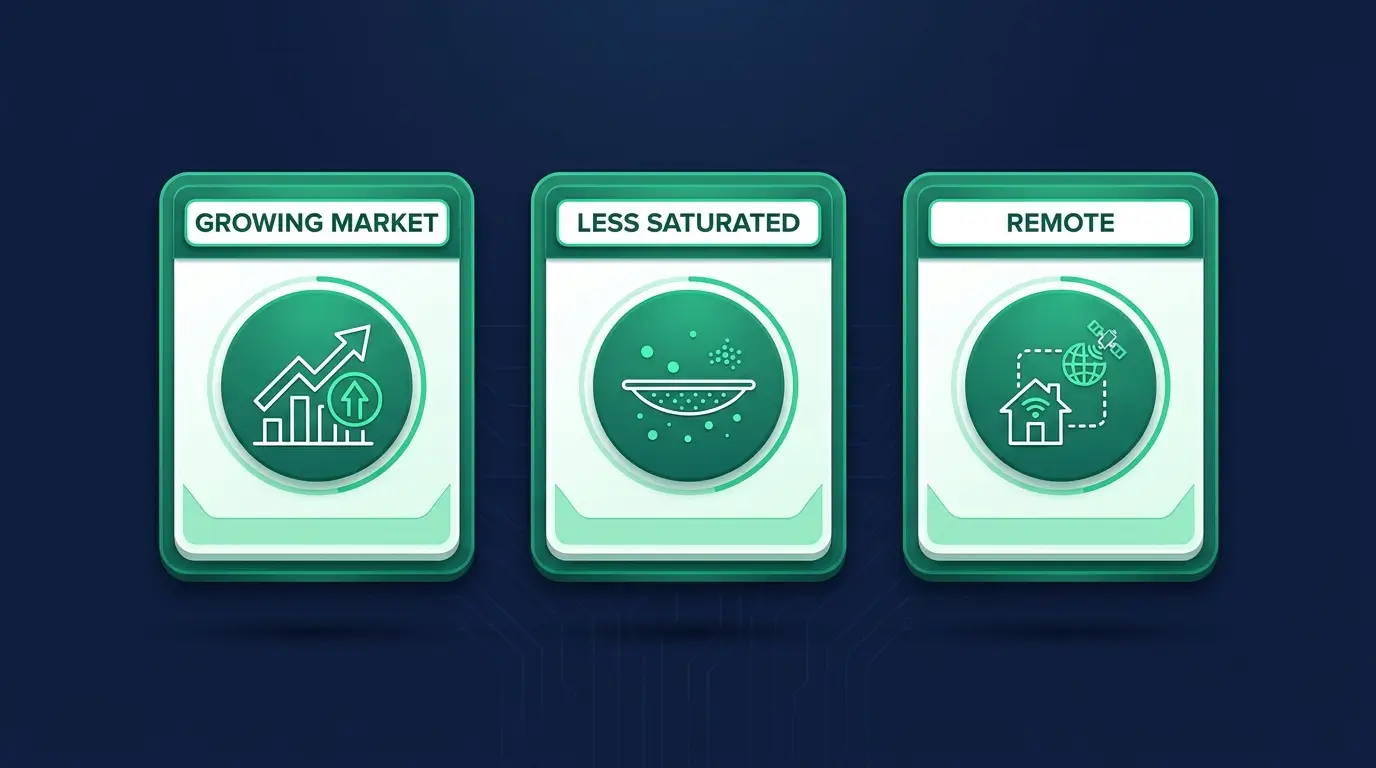
E-commerce isn't slowing down, and Shopify keeps eating share. Millions of stores run on it. Every one of them needs setup, customization, fixes, migrations, app integrations, and someone to call when checkout breaks at 2pm on Black Friday. That's a deep, renewing pool of work.
The niche is less saturated than general web dev. When you say "web developer," you're competing with everyone who finished a JavaScript course. When you say "I build and fix Shopify stores that convert," you're talking to a much smaller crowd. Specialization is leverage. Fewer people can do exactly what a Shopify merchant needs.
Your work ties to revenue, and that's the unfair advantage. This is the part most people miss. A general dev builds a feature, and the client has no idea if it was worth it. A Shopify dev speeds up a store, fixes a broken upsell, cleans up a checkout, and the merchant watches their sales number move. When your work touches money, you can charge against the money, not against your hours. That's how Shopify freelancers out-earn salaried devs with the same years in.
It's remote by default. Merchants are everywhere. The whole industry assumed remote before remote was cool. A solid Shopify dev in a small town can work with brands in three countries without leaving the house.
The on-ramp is faster than full-stack. Liquid, theme architecture, the basics of the platform, and HTML, CSS, and JavaScript will get you doing real paid work. You're not spending two years on data structures before anyone pays you. If you want the actual roadmap, I broke it down in how to become a Shopify developer.

The honest counter-case
Now the part the course-sellers skip.
You're renting your career from one company. Shopify owns the roadmap, the pricing, the API changes, and the rules. When they deprecate something or shift their app model, you adapt on their schedule, not yours. That's the cost of specializing in someone else's platform. It's real, and you should feel it before you commit.
Some of the work is repetitive. A lot of day-to-day Shopify gigs are theme tweaks. Move the button, change the font, swap the banner, fix the mobile spacing. It can pay the bills and it can also bore you stiff if that's all you take. The devs who stay happy push past pixel-pushing into performance, conversion, and custom app work.
A Shopify-only skill set is narrow. If you only ever learn Liquid and the Shopify ecosystem, you've got a smaller toolbox than a full-stack dev. That's fine while the platform thrives. It's a risk if your whole identity is "Shopify person" and nothing else. The fix is simple: keep your real fundamentals sharp underneath the specialty.
Client quality varies wildly. Tiny merchants can be the most stressful clients you'll ever have, because the store is their livelihood and every bug feels like an emergency. You'll need to manage expectations, not just code.
Who it's a great fit for, and who should skip it
It's a great fit if you like seeing your work matter quickly, you want freelance income that scales with results, you enjoy the mix of code and business, and you like the idea of a niche where you can become known.
Skip it if you want to build large software systems, you're chasing a big-tech engineering role, or repetitive client work would make you miserable no matter the pay. There's no shame in that. Better to know now.
If you're still deciding, the numbers help. I keep a current Shopify developer salary guide so you can see freelance versus salaried, junior versus senior, before you bet a year on it.
Does it have a future? The AI question, answered straight
Here's the fear I hear most: "Won't AI just build the stores?"
Short answer: AI changes the job. It doesn't delete it.
AI is genuinely good at boilerplate. It'll draft Liquid snippets, scaffold sections, explain an error, and knock out the repetitive theme work that used to eat your afternoon. If your entire value was typing out code a model can now generate in seconds, yes, that part is under pressure.
But that was never the valuable part.
The valuable part is knowing why a checkout converts at 1.8% instead of 3%, which third-party app is quietly tanking the page speed, how to migrate a 5,000-product catalog without losing SEO, and what to tell a merchant who wants a feature that'll actually hurt their sales. AI doesn't understand a specific business. You do.
Which gets me to the line I want you to keep: your job was never to build the theme, it was to own the merchant's outcome. The dev who owns the outcome uses AI to move faster and gets more valuable. The dev who only pushed pixels gets automated. Pick which one you're becoming.

Final verdict
Shopify development is a good career, with eyes open. Strong demand, real income upside, fast entry, remote by default. The tradeoffs are platform dependence, some repetitive work, and a narrower skill set if you let it stay narrow.
Treat it as a specialty on top of solid fundamentals, aim at conversion and performance instead of just theme edits, and use AI as a tool rather than fearing it. Do that, and it's one of the smartest career bets in web dev right now.
FAQ
Is Shopify development still in demand in 2026? Yes. E-commerce keeps growing and Shopify keeps adding merchants, each of whom needs setup, customization, and ongoing help. Demand for skilled devs who understand conversion has held up well.
Can you make good money as a Shopify developer? You can. Freelancers who tie their work to store revenue often out-earn salaried devs at the same experience level. See the salary guide for current ranges.
Is Shopify development hard to learn? The on-ramp is faster than full-stack. With HTML, CSS, JavaScript, and Liquid you can do paid work in months, not years. Going deep on performance and conversion is where it gets challenging, and where the money is.
Will AI replace Shopify developers? No. AI speeds up boilerplate Liquid and theme work, but it doesn't understand a merchant's specific business, conversion, or performance tradeoffs. Devs who own the outcome become more valuable with AI, not less.
Are there remote Shopify developer jobs? Plenty. The industry was remote-first before it was trendy. See current openings and how to land them in remote Shopify developer jobs.
If reading this lit something up instead of scaring you off, that's your answer. Shopify is a great place to build a career you actually own, and you don't have to figure out the path alone. Start with the full ecommerce specialist career path, and when you're ready to go deep, come learn it with us at codingphase. I'd rather you start now and adjust than wait another year wondering. You've got this.