How to Find Remote Shopify Developer Jobs (and Actually Get Hired)
On this page
It's 9pm in Austin and a candle brand's checkout just broke on the biggest sale night of the year. The owner is panicking, refreshing the page, watching carts get abandoned in real time.
Six hundred miles away, a developer cracks open a laptop at a kitchen table, pulls up the theme code, finds the bad Liquid tag, and pushes a fix. The cart works again. The owner never learns what city the person who saved her weekend was even sitting in. She just knows the store is back up.
That's the whole job. And that's why it's the most remote-friendly coding career most people have never seriously chased.
Here's the part that trips everyone up. The skill isn't the hard part. You can learn Liquid, ship a few stores, and still hit a wall that has nothing to do with code: you have no idea where these jobs actually live. So you guess. You scroll the same generic job board everyone else does and wonder why nothing fits.
Let me save you those months. If you can build and customize Shopify stores, you've already picked the right career. Now you just need to know where to look and how to look like someone worth hiring from a thousand miles away.
Why Shopify dev is built for remote work
Most coding jobs can be remote. Shopify dev is remote by nature.
Here's why. The whole job lives in a browser. The theme editor, the admin, the app store, the docs, GitHub, the staging URL you send a client. Nothing about it requires you to sit in a specific building. I've never once needed to be in a room with someone to ship a section or fix a broken cart.
It's also verifiable from anywhere. When you say "I built this," you paste a link. The hiring manager opens the live store, adds a product to cart, resizes the window on their phone. Your work proves itself in thirty seconds. That matters more than you think, because remote hiring runs on trust, and a live store is trust you can click.
And the ecosystem is freelance-heavy by default. A huge slice of Shopify work is project-based: a brand needs a theme customized, an app integrated, a checkout cleaned up. That kind of work was being shipped by contractors long before "remote" was a buzzword. You're stepping into a market that already assumed you'd work from home.
Who actually hires remote Shopify developers
Three groups, and they hire very differently.
Shopify agencies and Plus Partners. These are shops that build stores for a living, and a lot of them are remote-first or distributed across time zones on purpose. They take on bigger clients, so the work is steadier and you learn fast from senior people. Look for "Shopify Plus Partner" in an agency's footer. That badge means they handle enterprise-level merchants, which usually means better pay and harder, more interesting problems.
DTC brands hiring in-house. Direct-to-consumer companies that live and die by their store often want one developer who owns it. This is the most stable kind of remote Shopify role. You're not bouncing between clients, you're making one store better every week. The tradeoff is you go deep on one business instead of seeing many.
Freelance clients. Founders, small brands, and other agencies who need a specific thing done. This is where most people start, and honestly where the fastest money is once you're good. It's also where remote is simply assumed, nobody hires a freelance Liquid dev and expects them to commute.
If you're not sure which of these fits you, I broke down the full path in how to become a Shopify developer.
The exact titles to search for
This is the part Marco didn't know, and it's the part that quietly blocks most people. The jobs are there. They're just filed under names you aren't typing.
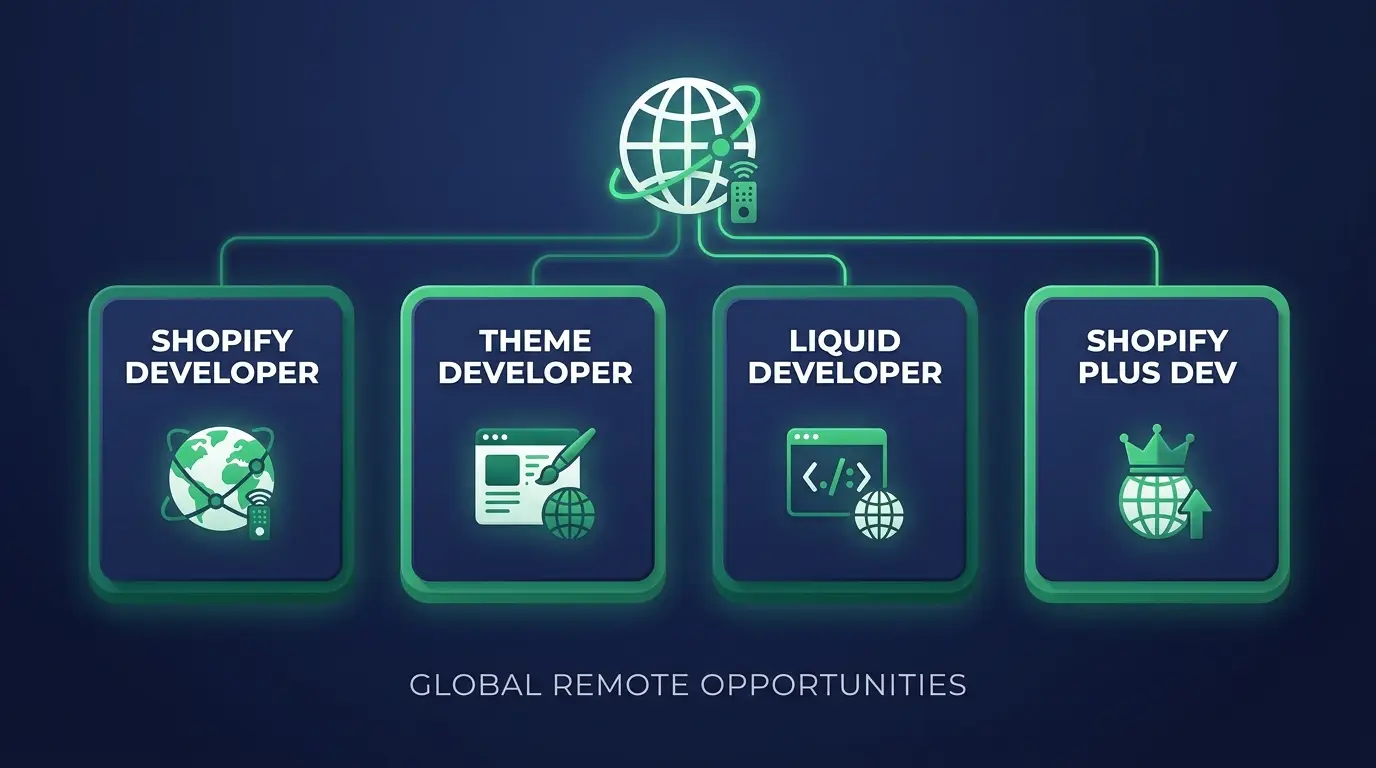
Search all of these, not just the obvious one:
- Shopify Developer (the broad catch-all)
- Shopify Theme Developer (front-end and theme-focused roles)
- Liquid Developer (Liquid is Shopify's templating language, and some listings lead with it)
- E-commerce Developer (wider net, often Shopify-specific once you read the listing)
- Shopify Plus Developer (enterprise work, usually higher pay)
- Front-End Developer (Shopify) (when the focus is the storefront UI)
Save every one of these as a search. The same job gets posted under three different titles depending on who wrote the listing, and the person who only searches "Shopify Developer" misses half the market without knowing it.
Where the remote jobs actually are
LinkedIn, used properly. Don't just scroll. Set the location filter to Remote, run each of the titles above, and save the search so LinkedIn pings you when new ones drop. The early applicants get the interviews. A saved search is how you become early without checking ten times a day.
Remote job boards. We Work Remotely, RemoteOK, Remotive, and the like. Filter for e-commerce or front-end and the Shopify roles surface. Smaller, focused boards often beat the giant ones because there's less noise.
The Shopify Partner directory and agency sites. Find the Plus Partners, open their sites, go straight to their careers page. Half the good agency jobs never make it to a job board because they get filled from the careers page and referrals first. Going direct puts you ahead of the crowd.
Freelance platforms. Upwork and similar marketplaces are full of Shopify work, especially theme tweaks and integrations. The early days are a grind on rates, I won't pretend otherwise. But it's the fastest way to get paid, real reviews, which become the proof that lands the next, better gig.
How to stand out for a remote role specifically
Remote hiring is different. They can't watch you work, so they're hiring for trust as much as skill. Here's what actually moves the needle.
A live store portfolio. Not screenshots. Real URLs they can open and poke. This is your single biggest advantage in Shopify, so use it. I put together Shopify developer portfolio examples for exactly this.
Reliability over genius. Remote managers have been burned by people who go quiet for three days. The developer who says "got it, shipping by Thursday" and then does, every time, beats the flashier one who disappears. Boring dependability is a superpower when nobody can see your desk.
Async communication. Write a clear update without being asked. Explain what you did, what's left, what's blocking you. The whole remote machine runs on good writing, and most developers are bad at it, which means decent writing makes you stand out fast.
Self-direction. Nobody is tapping your shoulder. Show, even in your cover note, that you can take a vague request and turn it into a finished thing without hand-holding.
Here's the line I'd tattoo on every remote applicant: in a remote Shopify role, clear communication is a feature you ship, not a soft skill you mention.
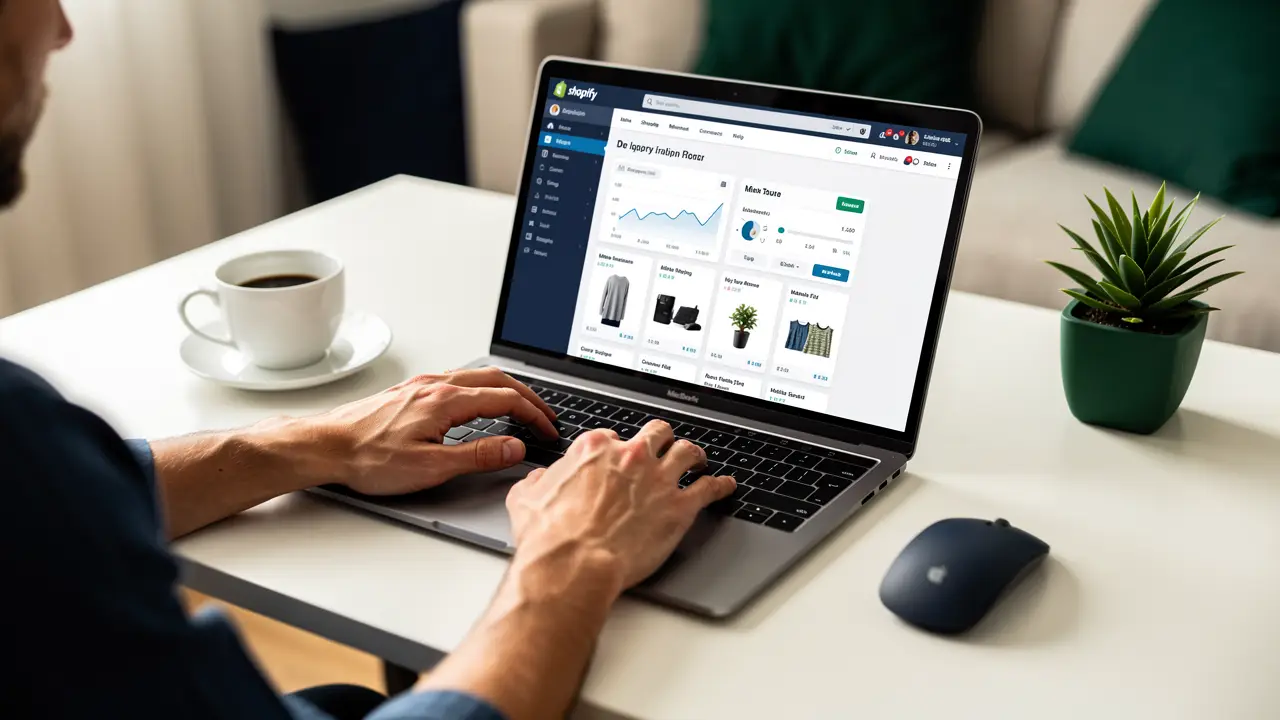
What remote Shopify pay actually looks like
In the US, full-time Shopify developer salaries land roughly between $60k and $140k, climbing with Plus experience and how much of the store you can own end to end. I went deeper on the numbers in the Shopify developer salary guide.
Freelance is hourly and ranges hard, from beginner rates that sting to senior rates that look unreal once you've got the reviews and the portfolio to back them.
Remote changes the math in a real way. When you're not tied to a city, you're competing in a global market. That cuts both ways. You're up against developers everywhere, but you can also work for companies that pay on their scale while you live somewhere cheaper. Plenty of people have quietly made that arbitrage the best financial decision of their career.
The honest tradeoffs
I'm not going to sell you a fantasy.
Remote and contract work means less stability, especially freelancing. Projects end. December gets slow. You have to manage the gaps yourself, which is a skill nobody teaches you.
You also carry your own structure. No office rhythm, no one keeping you on track. Some people thrive in that. Some people quietly fall apart in it. Be honest with yourself about which one you are before you go all-in.
And the global market that helps you can also undercut you on price early on. You win that fight with proof and specialization, not by racing anyone to the bottom.
FAQ
Are remote Shopify developer jobs actually realistic for beginners? Yes, but start freelance. Small theme tweaks and bug fixes on a marketplace get you paid reviews and a real portfolio, which is what unlocks the better remote full-time roles later.
Do I need a degree to get a remote Shopify job? No. I've never seen a Shopify hire come down to a diploma. A live store portfolio outweighs a degree in this niche every time.
Which job title should I search first? Search all six, but start with "Shopify Developer" and "Shopify Theme Developer," then save the rest as alerts. The same role hides under different titles depending on who wrote it.
Is freelance or full-time better for remote Shopify work? Freelance pays faster and is easier to break into. Full-time is more stable and less stressful. Most people freelance first to build proof, then move to a full-time remote role once they want steadiness.
Do I need to know more than Liquid? Liquid gets you in the door. HTML, CSS, and JavaScript make you genuinely useful, and basic familiarity with Shopify apps and the admin is what separates a tweaker from someone who can own a store.
Marco's wall wasn't skill. It was a map. Once he knew the titles to search and where to look, he had two freelance gigs inside a few weeks and a real remote role not long after.
If you're somewhere in that same spot, knowing how to build but not where the jobs hide, start with the ecommerce specialist career path and keep building stores you can link to. The work is remote-friendly, the demand is real, and you're closer than the silence in your inbox makes it feel.
You've got this. Go open one of those saved searches.