How to Become an Email Marketing Specialist (With No Degree and No Experience)
On this page
The fastest way into this job is not the one everybody takes.
The normal route is a marketing certificate, a portfolio of campaign screenshots, and an application into a pile of four hundred people who all did the same course. It works eventually, for some people.
The faster route is to learn the one skill the pile doesn't have. Almost nobody applying for email marketing jobs can open the HTML of a broken template and fix it. Learn that, plus the platform, plus enough data sense to prove your work made money, and you're not in the pile at all.
Here's how I'd sequence it if you were starting Monday.

Month one: learn to build the thing you'll be selling
Start with the email itself, not with strategy.
Learn HTML and CSS to a basic working level, then learn how email HTML differs from web HTML, which is more than people expect. Tables for layout. Inline styles. Fixed widths. Conditional comments for Outlook. Images that must survive being blocked by default.
Build five emails by hand. A plain text-and-button announcement, a two-column product email, a newsletter with sections, an abandoned cart email, and a receipt-style transactional email. Send each one to yourself and open it in Gmail, Outlook, and Apple Mail on both desktop and phone. Fix everything that breaks.
That last exercise is the whole month in one line. Everyone can make an email that looks good in Gmail. The job is the other clients.
If you want a structured version of exactly this, it's the opening stretch of our Email Marketing Specialist path, which teaches the code before the strategy on purpose.
Month two: learn one platform properly
Pick based on where you want to work.
Klaviyo if you want ecommerce, which is where most of the entry-level jobs are and where email is most obviously tied to revenue. HubSpot if you want B2B and a slightly more corporate route. Mailchimp is worth an afternoon because small companies still run on it, but don't build your career on it.
Create a free account and build a complete program for a made-up brand. Not a single campaign. A program: signup form, welcome series with three emails and branching logic, an abandoned cart flow, a post-purchase sequence, a win-back for people who haven't bought in 90 days, and segments that keep them from colliding.
Then do the platform's free certification. It takes a day and it gets you past first-round filters. It will not get you a job on its own, and anyone telling you otherwise is selling a course.
Month three: learn deliverability and data
This is where you separate from people who've done the same certifications.
Deliverability. SPF, DKIM, DMARC, what a sending domain is and why you warm it, why sending to people who never open damages everyone else's inbox placement, and how to sunset a dead segment. This knowledge saves companies real money and almost no junior marketer has it.
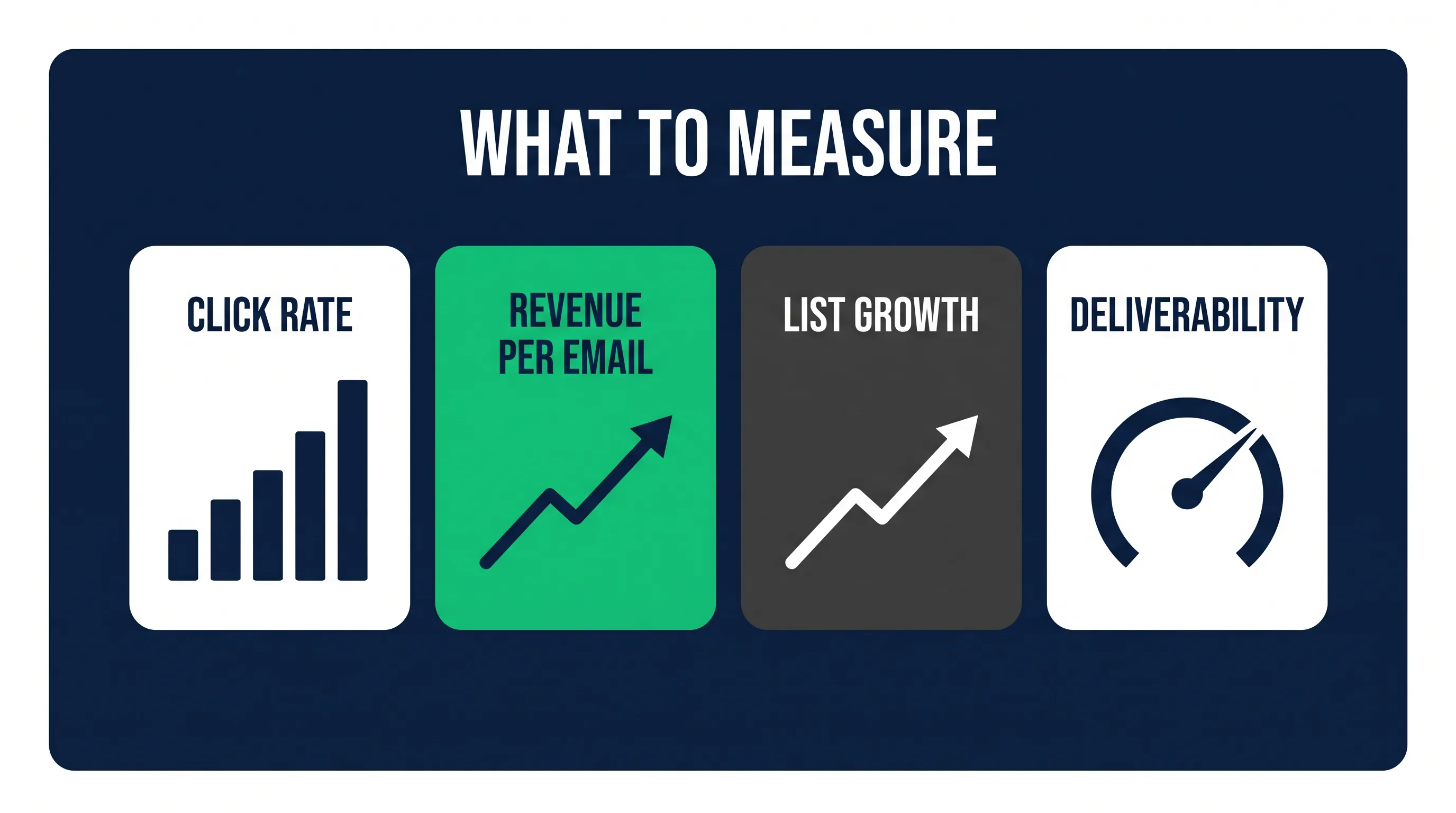
Measurement. Open rates are unreliable now. Learn to work in clicks, conversion, revenue per recipient, and list growth net of unsubscribes. Get comfortable enough in a spreadsheet to build a simple report without help.
Segmentation logic. Recency, frequency, value. Who to exclude, and when sending less makes more.
Month four: do it for one real business
This is the step that actually gets you hired, and it's the one most people skip because it involves talking to someone.
Find a small business with a customer list they barely use. A friend's store, a gym, a barber, a local service company, a creator with a mailing list. Offer to set up their welcome flow and one recovery flow for free or nearly free.
Then do it properly. Code the templates by hand. Set up the flows. Check their sending domain is authenticated, because it probably isn't. Run it for four weeks and record what happened.
What you get out of that: a portfolio with real code in it, a case study with a number attached, and one person who will vouch for you. "I built a welcome flow for a local store that produced $2,100 in its first month" is a sentence that ends interviews well.
Do it twice if you can. Two case studies is where people start replying to your applications.
Month five and six: apply properly
Search every title, not one. Email marketing specialist, email marketing coordinator, CRM specialist, lifecycle marketing associate, marketing automation coordinator, retention marketing associate. They're often the same job. The email marketing jobs guide has the full list, and the CRM specialist role is one of the easiest doors in.
Lead with the technical skill in your first line. Not "passionate about email marketing." Something like: "I code email templates by hand and build Klaviyo flows. Here are two I built for real businesses and what they produced."
Send an audit instead of a cover letter. Sign up for the company's list, receive their welcome email, screenshot what's wrong with it, and send three specific improvements. This works far more often than it should, because it demonstrates the job instead of describing it.
Expect coordinator titles first. $50k to $70k is a normal first offer. The email marketing specialist band of $65k to $100k comes with a year or two of proof behind you. That's a fast ladder by any standard.

What to skip
Degrees. Not required and rarely asked about in this field.
Expensive bootcamps that teach only strategy. You'll finish with the same portfolio as everyone else and no technical edge.
Learning five platforms. Depth in one transfers. Shallow familiarity with five doesn't.
Waiting until you feel ready. You will not feel ready. Build the first flow badly and improve it.
How long it really takes
Four to six months of consistent work to be genuinely employable, if you're putting in real hours and building rather than watching.
Faster if you already write code, in which case the email HTML part is a couple of weeks and you're mostly learning platforms and marketing judgment. If you're coming from a developer background, the case for pointing your existing skills at this market is laid out in why engineers switch to martech.
Slower if you're working full time elsewhere, which is most people. Eight months at an hour a night still gets you there.
FAQ
How do I become an email marketing specialist with no experience? Learn email HTML and CSS, learn one platform deeply, build a complete program in a free account, then run real flows for one small business so you have a case study with numbers. That package beats a certificate on its own.
Do I need a degree? No. This is one of the more credential-blind marketing roles. Portfolio and demonstrated results carry the hiring decision.
What certifications actually help? Klaviyo and HubSpot, both free, both useful for getting past first filters. Treat them as a screening tool, not as training.
How much will I earn starting out? Coordinator roles usually start at $50k to $70k. Specialists run $65k to $100k. Managers reach $110k and beyond. The full ladder is in email marketing jobs.
Is it too late to get into email marketing? No. Demand is steady because email is the one channel companies own outright, and the supply of people who can handle the technical side is still thin.
Should I freelance or get a job first? A job first, if you can. You learn faster with a real list, a real calendar, and someone senior correcting you. Freelance after you know what good looks like.
Here's the honest summary. This career doesn't ask for permission, a degree, or four years. It asks for four to six months of building things that work, and one small business willing to let you prove it.
Code one email tonight and open it in Outlook. Whatever breaks is your first lesson, and it's the same lesson most people in this field never bother to learn.