Ecommerce Developer vs Ecommerce Specialist: Which One Should You Be?
On this page
Search "ecommerce developer" and half the page is Upwork and Fiverr trying to sell you one. Search "ecommerce specialist" and you get career guides and a Reddit thread.
That difference in the search results is the difference between the two jobs, and it's worth understanding before you pick one.
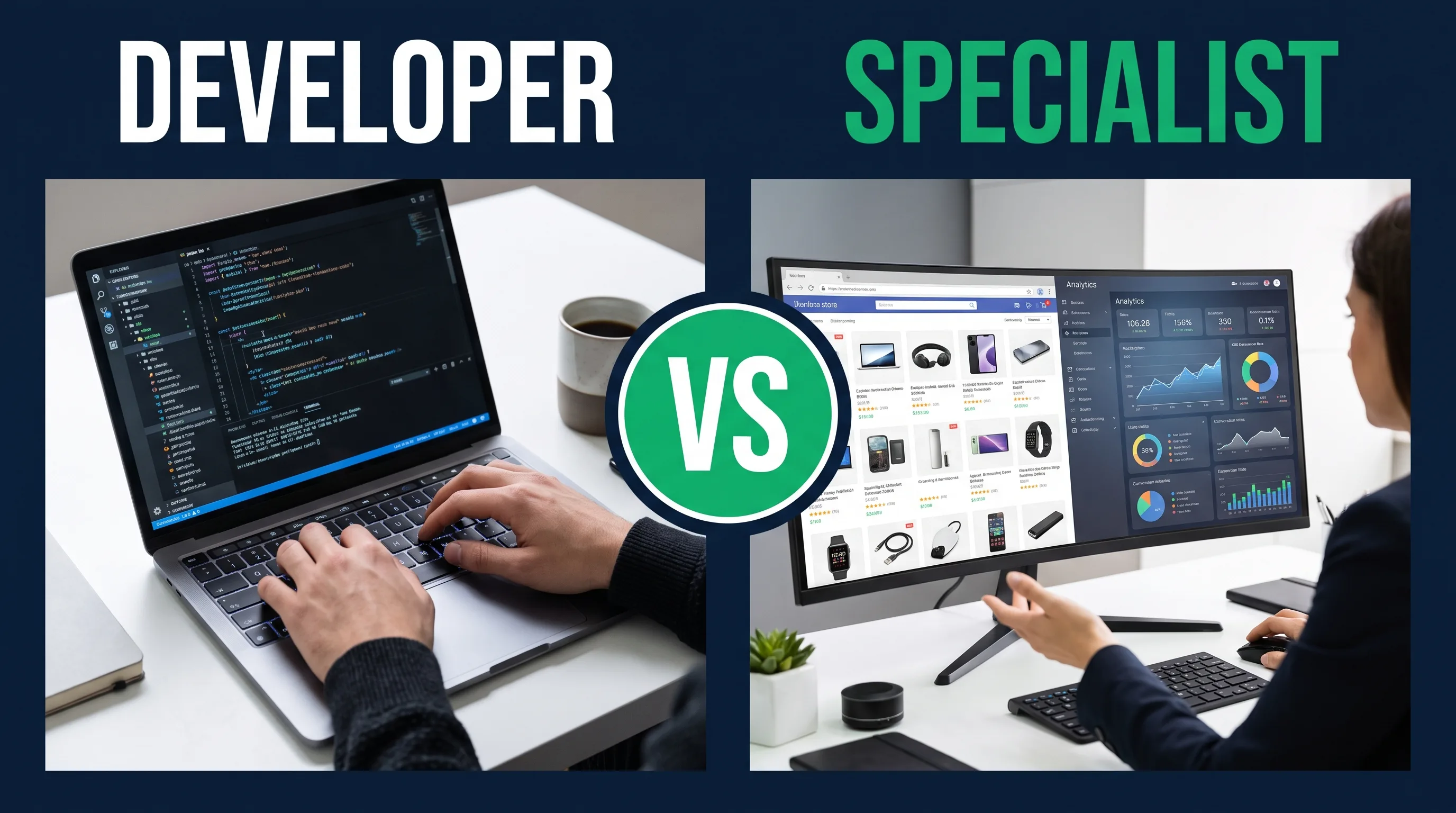
An ecommerce developer is a technical role people hire for a project. An ecommerce specialist is an operational role people hire for a team. Both good, both pay well, and the day to day has almost nothing in common.

The short version
The developer builds the store. The specialist runs it.
When a brand wants a custom bundle builder on the product page, the developer writes it. When someone has to decide which products go in the bundle, what it's called, what it's priced at, and whether it actually sold, that's the specialist.
Same store, same week, completely different problems.
What each one does on a Tuesday
The developer. Building a new section for the theme so marketing can drop testimonials into any page without asking. Fixing the cart drawer that broke when an app updated overnight. Wiring the store to the warehouse system through the API. Chasing down why the product page scores 34 on mobile performance and getting it to 70. Most of the day is in a code editor, some of it is in a spreadsheet of bugs, very little of it is in meetings.
The specialist. Loading the new season's products with correct data. Reordering collections before Thursday's launch. Pulling last week's numbers and noticing search results for a top term return nothing. Setting up the promo. Writing the email brief. Testing checkout on an actual phone. Most of the day is in the store admin, a good chunk in analytics, and more meetings than the developer has.
Neither of those days is harder. They just suit different people, and you probably felt a pull toward one while reading.
Skills, side by side
| Ecommerce developer | Ecommerce specialist | |
|---|---|---|
| Core skill | Writing code that runs a store | Running a store that already works |
| Daily tools | Liquid, HTML, CSS, JavaScript, Git, APIs | Store admin, analytics, spreadsheets, email platform |
| Success looks like | It works, it's fast, it didn't break | Revenue and conversion went up |
| Hardest part | Edge cases and other people's apps | Owning outcomes you don't fully control |
| Who you talk to | Other developers, the person who filed the ticket | Marketing, merchandising, customer service, the boss |
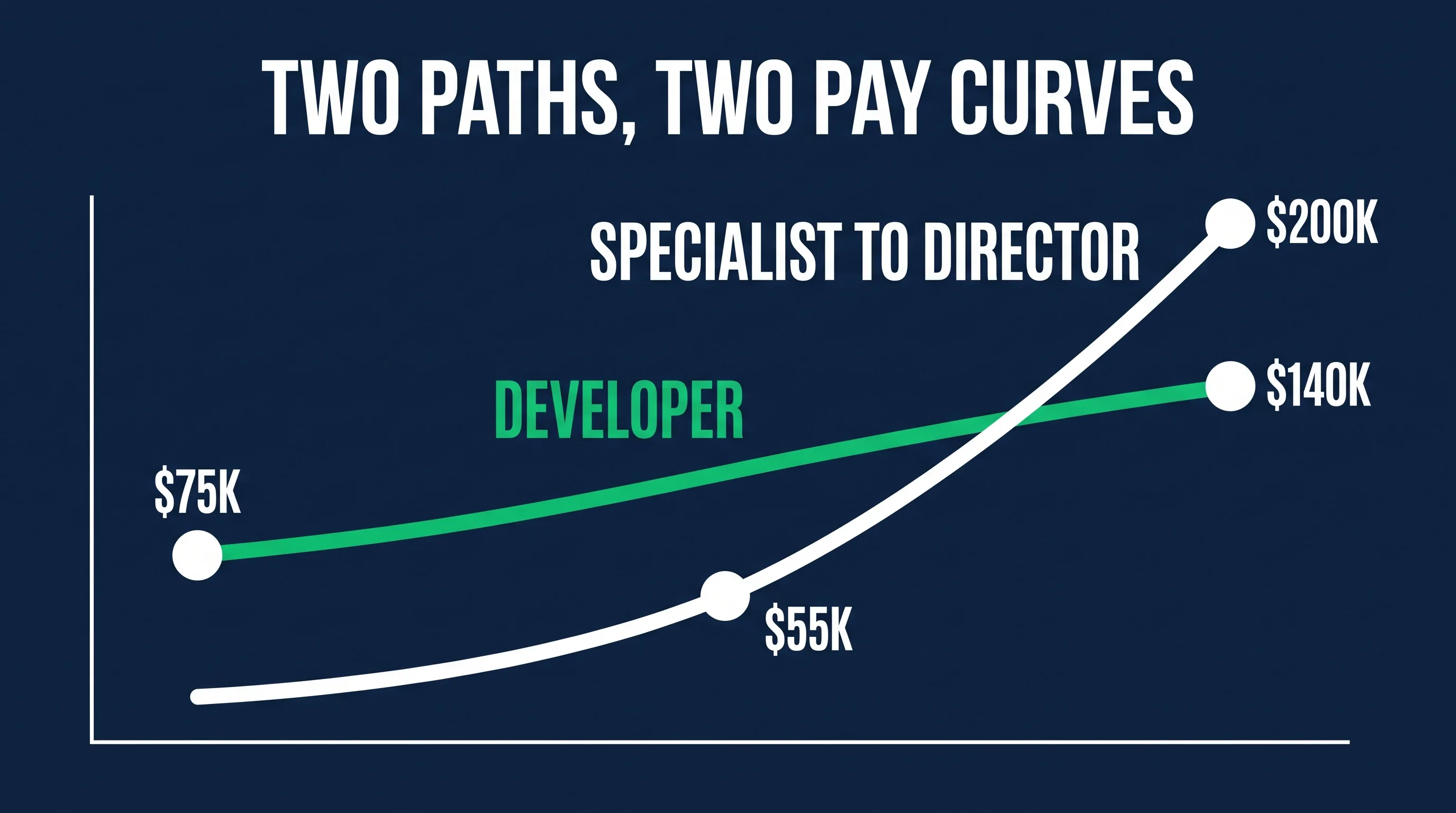
| Typical US pay | $75k to $140k | $55k to $80k, then manager money above that |
That pay row is the one people fixate on, so let's be careful with it.
The pay curves are shaped differently
Developers start higher and climb with technical depth. A theme-only developer sits near the bottom of that range for years. The ones who build custom apps, work on Shopify Plus, and handle checkout extensibility clear $130k and up. The whole spread is in the Shopify developer salary guide.
Specialists start lower and climb with scope. You go specialist, then manager at $75k to $110k, then senior manager, then director at $130k to $200k. The ceiling is higher on paper, but you get there by owning more of the business rather than by getting better at one craft.
So the honest framing: if you want the highest pay in the shortest time and you like building things, developer. If you want the higher ceiling and you like deciding things, specialist into management. Both are real routes and I've watched people do very well on each.
The competition problem nobody mentions
Here's the thing that should genuinely affect your choice.
"Ecommerce developer" is a crowded title. Every bootcamp graduate who learned React is applying to those postings, plus a global freelance market that will do theme edits for $15 an hour. The SERP is full of Upwork and Fiverr because that's who competes for the work. You can absolutely win in that market, but you win by being genuinely good at the hard parts, not by existing.
"Ecommerce specialist" has thinner competition and a weirder problem: most applicants aren't technical at all. They can write a product description and use the admin panel, and that's where it ends. Which means a specialist who can also code is not competing with the other specialists. They're in a category of one.
That combination is why our path teaches both halves, and why we named it Ecommerce Specialist rather than developer. Building stores is the skill. Running them is the job most people get hired into. Having both makes you the person the agency can't replace with a cheaper contractor and the brand can't replace with a smarter marketer.

Which should you pick
Pick developer if you lose track of time solving a problem in code, you'd rather ship something that works than argue about a discount, and you're okay with the fact that half your market is freelance. Start with how to become a Shopify developer and get the tooling from the best Shopify developer tools.
Pick specialist if you like seeing the whole board, you're interested in why people buy things, and the idea of owning a revenue number sounds like a challenge rather than a threat. The route in and the rest of the ladder are in the ecommerce jobs guide.
Pick both if you're early and undecided, because they are not opposite directions. Build a store, then run it, and see which half you keep going back to. Six months of that will answer this question better than any article can, including this one.
What if you already have a job in one and want the other?
Moving from developer to specialist is straightforward. You already understand the machine, and you're learning merchandising, analytics, and how to argue about margin. Most developers who make this move do it because they got tired of building things other people decided.
Moving from specialist to developer is harder but very doable, and it's the more valuable direction financially. Start with Liquid and the theme architecture, since you already know the admin side better than most developers ever will. You've got a real advantage there: you know why the feature is being asked for. If you want a sense of how the technical path compares to a general dev job, Shopify developer vs web developer covers it.
FAQ
Is an ecommerce developer the same as a web developer? No. A web developer builds websites generally. An ecommerce developer specializes in stores: platforms like Shopify, checkout behavior, product data, payments, and the integrations behind orders. The specialization pays better than generic front-end work because fewer people have it.
Which pays more, ecommerce developer or specialist? Developer, early on. A developer typically starts around $75k where a specialist starts around $55k. The specialist track catches up and passes it if you move into management, because manager and director pay scales with the size of the channel you own.
Do ecommerce specialists need to code? Not to get hired. To get paid at the top of the band, yes, at least enough to read Liquid, fix a template, and understand what an app is doing to your site. That's the difference between the specialists who plateau and the ones who become managers.
Which one is more in demand? Specialist and manager roles outnumber developer roles at brands, because every store needs someone running it and only some need a full-time developer. Developer demand is concentrated in agencies and larger companies.
Can I do both jobs at once? At a small company, you will, whether or not the title says so. That's the fastest way to learn both, and it's why small brands are underrated first jobs.
The question underneath this one is usually "which do I have a shot at," and the answer is both, sooner than you think. Neither role requires a degree. Both hire on demonstrated work.
So stop choosing in the abstract. Stand up a store this month, build something custom in the theme, then try to sell one thing through it. You'll know within a few weeks whether you're the person who enjoyed building it or the person who enjoyed selling through it, and that's your answer.