AI Automation Portfolio Examples
On this page
Open up the average "AI automation" portfolio and here's what you find. A grid of course-project clones. The same chatbot tutorial everyone built. Three certificates with gold seals on them. A demo workflow that summarizes a PDF, which is the automation equivalent of "Hello, World." Scroll the whole page and you will not find a single thing a real business would have paid money for.
It looks busy. It looks like effort. And it gets ignored, because it answers a question nobody asked.
Hiring managers for automation roles don't want to read that you "have experience with Zapier and AI." They've seen the certificates. They want to see a thing you built, why you built it, and what it changed. A list of tools is a claim. A documented build is evidence. A certificate is just proof you watched the videos.
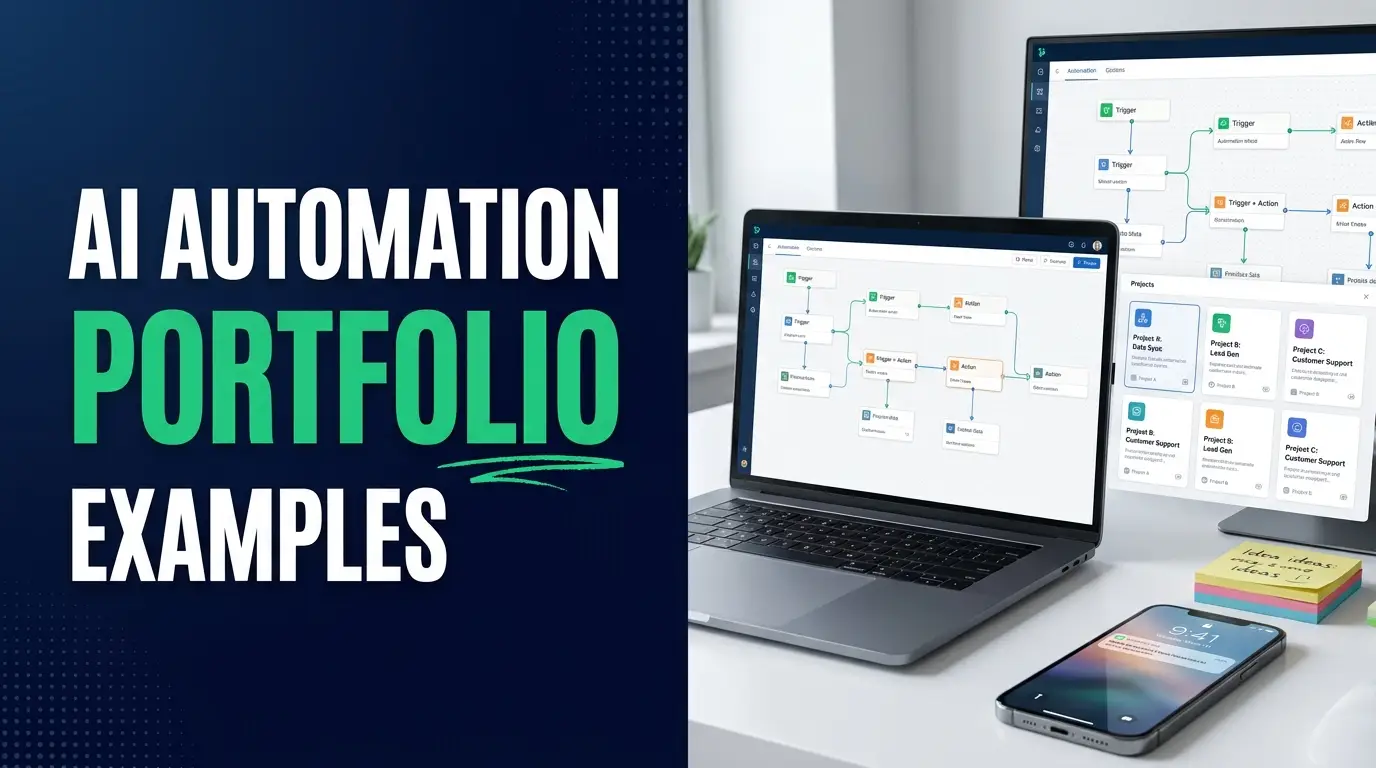
So let's fix the portfolio, not the resume. Here's what one that actually lands an automation job looks like, six projects a beginner can build, and the exact way to write each one up so it reads like work instead of homework.
The reframe that changes everything
Most people stall because they think the order is: get the job, then do the work, then have proof. It's backwards.
You don't need a job to have done the work.
Nobody is checking whether the lead-routing flow you built runs for a real company with real revenue. They're checking whether you understood a real problem and solved it with the right tools. A made-up business with a made-up inbox is fine, as long as the automation is real and runs. Build it for a fake bakery if you have to. The flow doesn't know it's fake.
That single shift is what separates the people who break in from the people who keep collecting certificates.
What a portfolio that gets hired actually contains
Three to five projects. That's it. More than five and nobody reads them. Fewer than three and it looks like a fluke.
Each project should hit a different muscle, so the spread shows range: one that moves data between systems, one that uses AI to make a judgment call, one that produces content, and one that's a genuine agent doing a multi-step task. A reviewer skimming for fifteen seconds should be able to tell you can do more than wire two apps together.
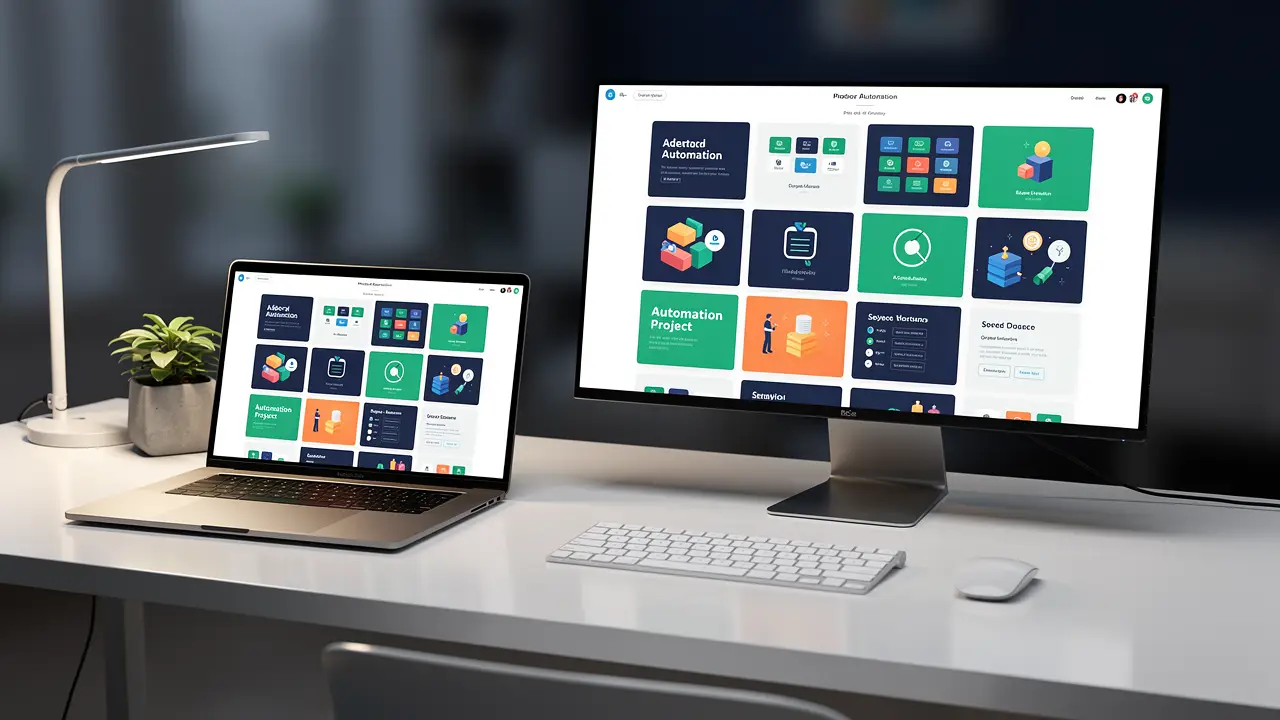
And every project needs a write-up. A screenshot of a workflow canvas with no explanation is worthless. The story around it is the actual portfolio piece. We'll get to the exact template, but first, here's what to build.
Six projects a beginner can actually build
These are ordered roughly easy to hard. You do not need all six. Pick the spread that shows range.
1. Lead-routing flow. A form submission comes in. Your automation reads it, scores or categorizes the lead, and routes it to the right place: hot leads get a Slack ping and a calendar link, cold ones drop into a nurture list, spam gets killed. This is the bread-and-butter of automation work, and it proves you understand conditional logic and real business intent, not just "if this then that."
2. AI email triage. Connect to a Gmail inbox and let an AI model read each message, then label it (sales, support, billing, junk), draft a suggested reply, and flag anything urgent. This is the project that makes people lean in, because it's visibly AI doing a human judgment task. Build it on a throwaway inbox you fill with sample emails.
3. Content-repurposing pipeline. One input, many outputs. Drop in a blog post or a YouTube transcript, and the flow generates a LinkedIn post, three tweets, an email summary, and a meta description, then files them in a Google Doc or Notion. Every marketing team on earth wants this, which makes it an easy one to talk about in an interview.
4. CRM sync. Keep two systems in agreement without anyone touching a spreadsheet. A new customer in your store creates or updates a contact in your CRM, tags them by what they bought, and logs the order. Unsexy, and that's exactly why it's valuable. Data plumbing is most of the actual job, and showing you can do it cleanly signals you're hireable for the boring, well-paid work.
5. Report automation. On a schedule, pull numbers from a few sources, have an AI write a short plain-English summary of what changed and why it matters, and deliver it to Slack or email every Monday morning. This shows scheduling, multi-source data, and the AI-as-analyst pattern in one tidy build.
6. An AI agent that does a real task. This is your headliner. Not a chatbot, an agent: something that takes a goal, makes decisions, uses tools, and finishes a multi-step job on its own. For example, "research these ten companies, find the head of marketing, and draft a personalized opener for each." It plans, it calls tools, it loops. If you can ship one working agent, you're ahead of most people applying next to you.
The honest part: where these go wrong
I'd be lying if I said you can throw these together in an afternoon and be done.
The agent project especially will humble you. Agents fail in ways simple flows don't, they loop forever, they hallucinate a tool call, they confidently do the wrong thing. Budget real time for it, and don't fake a result. A reviewer who builds agents for a living will smell a demo that never actually ran.
The other trap is over-polishing the screenshot and under-writing the story. I've seen gorgeous workflow canvases with one sentence under them, and they land flat every time. The reverse, an ugly flow with a sharp write-up, gets the call. The thinking is the product.
And don't build all six at a shallow depth. Three projects you can defend in detail beat six you'd stumble explaining.
How to document each one as a case study
Here's the template that turns a build into a portfolio piece. Four parts, in this order, for every project.
Problem. One or two sentences on the real pain. Not "I wanted to learn n8n." Instead: "A small agency was losing warm leads because form submissions sat in an inbox over the weekend." Lead with the human cost. This is where you prove you understand why automation matters, which is the thing tools can't teach.
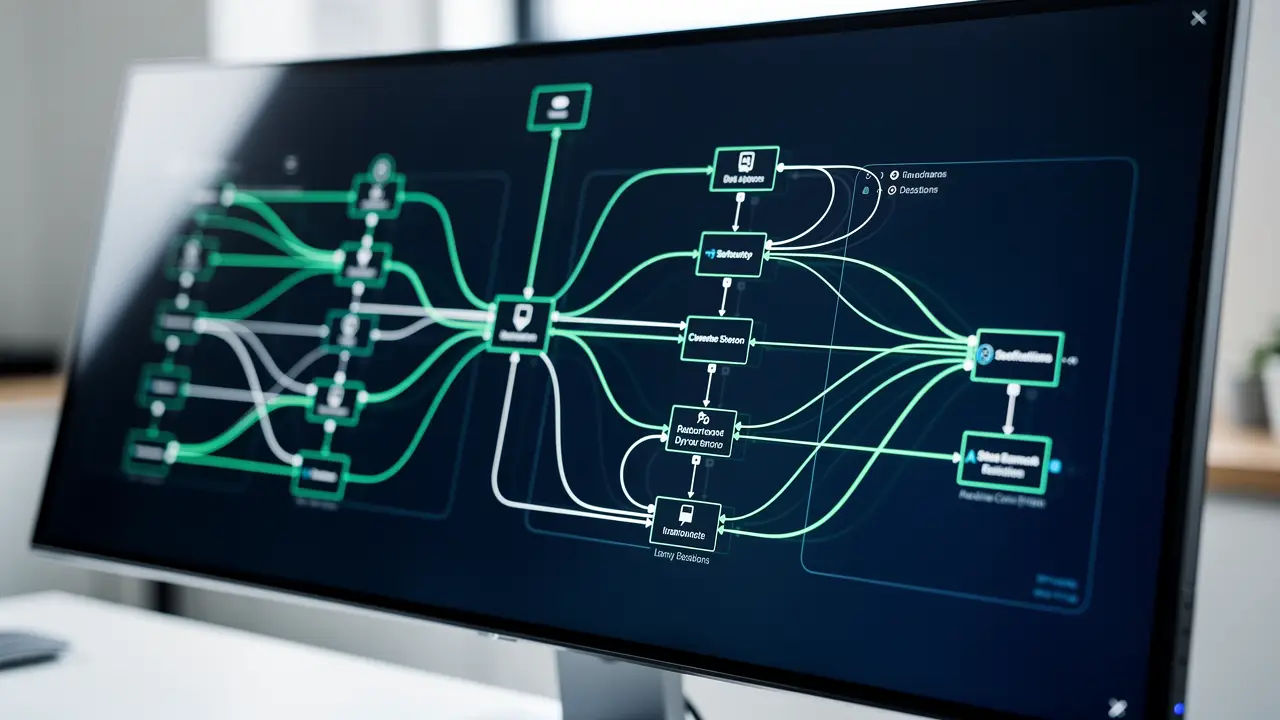
Build. Walk through the flow in plain language. Trigger, the steps, the decision points, what happens at the end. Two short paragraphs or a tight numbered list. Include one screenshot of the actual workflow. Enough that a technical reader trusts it's real, not so much that a non-technical hiring manager bounces.
Tools. Name them. n8n or Make, the OpenAI or Claude API, Gmail, a CRM, whatever you used and a one-line why for the important choices. "I used n8n over Zapier because the lead volume would've made Zapier's per-task pricing painful at scale." That sentence alone signals you think about cost and tradeoffs like someone who's done this for money.
Result. What changed. If it's a real client, use the real number. If it's a practice build, state the realistic impact honestly: "This removes roughly two hours of manual sorting a day and means no lead waits longer than five minutes." Don't invent fake revenue. A grounded, honest result reads as more credible than a made-up one, and an interviewer can always tell.
Write each case study so someone could read only it, with no other context, and understand the problem, the solution, and why you made the calls you made. That self-contained quality is what makes a portfolio feel professional.

Where to actually put it
Don't overthink the platform. A simple site, a Notion page, or even a clean GitHub repo with a good README per project all work. What matters is that each project has its four-part write-up and a way to see the flow. Record a 60-second screen capture of the automation running if you can, a thing that visibly works beats any amount of description.
Then link to it everywhere: your resume, your LinkedIn, the first line of every application. Make it impossible to evaluate you without seeing the work.
If you want a structured path to building these skills in order rather than guessing, the AI Automations career path lays out the sequence, and How to Become an AI Automation Specialist covers the rest of the journey from first project to first offer. For picking what to build with, the best AI automation tools breaks down where each one earns its place.
FAQ
How many projects should an AI automation portfolio have? Three to five. Three is the floor that proves it wasn't a fluke; five is the ceiling before reviewers stop reading. Pick a spread that shows range, one data-sync project, one AI-judgment project, one content project, and ideally one true agent, so a fifteen-second skim tells someone you can do more than connect two apps.
Can I build a portfolio with no clients or job experience? Yes, and most people who get hired did exactly that. Build the automations for a made-up business with sample data. The flow runs the same whether the company is real or not. What's being evaluated is whether you understood a real problem and solved it well, not whether money changed hands.
What should each project write-up include? Four parts: Problem (the real pain, in human terms), Build (the flow in plain language plus one screenshot), Tools (what you used and why), and Result (what changed, stated honestly). Each write-up should stand alone, readable with zero other context.
Should I fake results to make projects look impressive? No. Invented revenue numbers are the easiest thing for an experienced interviewer to catch, and getting caught sinks your credibility instantly. State realistic impact for a practice build, hours saved, response time cut, errors removed. An honest, grounded result beats a flashy fake one every time.
Which project is the most impressive to show? A working AI agent that completes a real multi-step task on its own. It's the hardest to build and the one fewest applicants have, so shipping a single solid one puts you ahead of most of the field.
The student I mentioned at the top stopped applying for two weeks and built three of these instead, the email triage, the content pipeline, and one scrappy agent. He wrote each one up the way I just described. The callbacks started before the projects were even polished.
You already have everything you need to start. Pick one project, build it for real, and write the story around it. The work proves the work, and once you've done it, no one can tell you that you haven't. Start with one this week, and come build the rest with us.