Ecommerce Assistant: The Easiest Door Into Ecommerce (and What It Leads To)
On this page
If you're trying to get into ecommerce and everything you find asks for two years of experience, this is the job that doesn't.
Ecommerce assistant is the entry door. It pays $40k to $55k, most postings don't require a degree, and plenty of people in these roles came straight from retail floors and customer service queues.
It is not a glamorous job. It is a real seat inside a real store, which is the one thing you cannot get from any course, and it's why I keep pointing people at it.
What you'll actually do
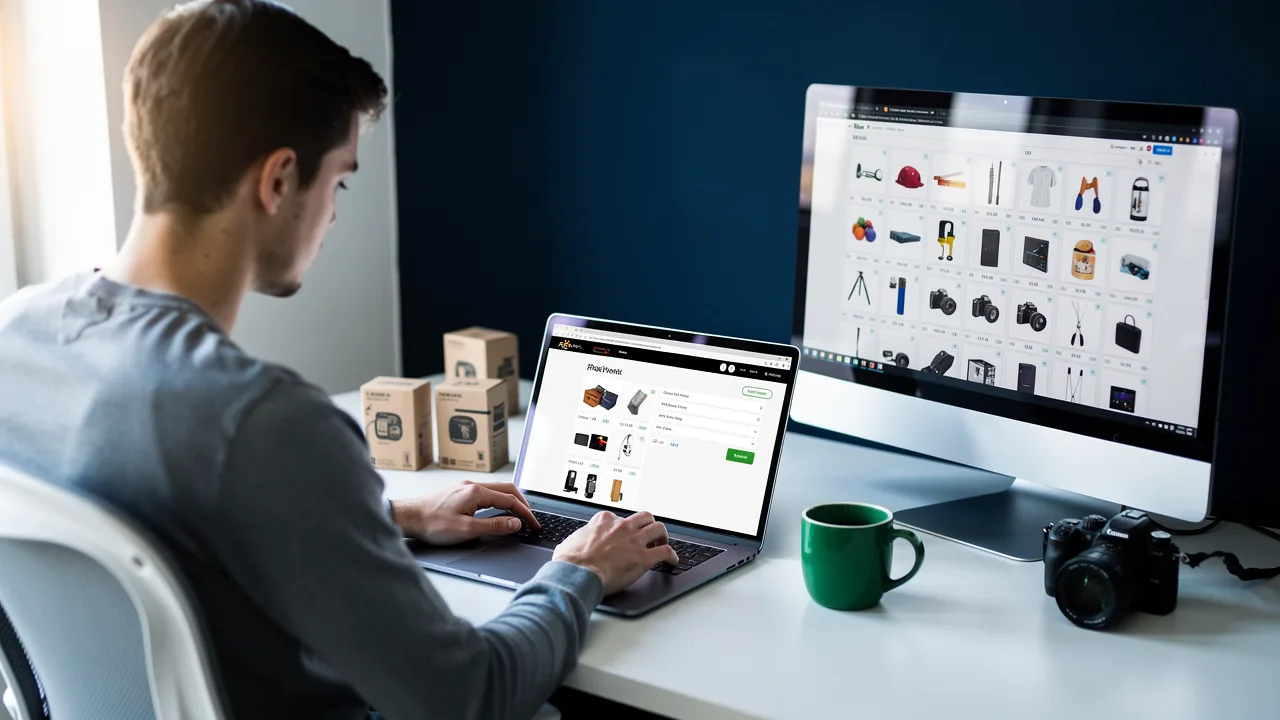
Product uploads and maintenance. New products, images, descriptions, pricing, variants, stock levels, categories. This is the bulk of it, and doing it accurately matters more than it sounds. A wrong price or a missing size costs real money within the hour.
Content updates. Homepage banners, collection pages, sale badges on and off, seasonal changes.
Checking things work. Placing test orders, checking pages on a phone, spotting the broken link before a customer does.
Basic reporting. Pulling weekly numbers into a spreadsheet for whoever presents them.
Customer service overflow. At smaller companies you'll answer the "where's my order" emails too, which teaches you more about the store's real problems than any dashboard.
Chasing people. The photographer who owes you images, the buyer who hasn't sent descriptions, the developer who hasn't fixed the thing from last Tuesday.
That's the job honestly described. Repetitive in parts, and it puts you in contact with every system the store runs on within your first month.
What it pays and what it becomes
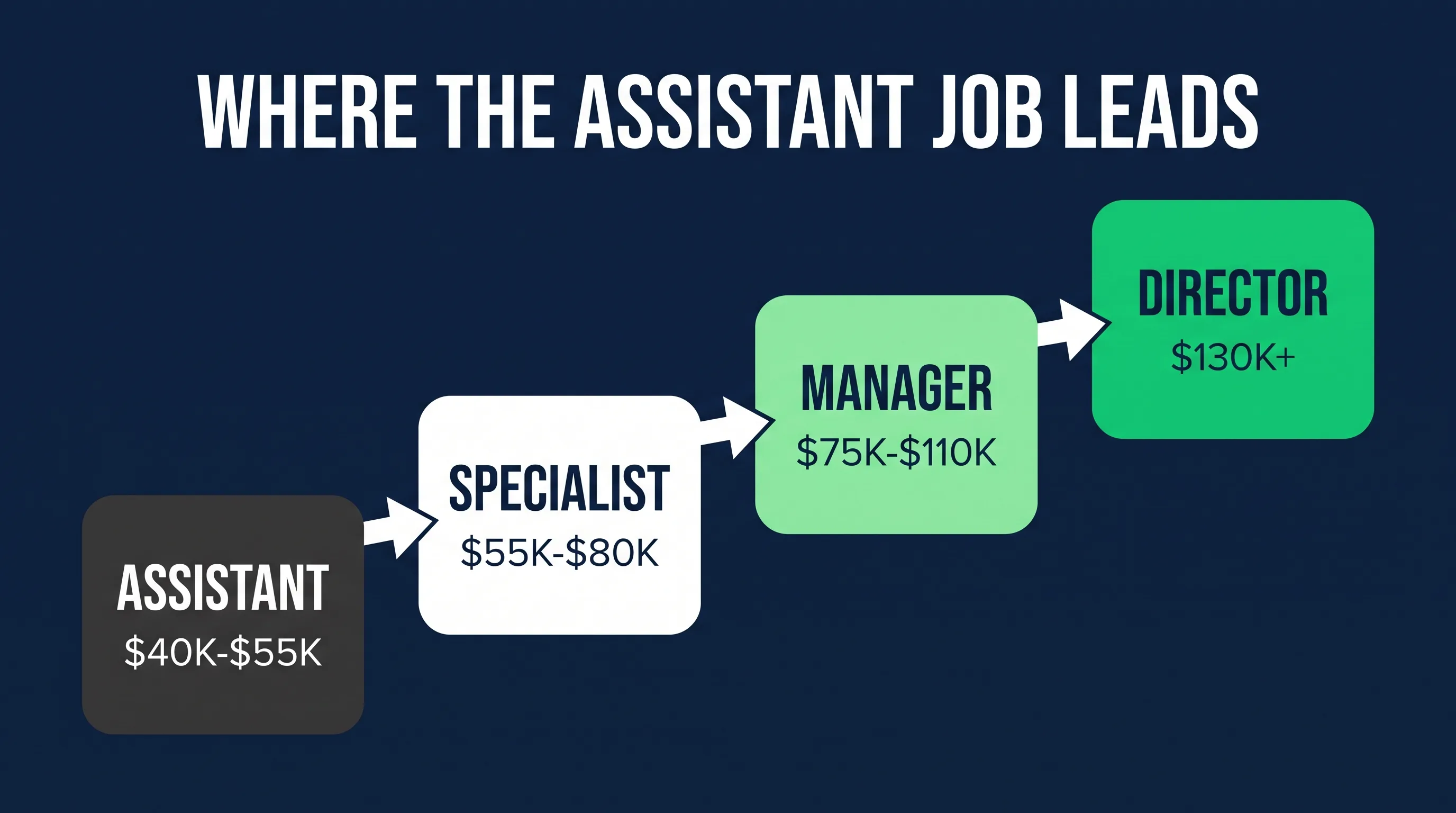
$40k to $55k to start, sometimes a little higher in expensive cities or at larger companies.
The number that matters is the next one. Ecommerce specialist runs $55k to $80k and is typically twelve to twenty-four months away. Ecommerce manager, the person who owns the store's revenue number, is $75k to $110k and is realistically three to four years out from here. Director is $130k and up.
So the honest pitch for this job is not the salary. It's that it's the shortest on-ramp to a career where the ceiling is genuinely high, and you can walk onto it from a job that currently pays you less. The whole ladder is mapped in the ecommerce jobs guide.
Who gets hired
The backgrounds I see most: retail, customer service, admin and office coordination, warehouse and fulfillment, and recent graduates in anything at all.
What hiring managers actually want, in order:
Attention to detail. Everything in this job is small and consequential. Whatever evidence you can offer that you're careful is worth more than enthusiasm.
Basic tech comfort. Spreadsheets, learning new software without panic, and not being scared of an admin panel.
Communication. You'll be chasing four departments constantly.
Any exposure to a store platform. Shopify most likely. Even having built your own is a genuine advantage, and hardly any applicants at this level have.
Nobody expects you to know their systems. They expect you to learn them fast and not break anything expensive.
How to get one with no experience
Build a store. Free trial, real products from a niche you know, real descriptions, collections, images sized properly, a working checkout. You now know the platform better than most people applying for this job, and you have a URL.
Learn spreadsheets properly. Sorting, filtering, lookups, cleaning a messy product export. This is genuinely half the job and most applicants overestimate their ability here.
Learn the vocabulary. SKU, variant, collection, conversion rate, average order value, fulfillment, returns rate. Using the right words in an interview signals you've been near this world.
Apply to the whole family of titles. Ecommerce assistant, ecommerce coordinator, ecommerce administrator, online store assistant, digital merchandising assistant, marketplace assistant. Same job, different labels.
Say the useful thing in your application. Not "I'm passionate about ecommerce." Something like: "I built and run this store, here's the link, I'm comfortable in Shopify's admin and I'm fast and accurate with product data." That's already a better application than most.
How to turn it into the next job fast
This is the part that matters, because plenty of people sit in this seat for four years and stay put.
Learn what happens outside your tasks. Ask why the promotion was structured that way. Ask what happened to conversion after the homepage change. Curiosity is what gets you invited into the decisions.
Take the thing nobody wants. Every store has an ignored problem: product data is a mess, the search results are terrible, returns are handled by hand. Fix one, measure it, and you've created your own promotion case.
Learn a hard skill on the side. Analytics first, then some HTML and CSS, then enough Liquid to edit a theme. The moment you can change the site instead of asking, you stop being an assistant in practice long before the title changes. That's exactly the sequence in our Ecommerce Specialist path.
Keep a record of what you did. Every fix, every improvement, every number that moved. In eighteen months this is either a promotion conversation or a much stronger application elsewhere.
Be willing to move companies. The fastest raises in ecommerce come from switching, especially early. Two years as an assistant at one company often converts to a specialist title and a $15k jump at another.
The honest downsides
It's repetitive. Some weeks are three hundred product uploads and nothing else.
You have very little authority. You'll see bad decisions and be able to do almost nothing about them, which is frustrating and also excellent training in how organizations work.
Q4 will be hard. Peak season lands on the assistant as much as anyone, usually as volume.
And the ceiling in the role itself is low. The point of this job is not to stay in it. Everyone I've seen do well started planning their exit from it in month three, not month thirty.
FAQ
What does an ecommerce assistant do? Supports the day-to-day running of an online store: uploading and maintaining products, updating site content, checking the site works, basic reporting, and coordinating with the people who supply images, copy, and stock.
How much does an ecommerce assistant make? Typically $40k to $55k in the US, with progression to $55k to $80k as a specialist within one to two years.
Do you need experience to be an ecommerce assistant? No, and that's the point of the role. Retail, customer service, and admin backgrounds are hired regularly. A store you built yourself substitutes well for formal experience.
Do you need a degree? Rarely required. Employers care about accuracy, platform familiarity, and whether you can learn quickly.
What's the difference between an ecommerce assistant and a coordinator? Very little in practice. Coordinator often implies slightly more ownership of timelines and launches, and sometimes pays a few thousand more.
What job comes after ecommerce assistant? Ecommerce specialist, usually within one to two years, then manager. Some people branch into merchandising, analytics, or the technical side toward ecommerce development instead.
Take this job if you're outside ecommerce and want in. Take it knowing exactly what it is: a low ceiling with a very good view of everything above it.
Spend your first year learning how the whole store works rather than perfecting product uploads, and the assistant title will be the shortest line on your résumé.