Ecommerce Analyst: The Job for People Who Want the Numbers, Not the Meetings
On this page
Conversion dropped from 2.4% to 1.9% on Tuesday and nobody knows why.
Marketing thinks the site is slow. The developer thinks the traffic changed. Merchandising thinks the new homepage is fine, thank you. Everyone is guessing, loudly, in a meeting.
The ecommerce analyst is the person who goes and finds out. That's the job, and if the previous three sentences sounded appealing rather than exhausting, keep reading.

What the job actually is
You turn what happened in the store into something someone can act on.
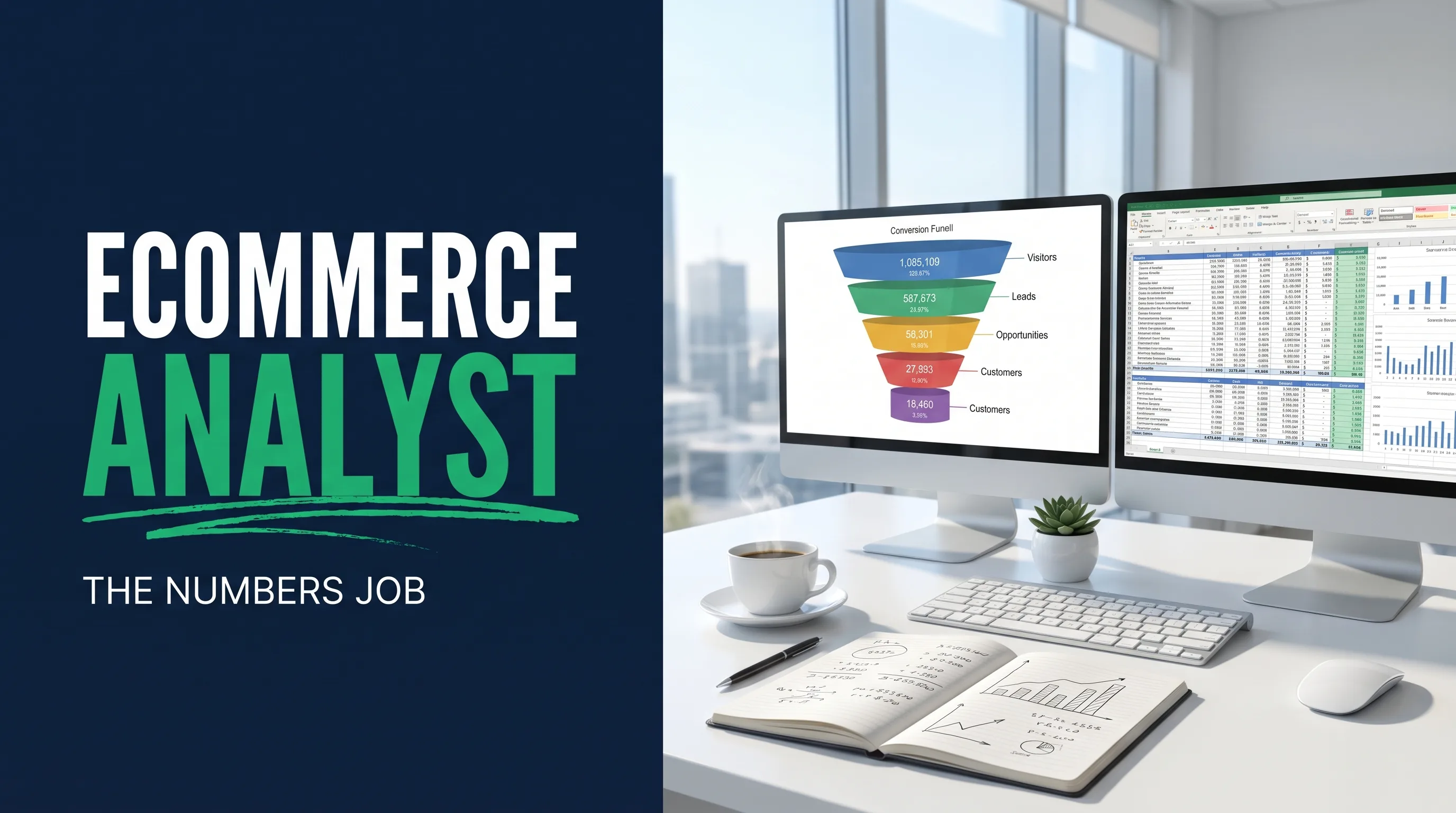
Day to day that means funnel analysis, cohort work, channel performance, product and category performance, pricing and promotion analysis, and building the reporting that everyone else reads.
The good version of this job is investigative. Somebody has a question, or should have one, and you go and answer it with data, then explain it in a sentence a non-analyst can repeat in a meeting.
The bad version is being a report factory: forty recurring dashboards that nobody reads and a queue of "can you pull me a number" requests. Part of doing this job well is refusing to be that, which mostly means automating the recurring stuff so you have time for the actual questions.
A real example of the work
Take that conversion drop.
You check whether traffic mix changed, because a spike in cold paid social traffic lowers conversion without anything being wrong. It didn't. You segment by device and find mobile fell while desktop held. You segment by browser and it's concentrated in Safari. You check page speed and it's fine. You check the release log and an app updated Monday night.
Four steps, twenty minutes, and you've saved a week of arguing. That's the value of the role in one story, and it's why analysts who are fast at this become disproportionately influential for their pay grade.
What it pays
$65k to $95k for most US ecommerce analysts, with senior analysts at $95k to $125k and analytics managers past that.
That's higher than the specialist roles beside it and comparable to ecommerce manager, which surprises people. The reason is supply: plenty of people can run a store, far fewer can query a database and explain what they found without a slide deck full of hedging.
SQL is the clearest pay divide in this role. Analysts who rely on dashboards someone else built sit at the bottom of the range. Analysts who can write their own queries against the warehouse sit at the top, and it's a few months of learning between the two.
For how this sits against the other roles, the ecommerce jobs guide has the whole ladder and the ecommerce manager salary guide covers the management side.
The skills, in the order to learn them
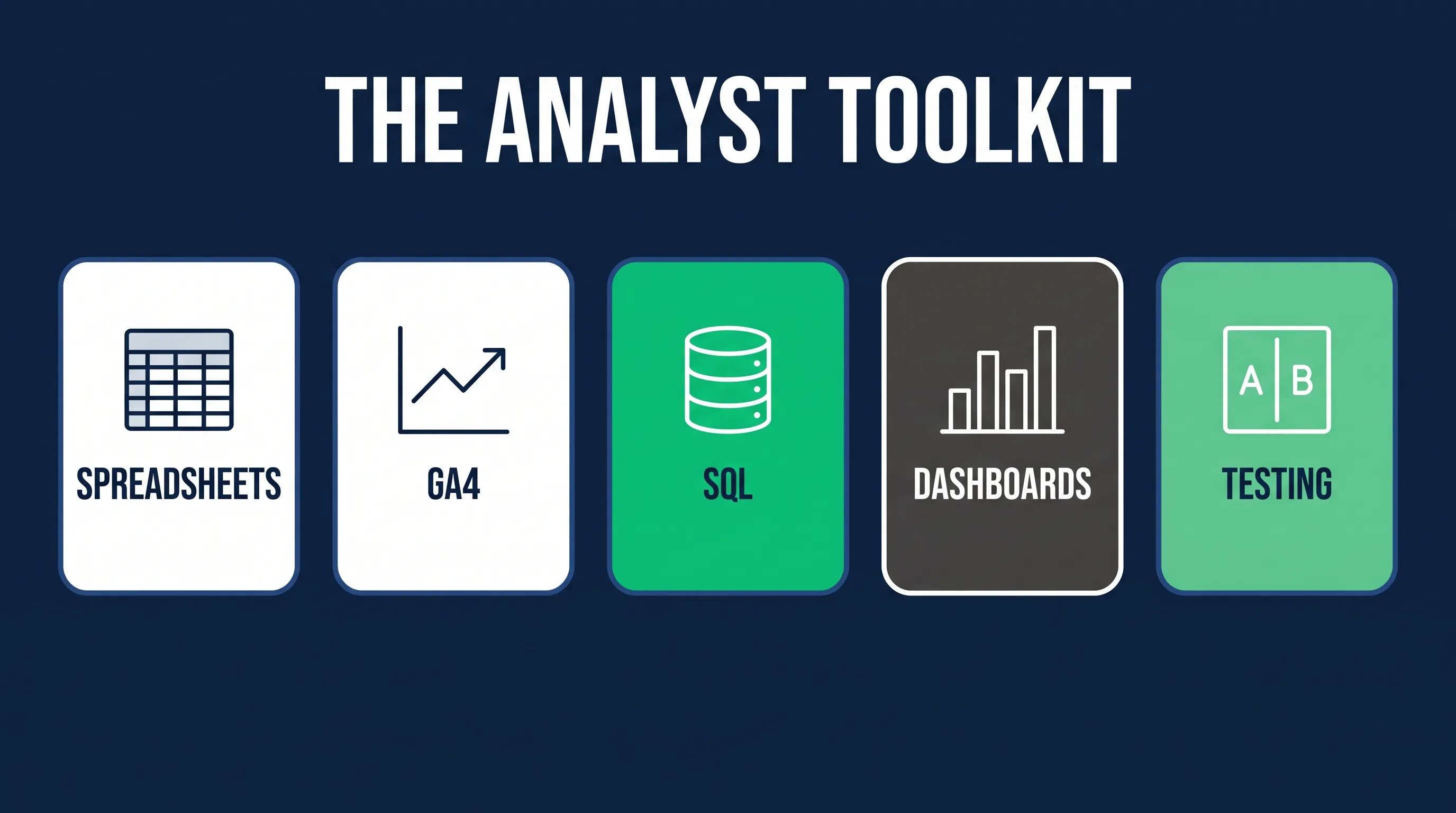
Spreadsheets, properly. Pivot tables, lookups, cleaning exports, and building a model that someone else can follow. Underrated and used constantly.
Analytics platforms. GA4 in depth, plus whatever the store platform provides. Understanding how sessions, users, and attribution actually work is where most people are quietly wrong.
SQL. The single biggest lever. Joins, aggregation, window functions eventually. Once you can pull your own data you stop waiting on anyone.
A visualization tool. Looker Studio, Power BI, or Tableau. Whichever your target companies use.
Ecommerce fundamentals. Conversion, average order value, contribution margin, customer acquisition cost, lifetime value, repeat rate, cohorts. You need to know which number matters for which question.
Statistical judgment. Enough to know when a difference is noise, how long a test needs to run, and why last week's 40% lift was probably nothing.
Python is a bonus rather than a requirement at most brands, and becomes more useful the larger the company.
How to get into it
From inside ecommerce. The most common route. An ecommerce specialist or assistant who starts answering the "why" questions with data ends up doing the analyst job before they get the title. If you're already in a store, this is the cheapest career move available to you: learn SQL on the side and start bringing answers nobody asked for.
From analytics into ecommerce. If you already analyze things for a living, the domain knowledge takes a few months and the pay usually goes up, because ecommerce analysts sit close to revenue.
From outside both. Harder but doable. Learn SQL, learn GA4, then build a portfolio with real data. Public ecommerce datasets exist and are fine for practice, but far better is running a small store yourself, even at tiny volume, and analyzing your own traffic. You'll produce more interesting insight from 400 real sessions than from a clean Kaggle file, and you'll have a story to tell about it. The build half of that is in how to become a Shopify developer, and the Ecommerce Specialist path covers running the store the data comes from.
Titles to search: ecommerce analyst, digital analyst, web analyst, ecommerce data analyst, retail analyst, marketing analyst with an ecommerce focus.

What separates good analysts from ignored ones
They answer the question behind the question. Someone asks for last month's revenue by category. The good analyst delivers it and adds the one line that matters: two categories are carrying everything and a third is quietly shrinking.
They're clear. One sentence, one number, one recommendation, then the detail underneath for whoever wants it. Analysts who lead with methodology lose the room.
They know the business. An analyst who understands margin, stock, and how the buying team works produces conclusions people can act on. One who only knows the data produces facts.
They automate the boring half. Recurring reports should build themselves. The time freed is where the value is.
The honest downsides
You'll be asked to prove things that are hard to prove, especially attribution. Someone will always want to know exactly which channel caused a purchase, and the truthful answer is often "we can't know precisely, here's the best estimate and its limits." Some organizations handle that maturely and some don't.
Data quality will frustrate you. Tracking breaks, tags fire twice, the platform and the ad platform disagree by 30%, and reconciling it is your problem.
And you can end up as a service desk if you let it happen. The analysts who thrive push back and pick their questions.
FAQ
What does an ecommerce analyst do? Analyzes an online store's performance: funnel and conversion analysis, channel and product performance, cohorts and retention, promotion effectiveness, and the reporting the rest of the team relies on.
How much does an ecommerce analyst make? Typically $65k to $95k in the US, with senior analysts at $95k to $125k. SQL ability is the clearest divider between the bottom and top of that range.
Do I need SQL for this job? Not always to get hired, but yes to be paid well and to stop depending on other people for data. It's the highest-return thing to learn in this role.
Do I need a degree? Helpful but not required. Demonstrated analysis on real data, and the ability to explain a finding plainly, carry more weight in most hiring processes.
Is ecommerce analyst better than ecommerce manager? Different, not better. The analyst has fewer meetings, less political exposure, and a skill set that transfers to any industry. The ecommerce manager role has a higher long-run ceiling through director roles. Pay is comparable in the middle.
What comes after ecommerce analyst? Senior analyst, analytics manager, or a move into ecommerce management if you want the commercial side. Some analysts go to data analyst or data scientist roles outside ecommerce entirely, which is one of the reasons the skills are worth having.
If you're the person on your team who always ends up in the spreadsheet working out what actually happened, this job already suits you. The only missing piece is usually SQL.
Learn it over the next two months, then answer one question nobody asked you to answer. That's how almost every analyst I know got the title.