Remote Jobs Reddit Says Are Real, and How to Land One
On this page
Remote jobs Reddit users actually hold come down to one rule, and a commenter on r/remotework said it better than any job board ever has: "Remember remote is not a job, it's a location."
So this page does two things. First, it sums up what Reddit says about which remote jobs are real, with links to every thread. Then it shows you the remote-friendly roles we train people for at CodingPhase, starting with AI automation, so you can go get qualified for one.
If you already know you want a skill that works from home, skip ahead to the remote roles worth training for.
What Reddit says about remote jobs
I read the big remote work threads on r/RemoteJobs and r/remotework, the ones with hundreds of replies. The mood is grim. People with 10 and 20 years of experience describe applying for months.
In Easiest US fully remote jobs to get?, one of the first replies is this: "I had to apply to 300+ remote jobs and interview with around 15-20 before I found a job and I have 20+ years of experience in my field."
I'm quoting it because it explains remote hiring better than any chart could. One remote listing pulls applicants from the whole country, so the job goes to whoever can prove they already do the work.
The full sentence from that r/remotework thread, How long did it take you to land your first remote role?, finishes the thought: "You need to be qualified for the job before you have any chance of choosing a location."

Which remote jobs Reddit says are real
When someone on r/RemoteJobs asked what people's remote jobs are and how they got them, the answers read like a hiring list for skilled roles: marketing specialist, executive assistant, software test analyst, business analyst, data engineer, technical support engineer, quality analyst. A few people do patient support or call center work.
Almost nobody in that thread got remote work without a skill. Most were hired for experience in a field, then got to choose where they worked.
The other pattern is how they found the jobs. LinkedIn comes up again and again, along with referrals from old coworkers. One reply has a tip worth stealing: "LinkedIn is a fantastic place to find job listing. You just shouldn't apply via LinkedIn. You should go to the company's site to apply."
The "easy" remote jobs, and why they pay so little
Ask Reddit for remote jobs that hire anyone and you get the same short list: call centers, insurance and bank customer service, contact representative roles, English tutoring and AI rating gigs. The replies in that easiest-jobs thread are frank about them. Low pay, high turnover, mindless work.
These jobs are real. They're also crowded, because anyone can apply. One commenter in the same thread suggests taking one of these for a while and using the time to "learn a high income remote skill in the mean time." That's the smartest line in the thread.
Remote job scams Reddit keeps warning about
In the long r/RemoteJobs thread Any REAL remote jobs?, people warn about fake listings on Facebook and LinkedIn, "remote job $30 an hour" posts that lead nowhere, and sign-up chains that bounce you from one site to another. In another r/RemoteJobs post, Working remotely sounded perfect to me at first, the first reply calls the remote hunt "way worse" because of all the scammy listings.
A few rules Reddit agrees on:
- Apply on the company's own careers page whenever you can, even if you found the listing somewhere else.
- Walk away from anyone who asks for money or sensitive personal details before you've had a real interview.
- Treat "no experience, $30 an hour, start today" as a red flag, not a lucky break.
The best reply in that thread is the one I'd frame and hang on the wall: "You need skills that are in demand for remote jobs. You can substitute having a degree with real world experience and portfolio projects."
Another commenter in the same thread tells their own story: they went from secretary to business analyst by teaching themselves Excel and data skills, with no college. That's the move. Pick a skill companies pay for, build proof, then apply.
Where people actually find remote work
Pulling the threads together, the advice on where to look is fairly consistent:
- LinkedIn for finding listings, then the company site for applying.
- Referrals and old coworkers. In thread after thread, people say their remote job came through someone they'd worked with.
- Smaller companies. In I landed a remote job. Here are my anecdotal notes., a 20-year financial services worker had no luck with big corporate listings and ended up at a firm of about 150 people. Their advice: find a company "small enough to embrace remote workers but not so small that they may not be here next year."
- Targeted applications. That same poster applied to only a few jobs a week, each one a close match for their skills. Fewer, better applications beat spraying hundreds.
CodingPhase members also get a tech job board built for the roles we train for, so you're not digging through call center ads to find them.
The remote-friendly roles worth training for
From here on it's my opinion, not Reddit's. I've been teaching people into these jobs since 2016.
The roles below are remote-friendly by nature. The work happens inside software, so there's nothing to do in an office. They also make companies money, which is why companies pay well for them. Our students land roles paying $75k+, and individual results vary.
1. AI automation
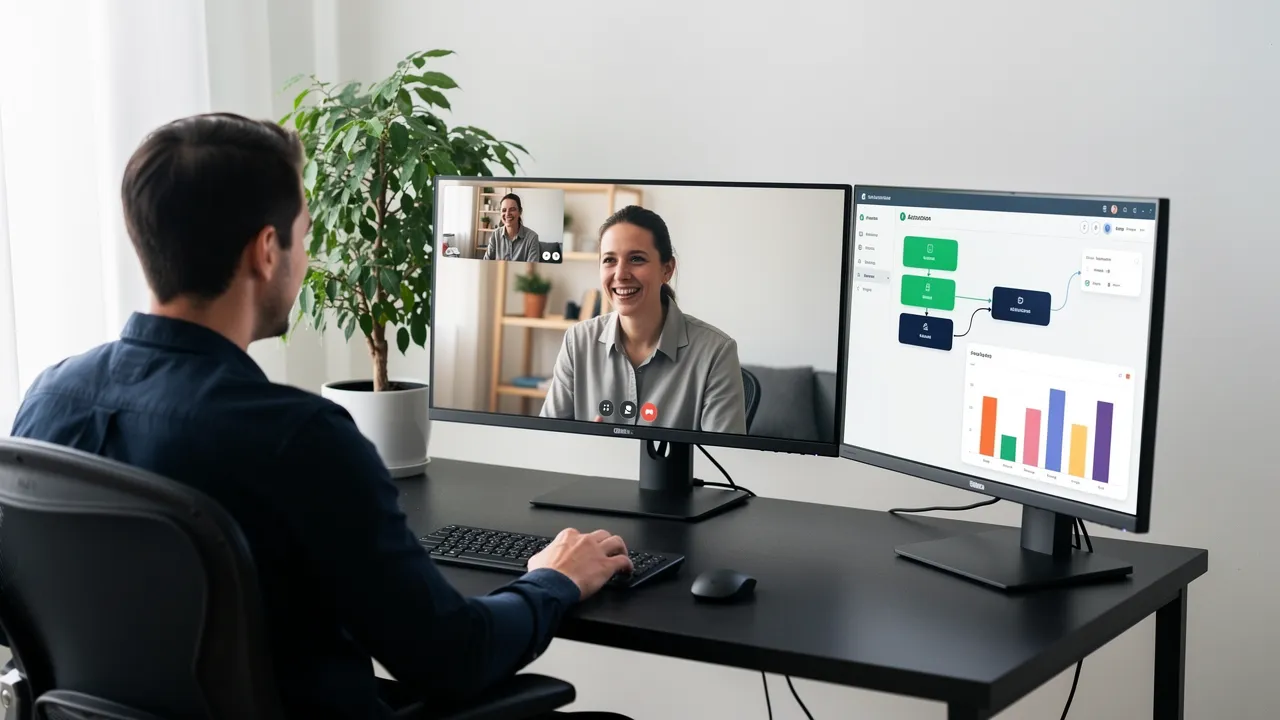
This is the one I'd look at first. An AI automation specialist connects a company's tools with Zapier, Make and n8n, and adds AI steps so work that took a person all afternoon runs on its own. A marketing team's lead routing, a store's order follow-ups, a sales team's data entry: all of it gets automated.
Why it's remote: you build everything in the browser. Why it pays: every workflow you build saves a team hours a week, and that's easy for a manager to put a dollar figure on.
It's also the path most of our new members pick. If you want the job-hunt details, I wrote a whole guide to remote AI automation jobs, including the titles companies actually use. Start with the AI Automations career path.
2. Web Content Manager
Every company with a website needs someone to run it: publish pages, update product and landing pages, keep the CMS organized, fix what breaks. That's a Web Content Manager. It's content operations, and you don't need to be a programmer to do it.
It's remote-friendly because the CMS is in the cloud, and it's a role a lot of career changers already have half the skills for if they've worked in marketing, admin or customer-facing jobs. Here's how to become a web content manager, and here's the Web Content Manager career path.
3. Email Marketing Specialist
Email is still one of the channels companies can tie most directly to sales. An email marketing specialist builds the campaigns, the automated flows (welcome series, abandoned cart, win-backs) and the reports that prove what made money.
That reporting is the reason companies pay well for this role, and it's a natural fit for remote work. Read how to become an email marketing specialist, then look at the Email Marketing Specialist career path.
How to get from "looking" to "hired"
If you take Reddit's advice seriously (get qualified first, then choose the location), the plan is straightforward:
- Pick one of the roles above. Just one, so you're not splitting your evenings three ways.
- Follow a guided path from beginner to job-ready, so you always know the next lesson.
- Build portfolio projects that prove you can do the job. That's what Reddit keeps saying replaces the degree.
- Apply with a résumé that survives the filter, on company sites, to smaller firms, a few strong applications at a time.
That's exactly what a CodingPhase Diamond membership is set up to do. You get 90+ courses, guided career paths for all three roles above, portfolio templates for every path, an ATS-ready résumé builder, the job board, priority support and an 80,000+ member community.
You also get two live calls every week with instructors who have 10+ years in the industry: Accountability on Wednesdays at 7 PM ET, where you set goals and report back, and Money Talk on Sundays at 8 PM ET. Hiring coaching like that on your own would cost hundreds a month.
Diamond lists at $60 a month or $365 a year, and it's always at least 30% off, so you'll pay around $42 a month or about $255 a year. There's a 7-day money-back guarantee. See what's included and the current price.

FAQ
What remote jobs does Reddit say are real? Mostly skilled ones: marketing, business and data analysis, technical support, operations and assistant roles, usually held by people with experience in the field. The no-experience remote jobs Reddit mentions are mostly call center and customer service work, which is real but low paid and crowded.
Are remote jobs on Reddit legit? Some are, but Reddit's own users warn about scams constantly. Apply on the company's careers page, never pay to get a job, and be suspicious of high pay for no experience.
What is the easiest remote job to get with no experience? Reddit points to call centers, customer service and AI rating work. They're the easiest to get and the hardest to live on. A better plan is to learn a remote-friendly skill like AI automation or email marketing, even while you work one of those jobs.
How long does it take to get a remote job? It varies a lot. In the Reddit threads, experienced people describe anything from a couple of weeks to many months and hundreds of applications. Strong proof of your skills and a résumé that passes ATS screening make the biggest difference you can control.
Which remote jobs pay well without a degree? AI automation, web content management and email marketing all hire on what you can show, and our students land roles paying $75k+ (individual results vary). A portfolio matters more than a diploma for these roles.
Reddit isn't wrong about how hard this is right now. But the people in those threads who got remote work had one thing in common, and it's something you can build: a skill a company will pay for. Pick one, put in the evenings, and let us help with the parts that are hard to do alone. I'd love to see you on a Wednesday call.