Online Store Manager: The Small Business Version of an Ecommerce Career
On this page
There's a version of the ecommerce career that doesn't happen in a marketing department.
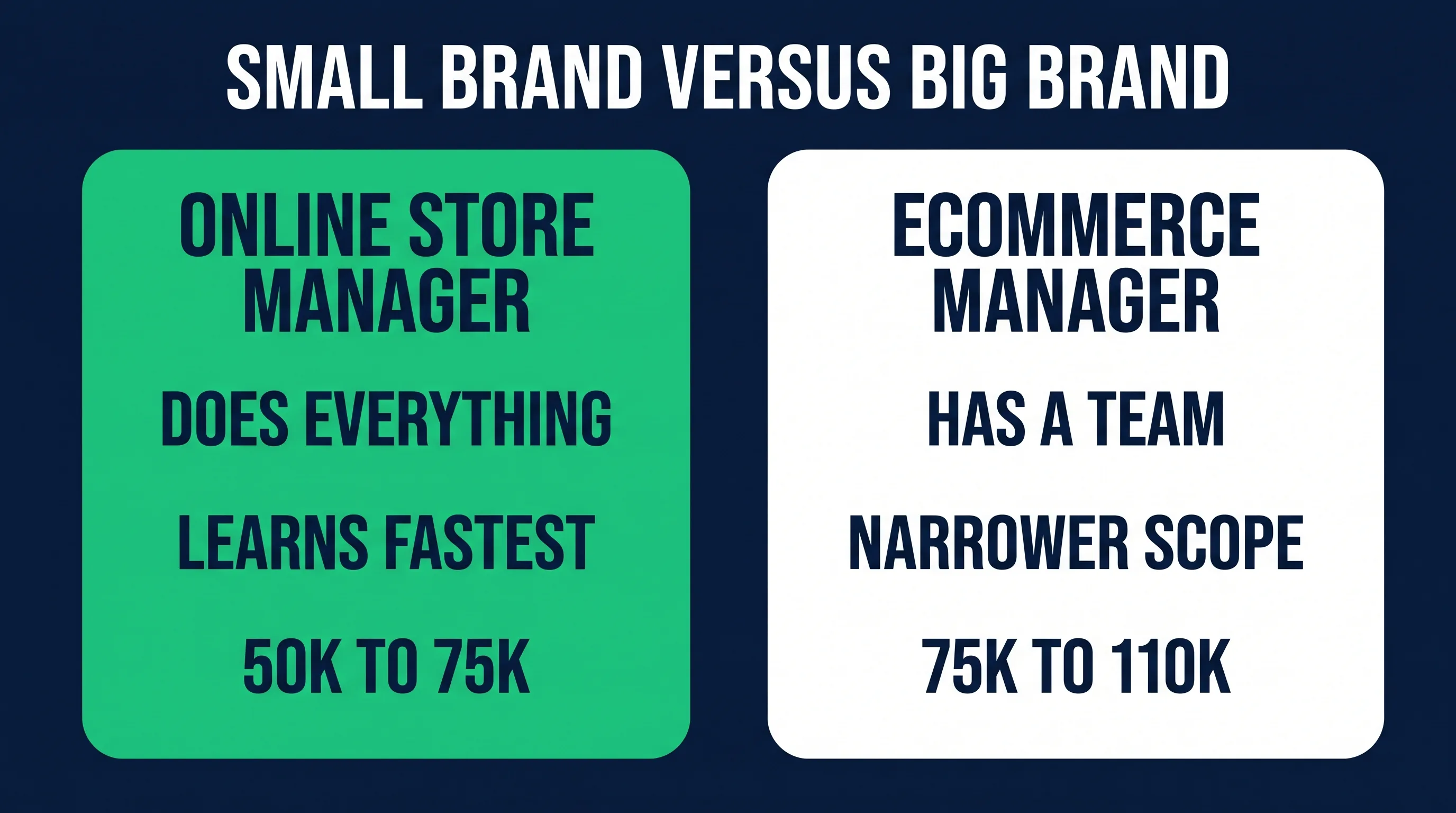
It happens at a company with 15 people, where one person is responsible for the entire online store. Products, site, orders, email, customer questions, the lot. The title is usually online store manager, sometimes web store manager or Shopify store manager, and the job is the whole business's digital operation in one chair.
It pays less than the corporate equivalent. It also teaches you faster than anything else, which makes it either an excellent first ecommerce job or a trap, depending entirely on how you use it.
What the job actually involves
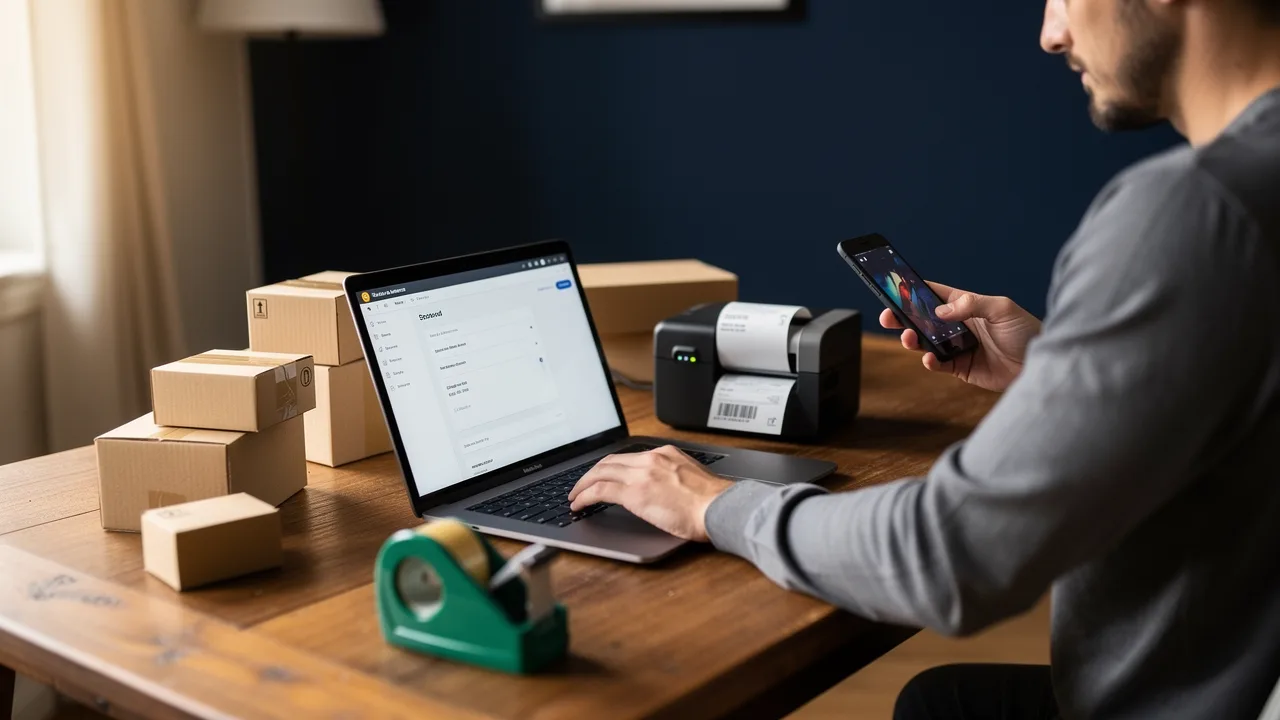
Everything. That's not a joke, it's the job description.
The store. Products, collections, pricing, images, descriptions, homepage, theme changes.
Orders. Processing, fulfillment coordination, tracking, and the ones that go wrong.
Customers. Where is my order, can I return this, does this come in blue.
Marketing. Usually email, often social, sometimes ads. Whatever the owner asks for on a given week.
Suppliers. Chasing stock, updating what's available.
Reporting. Telling the owner how the month went.
At a company this size there's no specialist to hand things to, so the constraint on your day is your own capability. Which is exactly why it teaches so fast: every gap in your skills becomes visible within a week.
What it pays
$50k to $75k in the US for most online store manager roles at small businesses, with the higher end at brands doing meaningful revenue.
Compare that to ecommerce manager at $75k to $110k, which is the same responsibility at a larger company with a team around it. The gap is real and it's the honest tradeoff of this role: broader scope, smaller paycheck.
What you get instead is total exposure. Someone who has personally run a store end to end for two years knows things that specialists at big companies genuinely don't.
Who this job suits
People switching careers into ecommerce. Small brands hire on capability and enthusiasm rather than credentials. If you built a store yourself, you can get one of these jobs.
People who want to start their own thing eventually. You're being paid to learn how a small ecommerce business works from the inside, including the parts founders get wrong. That's an unusually good deal.
People who like variety and hate meetings. There are almost no meetings. There is a lot of doing.
Not for people who want depth in one specialty, or a clear promotion ladder, or a team to lean on. None of those exist here.
How to get one
Build a store and show it. The single most effective thing, and it matters more here than at bigger companies because the owner is hiring a doer, not a manager. A live store you built, with a real catalog and working checkout, is close to a guarantee of an interview.
Learn Shopify properly. Most small brands run on it. Theme editing, apps, product data, discounts, and enough Liquid to change something without breaking the site. How to become a Shopify developer covers the build side, and it's the skill that makes you the obvious hire.
Show you can handle customers. At this size you will do support. Retail or service experience is a genuine asset here rather than something to hide.
Look in the right places. Small brands post on Indeed and LinkedIn but also on local job boards, in industry Facebook groups, and through their own site. Some of the best of these jobs are never posted at all and go to someone who emailed the owner directly with ideas about their store.
Titles to search: online store manager, ecommerce manager at companies under 50 people, Shopify store manager, web store manager, and online sales manager.
How to use it well
Two years in this seat, used deliberately, sets you up better than most corporate ecommerce jobs.
Keep the numbers. Screenshot the analytics when you start. Track revenue, conversion, average order value, and repeat rate. Small business owners rarely ask for this, and having it is the difference between "I ran their store" and "I ran their store and revenue went from $340k to $610k over two years."
Learn one deep skill on purpose. The risk of this job is ending up broad and shallow. Pick something, probably the technical side or paid acquisition or email, and go deeper than the job strictly requires.
Document what you build. Screenshots, before-and-afters, the email flows you set up. Your next employer will want evidence and small companies don't keep records.
Then leave for a specialist or manager role at a bigger company, where the same work pays $20k to $30k more. Plenty of people run exactly this play, and it's the most reliable path from small-business ecommerce into the corporate ladder in the ecommerce jobs guide.

The honest downsides
You'll be underpaid relative to the responsibility. That's the deal.
You may be the only person who understands any of it, which means no cover, no holidays without anxiety, and nobody senior to learn from.
Owners can be difficult in a specific way: it's their business, they have opinions, and the boundary between strategy and preference gets blurry.
And there's no ladder inside the company. The promotion is leaving, which is fine as long as you know that going in.
FAQ
What does an online store manager do? Runs a small business's entire online store: products and content, orders and fulfillment coordination, customer service, marketing, and reporting.
How much does an online store manager make? Typically $50k to $75k in the US at small businesses, below the $75k to $110k that a comparable ecommerce manager role pays at a larger company.
Is online store manager the same as ecommerce manager? Similar work, different context. Online store manager usually means a small company where you personally do everything; ecommerce manager usually implies a team and a specialist support structure.
Do I need experience to get one? No, and this is one of the easiest ecommerce jobs to enter with a self-built store as your proof.
Is it a good career move? Yes as a first or second role, because the learning rate is exceptional. Less good as a long-term destination, since the pay ceiling and the lack of a ladder both bind.
What should I learn first? Shopify, properly, including enough theme editing to change things yourself. Then analytics, then email.
The reason I recommend this job to career changers more often than the corporate version: nobody at a fifteen-person brand cares what your degree is in. They care whether you can make the store work.
Build one, show it to them, and you're most of the way through the hiring process before the interview starts.