Ecommerce Operations Manager: Everything Behind the Buy Button
On this page
Marketing gets the customer to click buy. Everything after that click belongs to operations.
Inventory that says twelve units when there are three. An order that syncs to the warehouse with the wrong address format. A returns process that costs more to run than the products coming back are worth. A carrier that quietly stopped delivering to a region.
None of it is visible when it works. All of it is a crisis when it doesn't, and the person who owns that is the ecommerce operations manager.
What you own
Inventory accuracy. Making sure what the site says is available matches what physically exists. Overselling is the fastest way to destroy customer trust and it's almost always a systems problem.
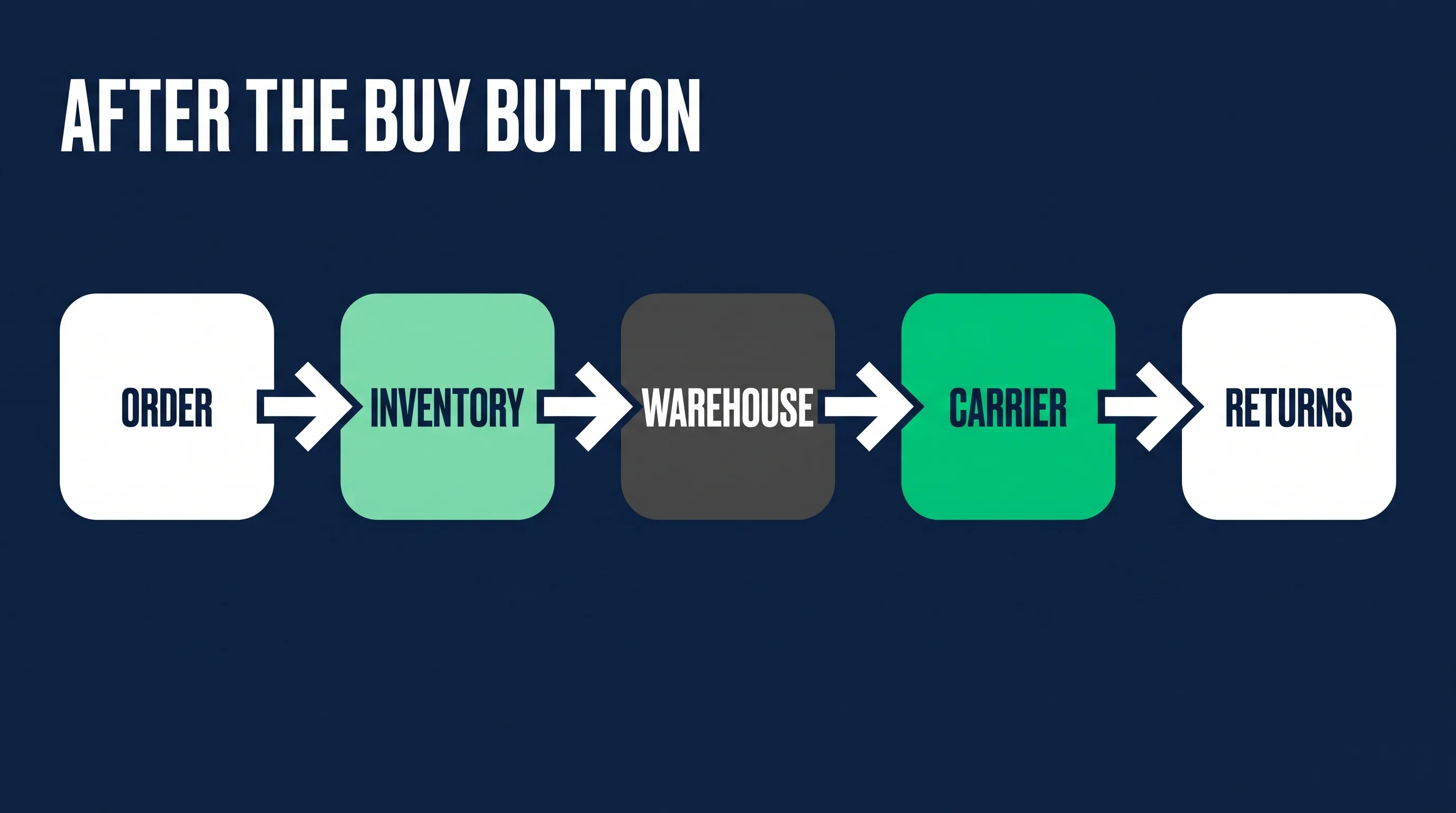
Order flow. The path an order takes from checkout to the warehouse to the carrier to the customer's door, and every integration in between.
Fulfillment. Whether in-house, third-party, or a mix. Pick and pack accuracy, dispatch times, and the cost per order.
Returns. Policy, process, and the reverse logistics of getting things back, restocked, or written off.
Shipping strategy. Carriers, rates, zones, delivery promises, and the ongoing tension between what customers expect and what it costs.
The systems. Order management, inventory management, the warehouse system, and the integrations tying them to the store. This is where most of the actual work lives.
Customer service escalations. Not usually your team, but their hardest problems land with you.
Why it pays what it does
$80k to $115k in the US, with senior and director-level operations roles at $120k to $160k.
That's higher than most of the customer-facing ecommerce roles at the same level, and the reason is straightforward: mistakes here cost real money immediately. A broken integration that misroutes 400 orders is a quantifiable disaster. Someone who prevents that reliably is worth paying for.
It's also a role where experience compounds visibly. Someone who has been through three peak seasons and two system migrations is genuinely more valuable than someone who hasn't, in a way that isn't always true elsewhere in marketing.
For how this sits against the other roles, the ecommerce jobs guide has the full ladder.
What the work is really like
Long stretches of process improvement, punctuated by things being on fire.
A normal week: reviewing yesterday's dispatch rate, chasing why 40 orders are stuck in a pending state, working with the warehouse on a pick error trend, renegotiating a carrier rate, testing a new returns portal, and preparing the inventory plan for a launch.
Then Black Friday arrives and none of that matters because you're in a war room watching order volume against fulfillment capacity in real time.
The people who love this job like solving problems that have concrete answers. The people who hate it wanted more strategy and less logistics.
The skills that matter
Systems fluency. You need to understand how the store, the order management system, the inventory system, and the warehouse talk to each other. Most operations failures are integration failures.
Data. Spreadsheets at a serious level, and ideally SQL. Questions like "which SKUs are driving our return rate" should be something you can answer yourself.
Process design. Writing down how something should work, getting people to follow it, and improving it. Unglamorous and it's the actual job.
Vendor management. Carriers, third-party logistics providers, and software vendors. Knowing what to ask for and when to escalate.
Enough technical ability to debug. Reading an API error, understanding what a webhook does, and being able to tell whether a problem is the store, the middleware, or the warehouse system. This is what separates operations managers who diagnose from ones who file tickets and wait, and it's the same technical grounding taught in the Ecommerce Specialist path.
Calm. Genuinely a job requirement. Peak season is a stress test and the operations manager sets the temperature for everyone else.
How to get into it
From ecommerce. An ecommerce assistant or specialist who gravitates toward the systems side rather than the merchandising side is already halfway there.
From logistics or warehouse work. A strong route that people underestimate. If you've run a warehouse floor, you understand the physical reality better than anyone applying from marketing, and the software side is learnable.
From customer service. You already know every way an order can go wrong, which is exactly the knowledge this role needs.
From operations in another industry. Process and vendor management transfer well; the ecommerce specifics take a few months.
What to show: a process you fixed with a number attached. "Reduced order errors by 60% by rebuilding the address validation step" is the shape of it. If you have no professional example, run a small store yourself and document how you handled fulfillment and returns.

The honest downsides
Peak season is genuinely hard. Not busy, hard. Q4 in ecommerce operations is the closest thing marketing-adjacent work has to a hospital shift.
You're invisible in the good times and extremely visible in the bad. Nobody notices 99.4% on-time dispatch. Everybody notices the 0.6%.
You'll be blamed for things outside your control. Carriers have weather. Suppliers miss dates. The site oversells because a developer changed something. It still lands on you.
And the work can be repetitive between crises. If you need constant novelty, this isn't it.
FAQ
What does an ecommerce operations manager do? Owns everything after checkout: inventory accuracy, order flow, fulfillment, returns, shipping strategy, and the systems connecting the store to the warehouse and carriers.
How much does an ecommerce operations manager make? Typically $80k to $115k in the US, with senior and director-level roles reaching $160k.
What's the difference between this and an ecommerce manager? The ecommerce manager owns the revenue side: the site, merchandising, conversion. The operations manager owns delivery of what was sold. At small companies one person does both.
Do I need logistics experience? It helps but isn't required. Systems ability and process discipline matter more, and plenty of people move in from ecommerce or customer service.
Do I need to code? No, but understanding APIs and integrations well enough to diagnose a sync failure makes you dramatically more effective and is a common gap.
Is it a stressful job? Seasonally, yes. Q4 is intense in a way most office jobs aren't. The rest of the year is manageable and largely process work.
If you're in ecommerce and keep finding yourself drawn to why the order didn't arrive rather than why the page didn't convert, this is your lane.
It's the half of ecommerce nobody writes articles about, which is precisely why the people who are good at it don't stay unemployed.