Retention Marketing Manager: Getting Paid to Keep Customers

On this page
Nobody in the company will thank you for the customers who didn't leave.
That's the strange thing about retention work. Your best month is one where a number that should have gone down didn't. There's no launch, no campaign everyone shares internally, no obvious moment of success. Just a cohort chart that flattens where it used to fall.
It also happens to be some of the most valuable work in a business, which is why the title keeps appearing and why it pays what it does.

What you actually own
The churn number. However the company defines it. Subscription cancellations, customers who stop reordering, users who go dormant.
Repeat purchase or renewal rate. The positive framing of the same thing.
The programs that move both. Onboarding that gets people to value faster, replenishment reminders timed to actual consumption, win-back campaigns, loyalty and rewards, cancellation flows with save offers, and proactive outreach to accounts showing exit signals.
The diagnosis. Why are people leaving. This is the part that separates good retention people from campaign operators. The answer is frequently not a marketing problem at all: the product is confusing, shipping is slow, support is bad, or the company acquired the wrong customers in the first place. Being willing to say that out loud, with evidence, is most of the job's value.
Why the pay holds up
The arithmetic is hard to argue with. Acquiring a new customer typically costs several times more than keeping an existing one, and a small improvement in retention compounds through every future month.
So when someone can show that a rebuilt onboarding sequence moved 90-day retention by four points, finance can calculate what that's worth over a year, and it's usually a big number.
$85k to $120k is the normal US range for a retention marketing manager, with senior and director-level retention roles at $130k to $170k. Specialist versions run $60k to $85k.
The people at the top of that range all share one trait: they present retention in money rather than in percentages.
The metrics you'll live in
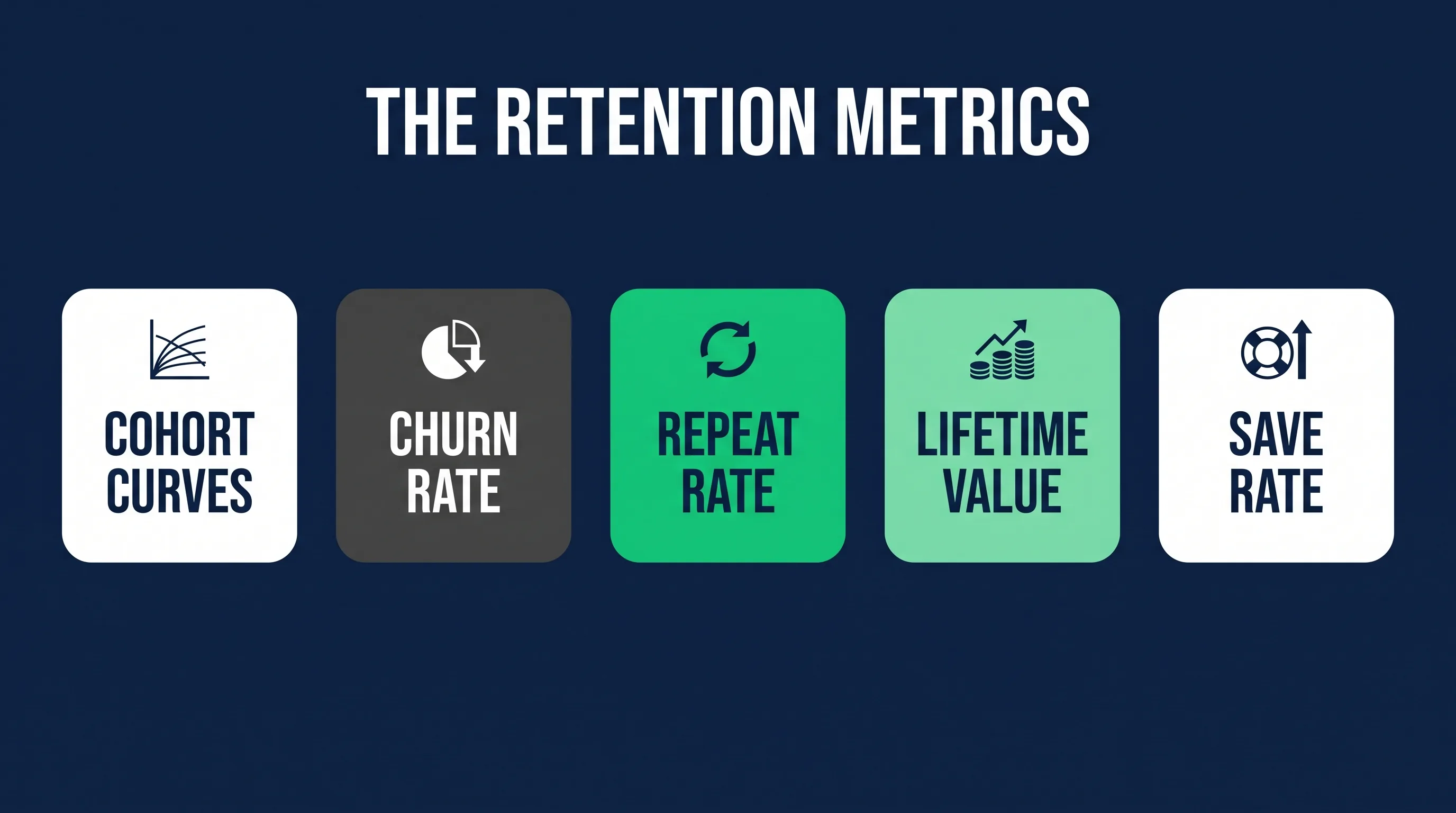
Cohort retention curves. The single most important view. What percentage of customers acquired in a given month are still active at 30, 60, 90, and 365 days.
Churn rate, gross and net. Net revenue retention matters most in subscription businesses because expansion can offset losses.
Repeat purchase rate and time between orders, in ecommerce.
Lifetime value, and the ratio between it and acquisition cost.
Save rate, on cancellation flows.
If those terms are unfamiliar, that's the first thing to learn. This job is largely conducted in that vocabulary.
What the work looks like
Some of it is building: flows, offers, loyalty mechanics, cancellation experiences.
More of it than you'd expect is investigation. Pull the cohort data, segment by acquisition channel, and discover that customers from one paid campaign churn at three times the rate of everyone else. That finding is worth more than any campaign you could run, and it belongs to the retention person because nobody else is looking.
And a serious amount is persuasion. Retention fixes frequently live outside marketing. You'll be the person arguing that the checkout emails are confusing, or that the onboarding needs a product change, and you'll have to make that case with data to teams who don't report to you.
How to get into it
From email, CRM specialist roles, or lifecycle. The natural feeders. You already build the programs; you're adding accountability for the outcome and the analytical work behind it. Lifecycle marketing manager is the closest neighbor and often the same job.
From analytics. Analysts who move into retention arrive strong on the diagnosis half and learn the building half. Increasingly common and usually effective.
From customer support or success. Underrated. Support already knows why people leave, which is the question everyone else is guessing at.
What to show: evidence you moved a retention number, or at minimum that you can read cohort data and explain what it says. A written analysis of a real business's repeat purchase behavior is a strong portfolio piece and few applicants bring one.
The technical build skills matter here too, for the same reason they do everywhere in this cluster: being able to construct the flow yourself, and fix the template when it breaks, means your ideas ship. That's the foundation in our email marketing path.

The honest downsides
Slow feedback. A retention change takes a quarter or more to prove, which makes it hard to demonstrate value quickly in a new job.
Invisible wins. You'll watch acquisition get credit for growth you protected.
Blame for things you don't control. If the product is genuinely worse than the competition, no email sequence fixes that, and you'll still be asked why churn is up.
And a specific trap worth naming: discounting your way to retention. It's the easiest lever, it always works in the short term, and it quietly trains customers to leave until you pay them to stay. Managers who lean on it look effective for two quarters and then have a much worse problem.
FAQ
What does a retention marketing manager do? Owns the programs and analysis that keep existing customers active: onboarding, win-back, loyalty, cancellation saves, and the diagnostic work to understand why people leave.
How much does a retention marketing manager make? Typically $85k to $120k in the US, with senior and director roles at $130k to $170k.
Is retention marketing the same as lifecycle marketing? Nearly. Lifecycle is framed around the journey, retention around the outcome. Many companies use the titles interchangeably.
What skills do I need? Cohort and retention analysis, segmentation, one messaging platform in depth, testing discipline, and enough commercial understanding to know when a save costs more than it's worth.
Is retention marketing in demand? Increasingly. As paid acquisition gets more expensive, keeping customers becomes the cheaper source of growth, and companies staff accordingly.
Do I need to code? Not required, valuable in practice. Building complex flows and fixing broken templates yourself removes your dependence on other teams.
If you like problems where the answer is knowable and the work compounds, retention is one of the better seats in marketing. It rewards patience and evidence over noise.
Start by learning to read a cohort chart properly. Everything else in this job hangs off being able to look at one and say, precisely, where and when people start leaving.