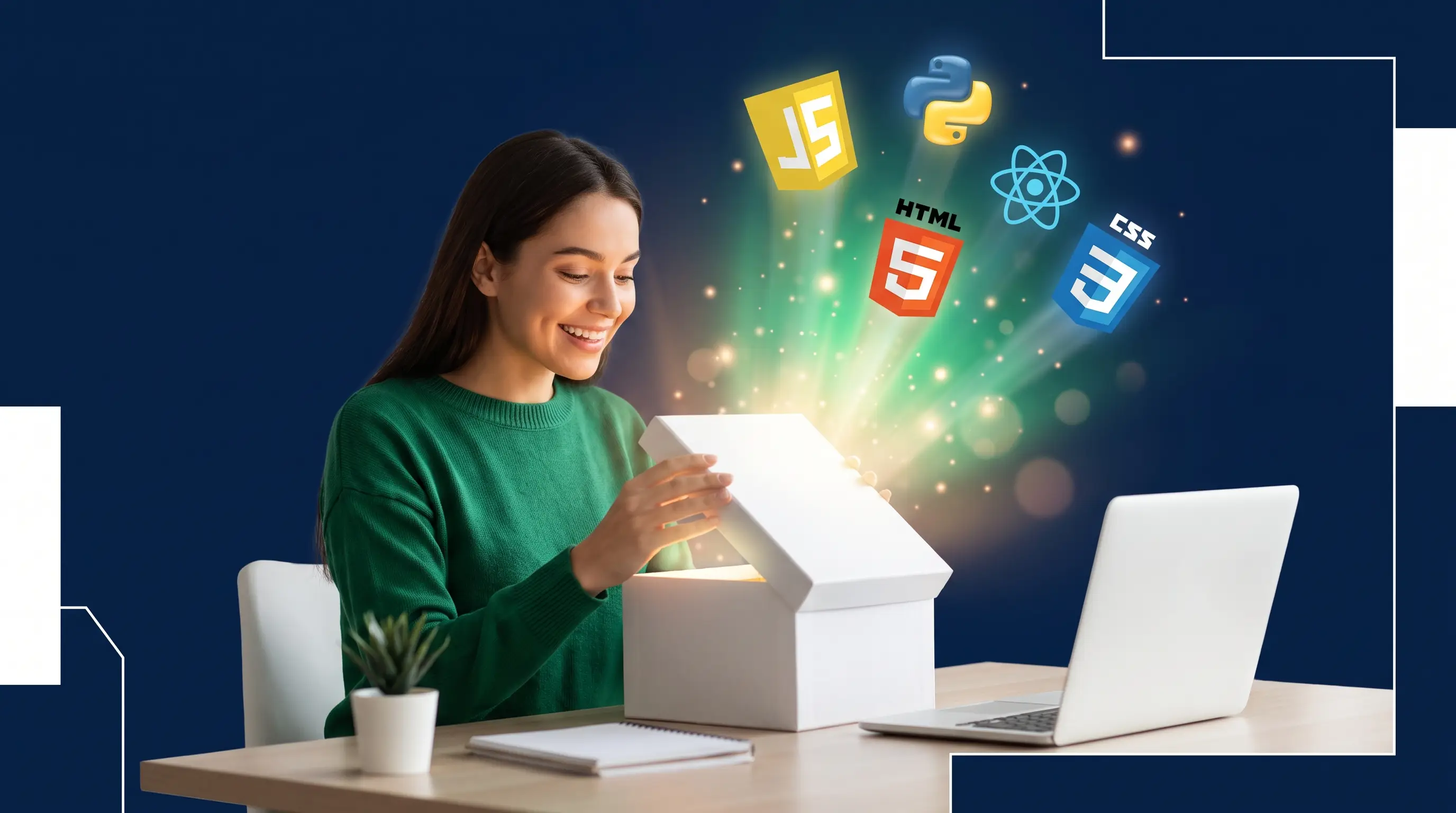
Python3 - Bootcamp Course
Python from your very first install to object-oriented programming and a real API project, with quizzes after each core topic so you know it actually stuck.
Python has a reputation as the easy language, and it is earned. The syntax reads close to English, one file runs without ceremony, and the distance between "I wrote code" and "I built something useful" is shorter than in almost anything else. That makes it a good first language, and a common second one.
What beginners actually struggle with is not Python. It is setup, and the moment an error message first fills the screen. So this bootcamp starts at the genuinely unglamorous beginning: installing Python 3 and pip on Mac, Windows, or Linux, creating an alias so the right version runs, and writing a first program that works. There is a whole section on reading Python's errors, raising your own, and handling exceptions, because debugging is where most self-taught learners quietly give up.
What you cover
The core of the course walks through the language a layer at a time: numbers and math, variables and user input, strings and interpolation, booleans and conditionals, then the data structures you will use every day (lists, tuples, sets, and dictionaries). From there it moves to loops, functions, and lambdas, then built-in functions, modules, and installing external packages from pip.
The last third steps up to object-oriented programming: classes, constructors, instance and class methods, attributes, inheritance, and why everything in Python is an object. Quizzes close out most sections, so you find weak spots while they are still cheap to fix.
The final project
You finish by building a command-line app against the Pokemon API: call the API, convert the JSON to dictionaries, take user input, and display the data. It is deliberately small. The point is that every piece of it, requests, data structures, functions, and input handling, is something you learned in the course, assembled into a real running program.
Where Python takes you
Python shows up in web backends, automation scripts, data work, and AI tooling, which is exactly why it is worth having even if you end up specializing elsewhere. If your goal is web development specifically, I wrote an honest comparison in PHP vs Python about which one to learn first and why the answer depends on the jobs you are aiming for.
What you'll learn
- ✓ Install Python 3 and pip on Mac, Windows, or Linux and run your first program
- ✓ Work confidently with integers, strings, booleans, lists, tuples, sets, and dictionaries
- ✓ Control program flow with conditionals, loops, and functions, including lambdas
- ✓ Read Python error messages, raise your own, and handle exceptions cleanly
- ✓ Structure code with modules, including pulling in external packages from pip
- ✓ Write object-oriented Python with classes, inheritance, and class methods
- ✓ Build a working command-line app that pulls live data from a real API
Course Curriculum
15 sections
1
First Section
2
Integers (Numbers)
3
Variables
4
String
5
Booleans and Conditionals
6
Lists, Tuples, and sets
7
Dictionary
8
Loops
9
Functions
10
Built In Functions
11
Debugging Python and Handling Errors
12
Modules
13
Object Oriented Programming
14
Project: Pokemon API
15
More Videos Being Added
Before you start
- ✓ None. This starts at the install step and assumes you have never written code
Frequently asked questions
Is this really for complete beginners? +
How do I know the material is sinking in? +
What do I actually build? +
Is Python a good first language? +
Do I get a certificate? +
Is this included in the Diamond membership? +
More courses you might like
Ruby On Rails
Rails has a strange reputation problem. Everyone agrees it is one of the fastest ways ever built to ship a web...
Google Analytics Course
Almost every struggling site I have looked at over the years shared one trait: the owner had never opened thei...
Learn Ruby - Backend Developer Master Course
Most Ruby tutorials rush you to Rails so fast that you end up a framework user who cannot read the language un...
Niche Websites
The classic niche site failure goes like this: someone gets excited, buys a domain the same night, writes fift...
Build any site into a Wordpress Theme
Ask ten small businesses what their website runs on and most of them will say WordPress, usually with a theme...
Affiliate Marketing
The affiliate world has an honesty problem. It is drowning in income screenshots, rented Lamborghinis, and cou...